
Nature as an ally of agriculture:
biological innovation from the root
At a time when global agriculture seeks to balance productivity and sustainability, conversations about green innovation are more relevant than ever. From the FEMAC cluster, a benchmark in agricultural machinery and means of production in Catalonia, comes Agropodcast, a space where companies in the sector share experiences, knowledge and vision about the future of the field.
In one of its most inspiring episodes, entitled “Nature as an ally of agriculture”, FEMAC invited Biocontrol Technologies to discuss how biotechnology can transform the way we farm. In the dialogue with Eduard Fernando, Marina Yepes and Lydia Bakagianni, members of the Biocontrol Technologies team, a story emerged that unites science, sustainability and innovation with a clear purpose: to give nature back its leading role in agriculture.
"We wanted to transform a scientific discovery into a useful tool for farmers."
Eduard Fernando
Thus began a trajectory where biotechnology and nature join hands to rewrite the future of the field.
From the university to the field:
the origin of a natural biotechnology
The history of Biocontrol Technologies has its roots in university research. In the laboratories of the University of Barcelona, Dr. Maria Isabel Trillas discovered a fungus of the Trichoderma genus, strain T34, with extraordinary potential to protect crops against soil diseases. What began as a scientific discovery soon became an opportunity for applied innovation: to create a company capable of bringing this knowledge to farmers.
Thus Biocontrol Technologies was born, a spin-off of the University of Barcelona with a clear mission: to turn science into sustainable solutions for agriculture. Its goal was, and still is, to transform microbiological discoveries into real tools for a more efficient and environmentally friendly production.

"More than half of the team is dedicated to R&D tasks", "Our company breathes research: we develop new, safe and effective microbial solutions for more sustainable agriculture".
Eduard Fernando
Since then, the company has grown while maintaining its essence: a culture based on science, innovation and collaboration with growers, researchers and distributors around the world.
Innovating in a context of change:
European regulatory transition
The conversation with FEMAC also addressed the regulatory context in which agricultural biotechnology companies operate. In Europe, the legal framework on phytosanitary products has been profoundly transformed in recent decades, progressively restricting the use of harmful chemicals.
"Since 1991, more than 75% of plant protection active substances have been banned...because they have been shown to be toxic to the environment and health."
Eduard Fernando - CEO
"We contribute to this (ecological) transition by offering products that are more effective than traditional ones, and much safer."
Eduard Fernando - CEO
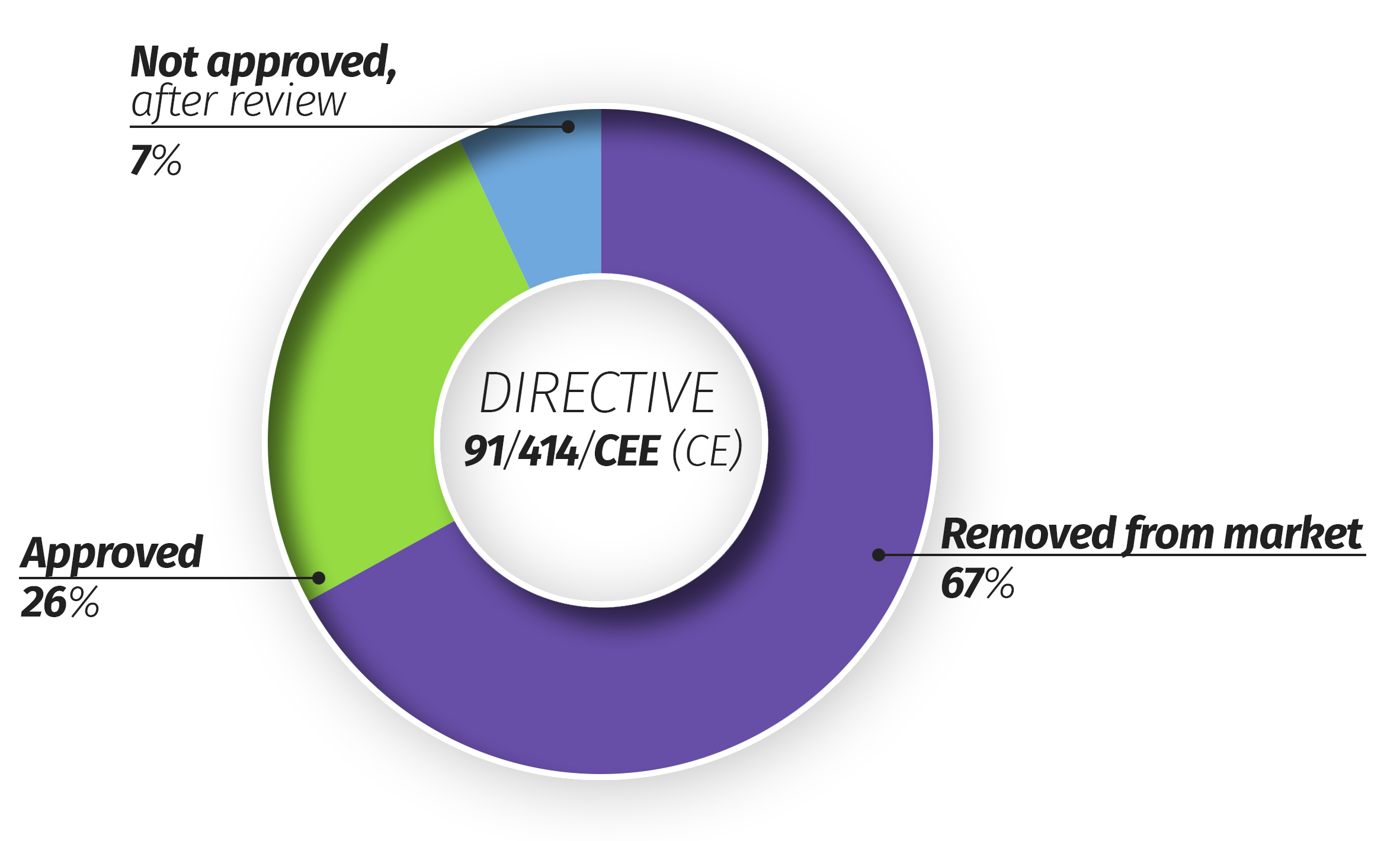
Far from seeing this process as a barrier, Biocontrol interprets it as a natural evolution of the sector. Each new restriction opens space for biological innovation, offering safer and more sustainable alternatives.
This optimistic outlook reflects a deep conviction: sustainability is not only a legal obligation, but an opportunity to move towards an agriculture that cares for people, the planet and productivity.
The challenge of registration:
between science and regulation
One of the most relevant issues that came up in the dialogue was the complexity of the registration process for bioinputs. As Marina explains, registering a plant protection product in Europe can be a long and costly process.
"The process can take several years and reach costs in the millions of euros. Two key aspects are evaluated: safety, for the environment and human health, and product efficacy."
Marina Yepes - Comunicación
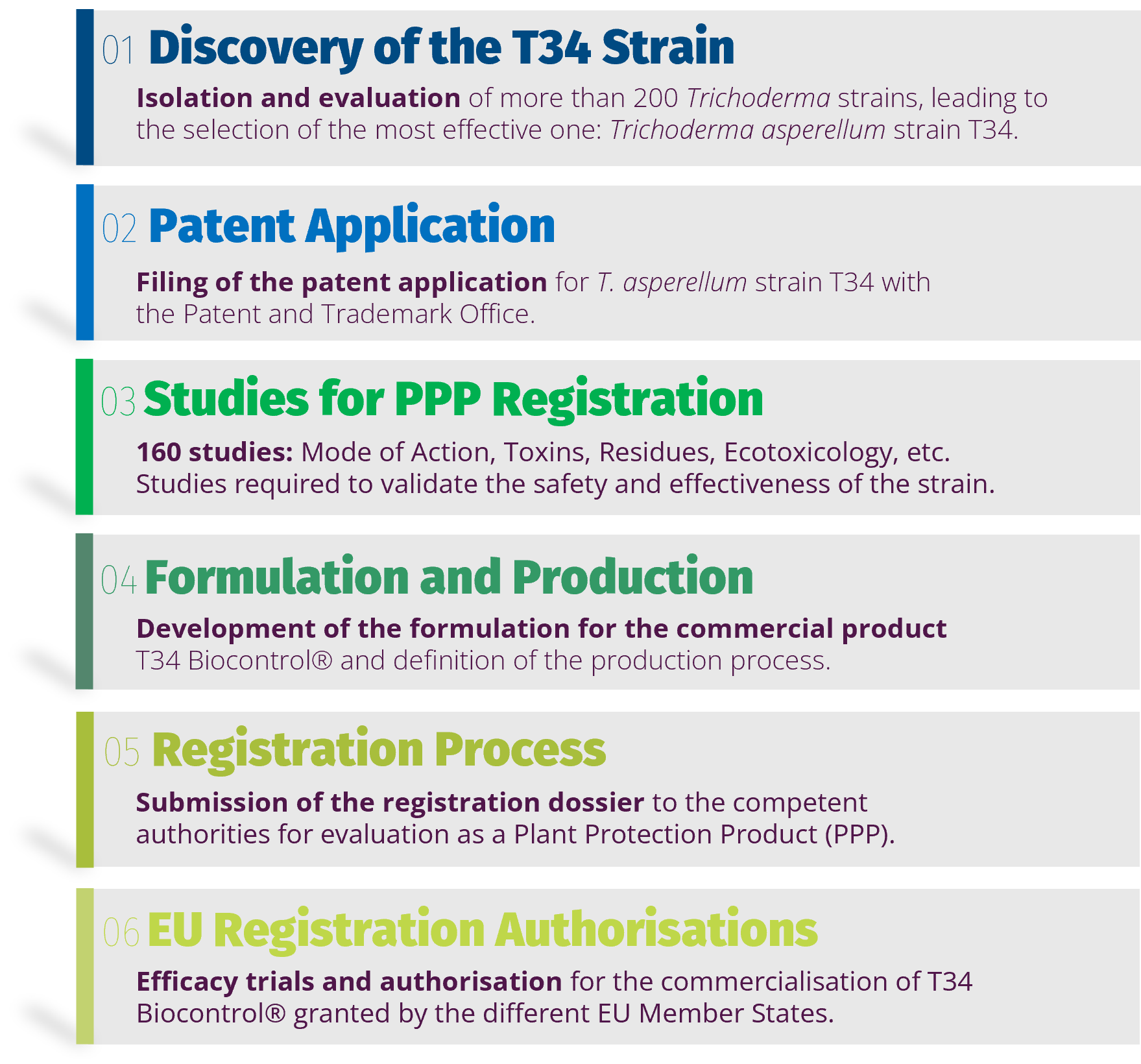
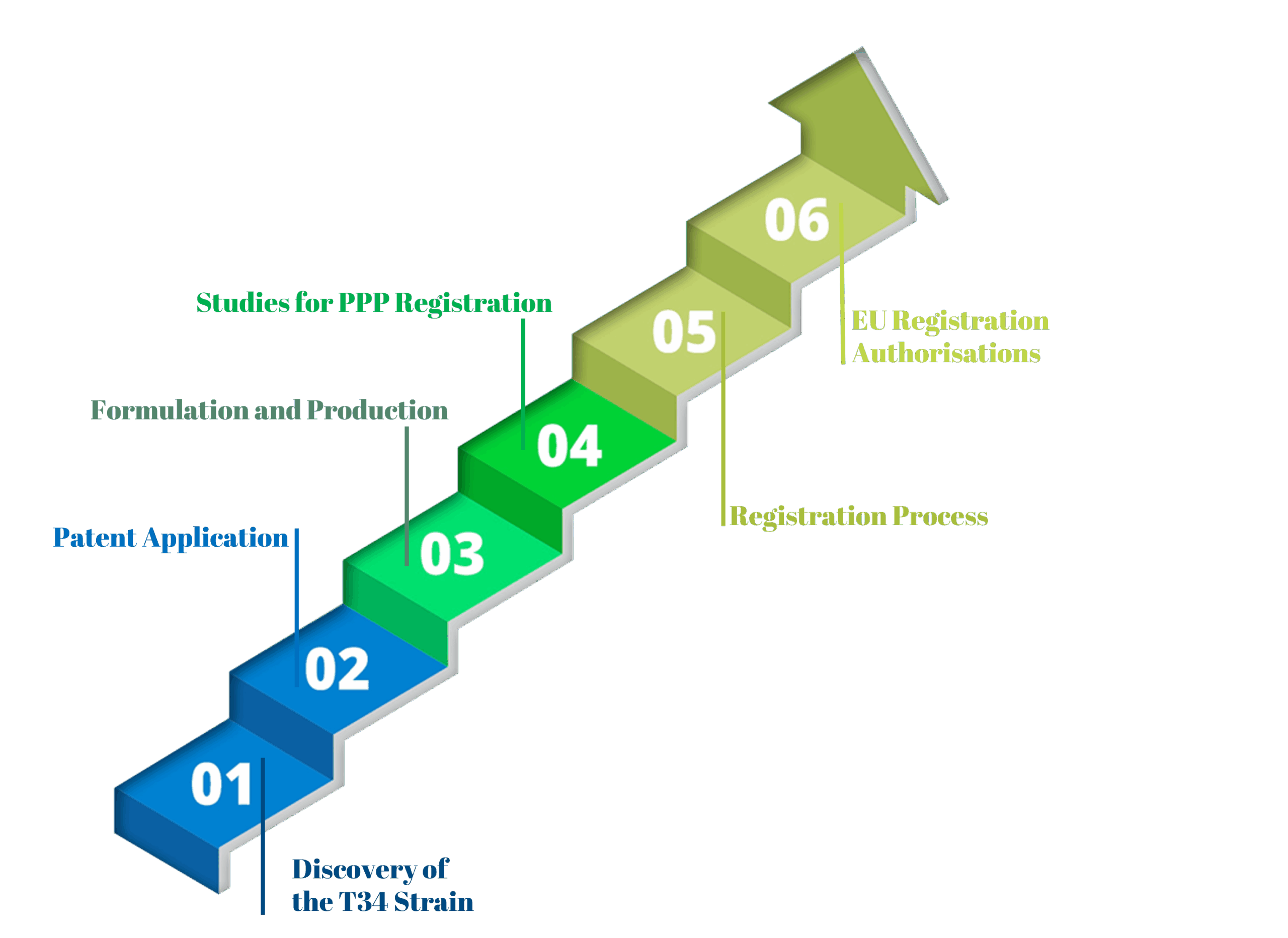
The company decided from the outset to comply with the most demanding standards, the European ones, which are also the most internationally recognized. This decision, although difficult, has become an added value.
However, bureaucracy does not always keep pace with innovation.
"When we then register in other countries, the process is faster, because we already have the active material validated."
Marina Yepes - Comunicación
"Technology advances faster than regulation", "Sometimes you have a brilliant and effective idea, but the years of waiting make it difficult to sustain economically."
Marina Yepes - Comunicación
Nevertheless, Biocontrol remains committed to transparency and scientific rigor, convinced that only through solid controls can a credible and sustainable bioproducts sector be built.
T34 Biocontrol®:
science in the service of sustainability
T34 Biocontrol® is the emblem of Biocontrol Technologies’ philosophy. It is a biofungicide based on the Trichoderma asperellum fungus (strain T34), selected for its high capacity to control soil diseases and improve plant health.
"We chose strain T34 from more than 200 isolates because of its efficacy against Fusarium and its excellent performance under real field conditions."
Lydia Bakagianni - Dept. de Ventas
Since then, the product has become an international reference: present in more than 30 countries, authorized for more than 200 crops and 20 different diseases.
T34 not only fights pathogens such as Rhizoctonia, Phytophthora or Botrytis, but also stimulates root growth and activates the plants’ natural defense mechanisms. In other words, it helps crops to take care of themselves.
"We continue to be surprised to discover new applications of T34 in different crops", "It is a living product, evolving along with nature".
Lydia Bakagianni - Dept. de Ventas
Its safety is another of its great attributes: it does not generate residues, does not cause resistance and can be used in organic, integrated or conventional agriculture. A clear example that efficacy and sustainability can coexist.
Disinformation and regulatory coherence:
a pending battle
During the recording of the podcast, it was pointed out that “European regulations are not always clear” regarding the use of microorganisms. We would like to point out that the European framework is clear:
- Microorganisms used as crop protection agents (e.g. Trichoderma) are regulated by Regulation (EC) 1107/2009 and its specific package for microbials (2022).
- In fertilizers/biostimulants, Regulation (EU) 2019/1009 allows only four microbial groups (Azotobacter, Azospirillum, Rhizobium and mycorrhizae) for CE marking; Trichoderma is not included.
- The differences between countries are due to national authorizations and the practical application of mutual recognition, as well as to local tests and the zonal procedure for phytosanitary products.
In some cases, certain Member States allow the national marketing of products containing microorganisms not included in the European Regulation, applying flexible interpretations or simplified procedures within their national frameworks.
These practices, although legal at the domestic level, can generate differences in consistency and control between countries, and do not always guarantee the same levels of safety and efficacy evaluation required by EU phytosanitary regulations, which often generates confusion among users and professionals in the sector.
We apologize for the confusion and thank our community for their interest in technically accurate information.
Despite advances, the bioinputs sector still faces confusion and misinformation. Many farmers, and consumers, are unaware of the differences between products registered as plant protection products and others marketed as biological fertilizers.
In some European countries, products with microorganisms similar to Trichoderma can be sold as fertilizers, without demonstrating their efficacy and safety through the rigorous studies required for phytosanitary products.
This creates a problem of trust and unequal competition between compliant and non-compliant companies.
"Phytosanitary registration is the only guarantee that a product is safe, effective and consistent", "This is the only way to protect the farmer, the consumer and the environment".
Lydia Bakagianni - Dept. de Ventas
Biocontrol therefore advocates a coherent and transparent regulatory framework that encourages responsible innovation and reinforces the credibility of biological products.
Sowing the future:
Attracting young talent to the agricultural sector
The Agropodcast conversation closed with an inspiring question: what would you say to a young person who wants to go into agribusiness?
Eduard had it clear:
"The agricultural sector is very broad. There is room for all specialties: biotechnology, artificial intelligence, satellite imaging, drones.... There will be a lot of technology, but in the end we all have to eat. Agriculture will always be the pillar of humanity".
Eduard Fernando - CEO
In a context of technological and climatic transformation, agriculture is positioned as one of the sectors with the greatest capacity for innovation and real impact. From Biocontrol Technologies, it is lived as a shared vocation: to connect science with the land, and innovation with the collective welfare.
Conclusion:
A dialogue that cultivates collaboration
Our participation in Agropodcast, a FEMAC initiative, was much more than an interview. It was a space for dialogue between science, business and territory. A reminder that great advances in sustainability are born from exchange, collaboration and shared vision.
"These spaces for dialogue are essential, ...they remind us that sustainability is not achieved alone, but by collaborating."
Eduard Fernando -CEO
From its university origins to its international presence, Biocontrol Technologies has kept its mission intact: to use biotechnology as a bridge between innovation and nature. With each new development, it reaffirms its commitment to promote a safer, more efficient and planet-friendly agriculture.
Because, in the end, as the title of the episode suggests, nature is not an enemy to be controlled, but an ally that we must understand and care for.


