7–9 years
Average time to approve a biocontrol active substance in the EU, versus 2–3 years in the Americas and Asia.
The registration barrierConventional fungicides are being withdrawn across an increasing number of markets, driven largely by evidence of their negative impact on human health and the environment (persistance in soil and their mobility towards groundwater). Every withdrawal narrows the toolbox available against the soil-borne and foliar pathogens — Fusarium, Pythium, Rhizoctonia, Sclerotinia… — that remain among the most damaging constraints on yield and quality in high-value crops.

The same intensification that reduced the chemical toolbox has also reduced the biological capacity of the soil itself. Repeated applications, short rotations and compaction deplete the microbial communities that regulate the rhizosphere naturally, leaving each successive crop more exposed.
Restoring that biology is no longer an agronomic aspiration; it is a precondition for stable production.
Growers, however, cannot suspend disease control while this transition takes place. What the sector needs is a tool that controls pathogens with the reliability of a conventional programme, actively rebuilds soil biology, and is authorised where the crop is grown. For biological solutions, registration — not efficacy — has been the limiting factor.
Average time to approve a biocontrol active substance in the EU, versus 2–3 years in the Americas and Asia.
The registration barrierCrops authorised for use with Trichoderma asperellum strain T34.
Authorised usesWhere T34 already holds phytosanitary registration — the approval process, completed.
T34 Biocontrol®
EPA Approved
No. 00A933-00
EFSA Approved
No. 00A933-00

FRAC Group BM02
Resistance not known
More than 25 years ago, Emeritus Professor Dr. María Isabel Trillas at the Universitat de Barcelona identified an exceptional strain of Trichoderma asperellum: highly effective, adaptable to different crops and conditions, active against multiple soil-borne pathogens, and capable of working through different application strategies. This strain, T. asperellum strain T34, was first patented and later registered as plant protection product and became the scientific foundation of Biocontrol Technologies, S.L.
What began as scientific research soon proved to have a much broader value. T34 was not a microorganism to remain confined to the laboratory: over years of trials, crops and field conditions, it continued to demonstrate its potential as a effective biological tool for modern crop protection.
Today, the Chair of Microorganisms in Agriculture — a joint initiative of Biocontrol Technologies and the University of Barcelona maintains this commitment to applied research.

T34 Biocontrol® is a specific microbial plant protection product formulated with the biocontrol agent Trichoderma asperellum strain T34. A powerful tool designed for use across multiple crops, targeting both soil-borne and foliar diseases.
T34 Biocontrol® was developed to integrate into standard crop protection programmes and existing application systems — without changing machinery or adding unnecessary complexity to the grower’s routine.
It brings together what growers need today: reliable disease control, compatibility with sustainable production, support for soil and root health, and a practical way to protect yield and quality in a changing regulatory context.
Its versatility across crops, application methods and production systems makes T34 Biocontrol® a practical biological tool for modern crop protection programmes.
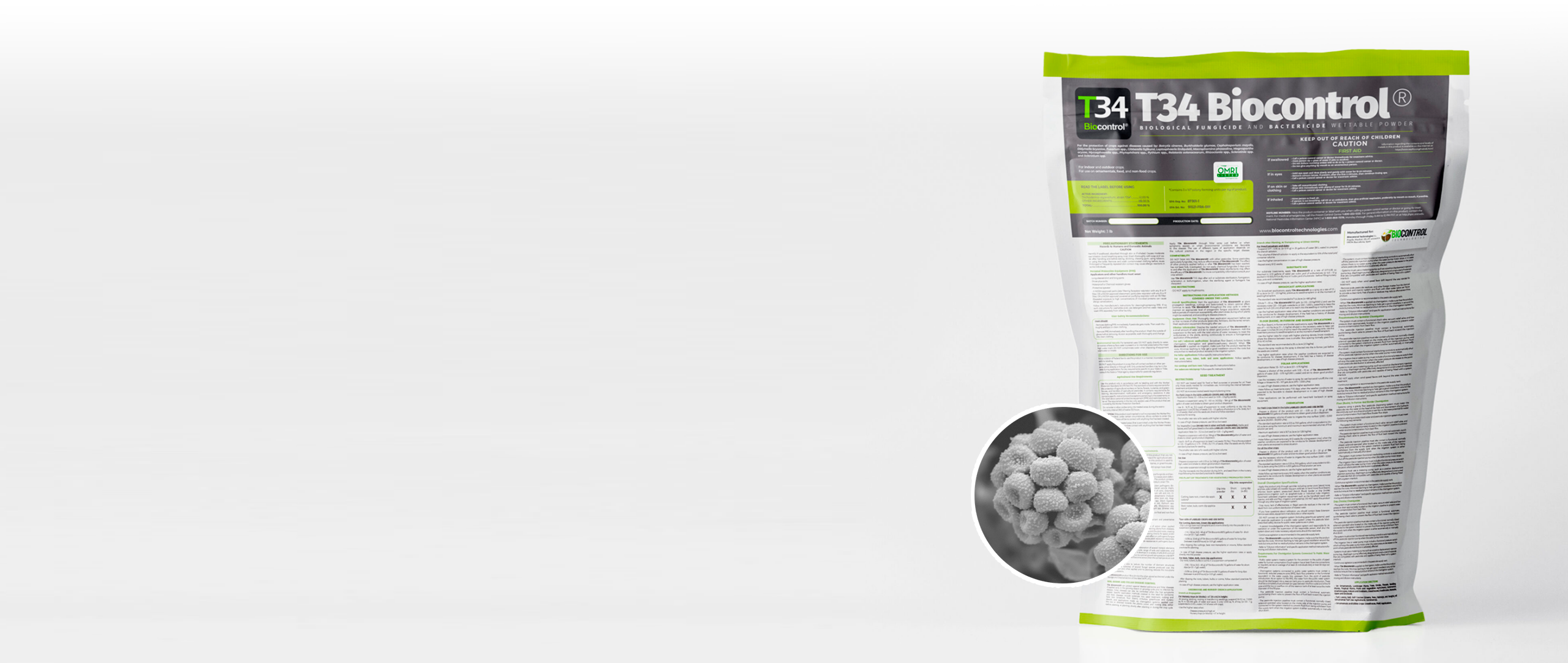
*Spores of Trichoderma asperellum strain T34 under the microscope.
Dose depends on the pathogen, crop and application method: always read the authorized label.

Product Controlled by ECOCERT SAS

Organic input listing

UNE 315500

Japanese organic standards

Organic certification

Certification
T34 does not only act on the crop. It acts also on the pathogen, specifically on the root zone where the pathogen needs to establish — which is why a single strain appears on registrations covering more than 200 crops and over twenty target pathogens, from soil-borne fungi to foliar disease. What changes from one country to the next is not the biology, but which of those uses the national label authorises, and at what rate.
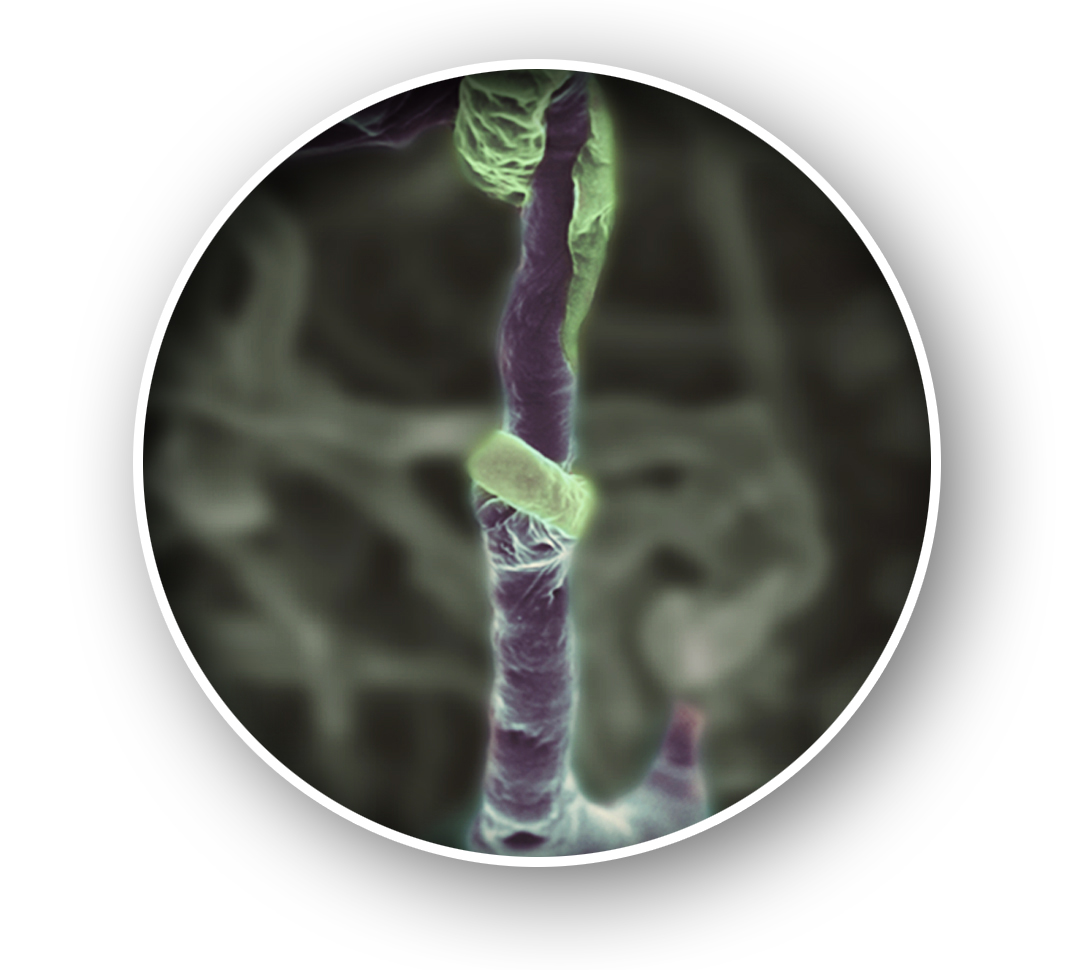
Scanning electron micrograph: a Trichoderma asperellum T34 hypha coiled around the hypha of a pathogenic fungus, false colour, 2 micrometre scale bar.
T. asperellum T34 (green) coiled around the hypha of Didymella bryoniae. SEM, false colour.
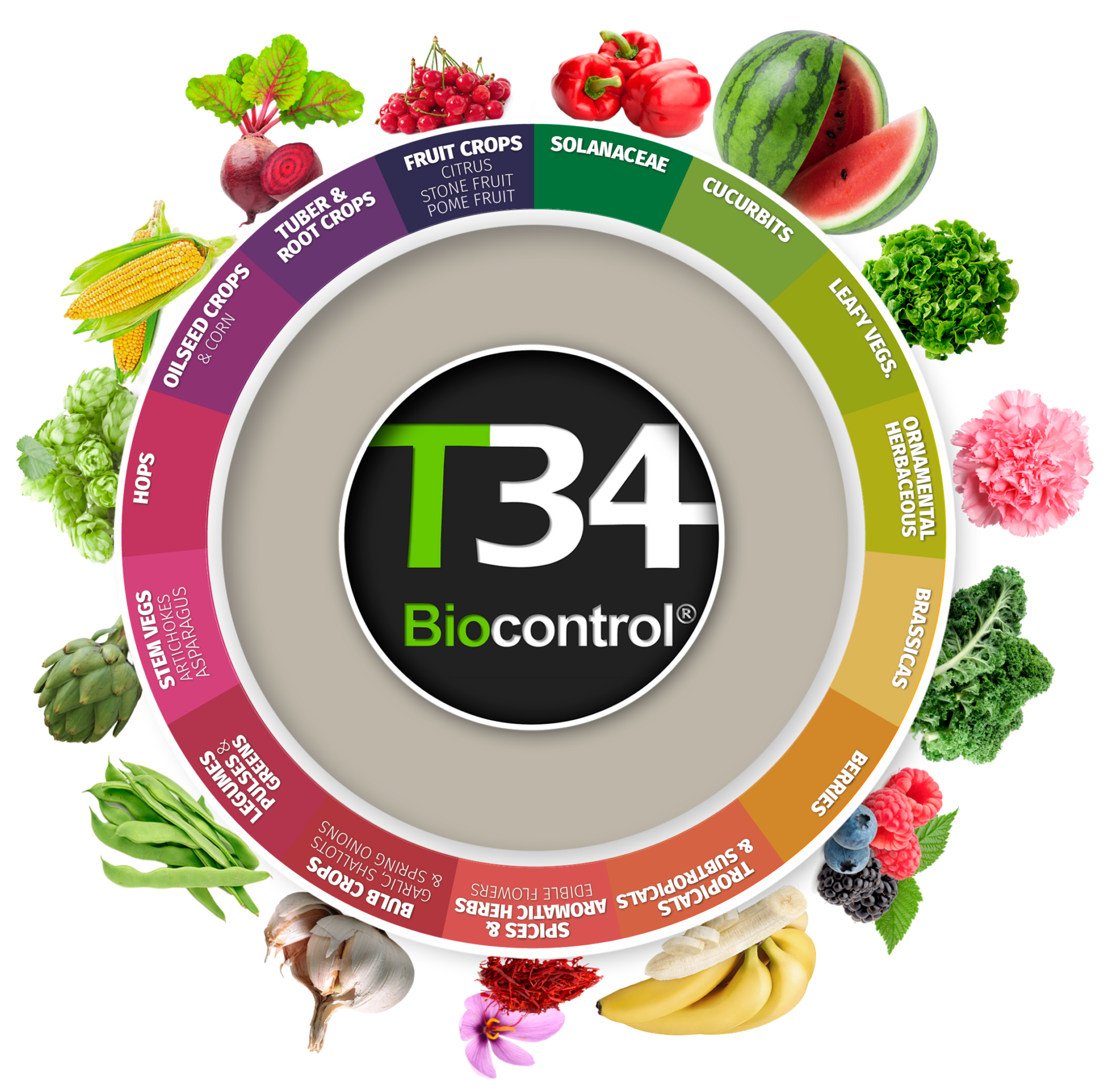
Authorised or covered by group registration across all markets.
Across all registers worldwide. Scope varies by country — check your label.
Registered, under registration or distributed by partners.
Soil-borne disease is the core of the label. These pathogens persist in the ground between crops as resting structures (chlamydospores, sclerotia), T34 is applied to preventively in the root zone and colonises the same space the pathogen needs in order to establish — which is why one strain covers a set of organisms that would otherwise be addressed one product at a time. Its colonisation also activates the plant immune system.
Cephalosporium maydis, Fusarium spp., Gibberella fujikuroi, Leptosphaeria lindquistii, Macrophomina phaseolina, Phytophthora spp., Pythium spp., Rhizoctonia spp., Sclerotinia spp., Sclerotium spp., Verticillium spp.
Where the label allows foliar application, the same strain is used above ground parasitizing the foliar pathogens that colonise leaf and fruit tissue.
Botrytis cinerea, Didymella bryoniae, Magnaporthe oryzae, Lasiodiplodia theobromae, Mycosphaerella fijiensis.
Control is indirect: the strain acts by parasitism and also by activating the plant’s own defence mechanisms.
Burkholderia glumae, Erwinia spp., Pseudomonas syringae pv. tomato, Ralstonia solanacearum.
Adulticidal and ovicidal effect reported against gall-forming and cyst-forming nematodes. Also parasitism and activation of plant defence mechanisms are described in the literature and also in the field studies.
Meloidogyne spp., Globodera spp.
The authorised crops, target diseases, dosages, and conditions of use are defined by the national registration in effect in each country. The groupings shown here represent the cumulative scope of all registrations worldwide and are provided for informational purposes only; they do not replace the approved national label. Always consult the label authorized in your territory before using the product. Registration Status by Country
A sample of the main groups covered. The full crop list, and which registration covers it, will be available through the search tool.
The authorised crops, target diseases, dosages, and conditions of use are defined by the national registration in effect in each country. The groupings shown here represent the cumulative scope of all registrations worldwide and are provided for informational purposes only; they do not replace the approved national label. Always consult the label authorized in your territory before using the product. Registration Status by Country
APPLICATION METHODS
T34 Biocontrol® is designed to reach the rhizosphere early and establish before pathogen pressure builds. The application method is selected according to the crop, pathogen and growing system, not the other way round.
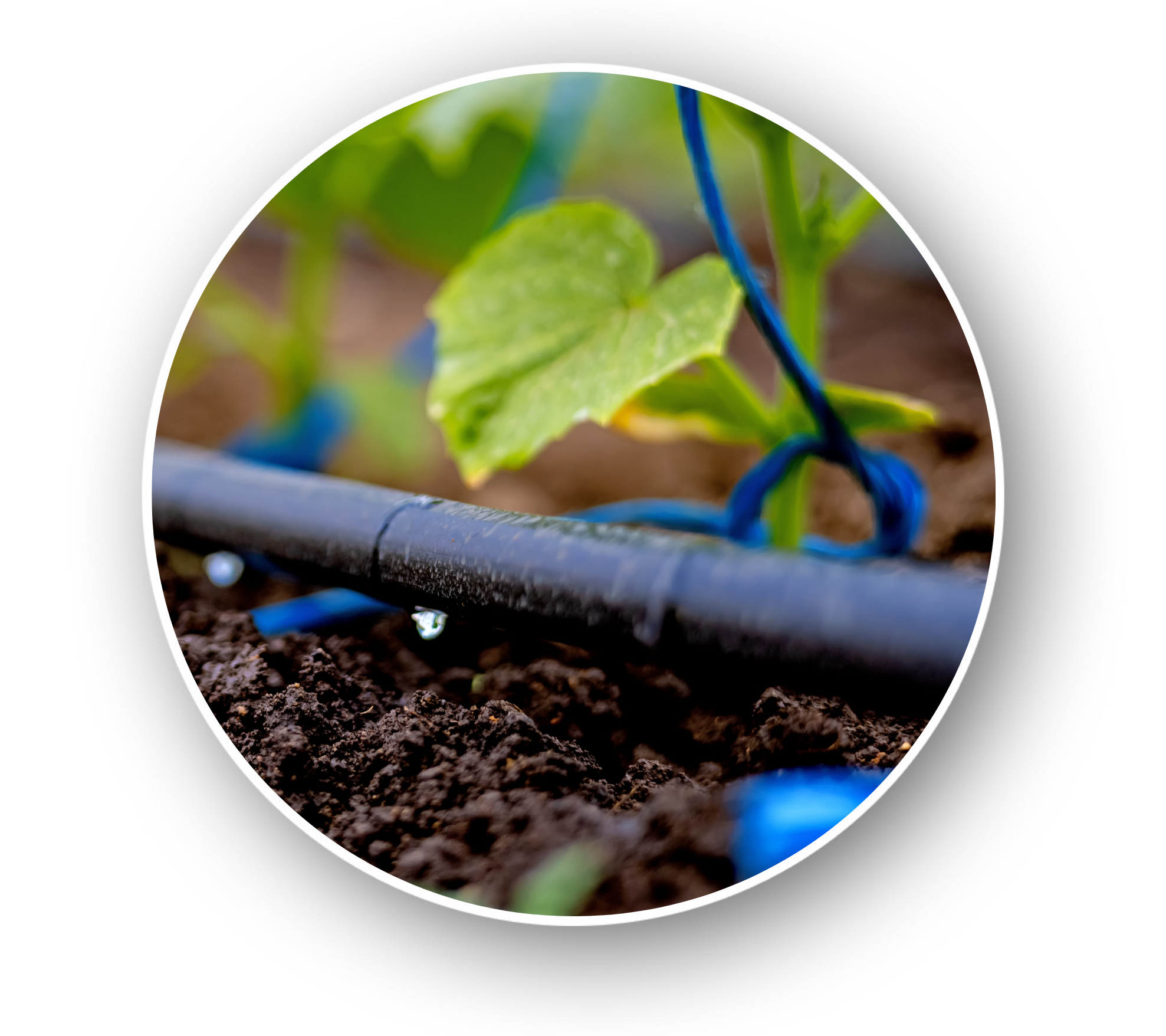
T34 goes into suspension and travels with the irrigation water. Its formulation allowed to go through the filtration stages of a standard installation and does not block emitters, so it can be applied through the system already in place — no extra field operation and repeated across the cycle as the crop demands it. Before mixing with any other product or input, ask your specialist technical adviser: compatibility depends on the product, the water and the conditions.
Where the crop starts, and where colonisation is cheapest to establish. The nursery has a methodology of its own, adapted to how each operation works — the plants leave already colonised, before they ever meet field pressure.
Mixed into growing media before transplanting, so the root system develops into an already colonised medium rather than competing for space once the pathogen is established. Used in nursery and in protected production alike.
Applied to the canopy where the label allows it, or directed at a specific part of the plant. The equipment ranges from a standard sprayer to aerial application in extensive crops.
Application methods vary by crop and national registration.
VIEW AUTHORISED APPLICATION METHODS →Always read the label. Authorised crops, target pathogens, application methods and rates are defined by each national registration and may differ between markets. The information shown above reflects the cumulative scope of uses authorised worldwide and does not necessarily represent what is authorised in your territory. The approved national label is the only binding source for conditions of use. Check registration status by country
Trichoderma asperellum strain T34 works through a network of mechanisms that not only combat pathogens but also promote plant health. FRAC classifies T34 under group BM02 — a microbial biological control agent with multiple modes of action.
T34 recognises the hyphae of pathogenic fungi, attaches to them and breaks them down using lytic enzymes. Effective against Rhizoctonia solani, Botrytis spp. y others.
T34 parasitises sclerotia and other survival structures, helping reduce the infectious reservoir in the soil and limiting new infection cycles.
Rapid colonisation of the rhizosphere prevents pathogen establishment. Demonstrated suppression of Fusarium spp., Pythium spp. y and others.
T34 produces bioactive compounds with inhibitory effects against fungi such as Sclerotinia spp. and Rhizoctonia solani.
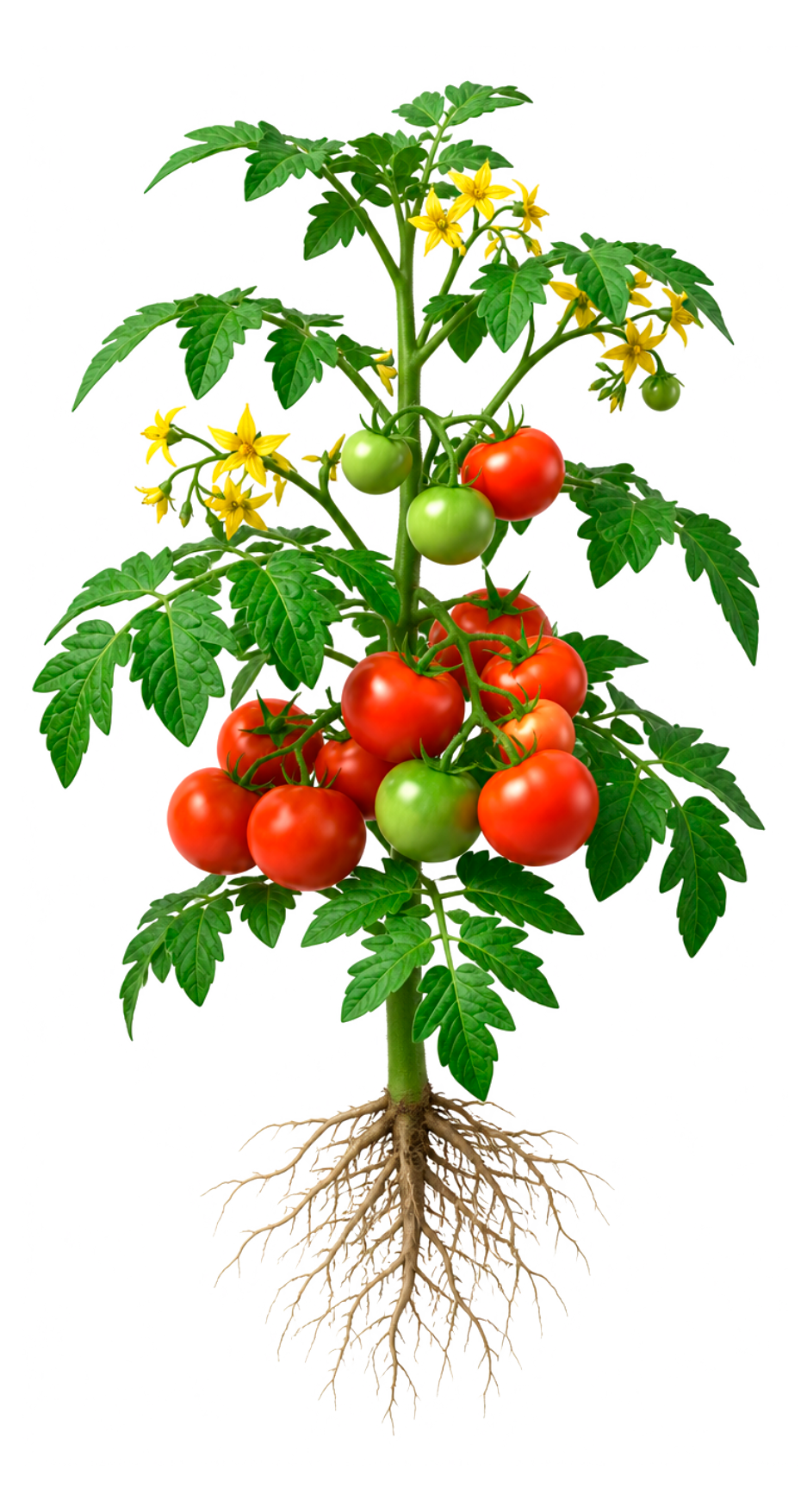
Improves the plant’s natural defence mechanisms against a range of biotic stressors, enabling faster and more effective responses to pathogen attack.
Promotes the formation of secondary roots and root hairs, improving water and nutrient uptake from the beginning of the crop cycle.
Strengthens rhizosphere activity and supports more efficient nutrient uptake and utilisation by the plant.
Supports stronger early development and more even crop establishment, particularly under stressful or variable growing conditions.

Always read the label. Authorised crops, target pathogens, application methods and rates are defined by each national registration and may differ between markets. The information shown above reflects the cumulative scope of uses authorised worldwide and does not necessarily represent what is authorised in your territory. The approved national label is the only binding source for conditions of use. Check registration status by country
We are publishing the accounts of the growers, nurseries and advisers working with T34 Biocontrol® across our markets. We begin in Almería, one of Europe’s leading centres of professional greenhouse horticulture, where growers, nurseries and advisers work within highly specialised production systems. Biological control is an established part of crop protection in the region, making Almería a natural place to begin listening to the people who usen T34 Biocontrol® in practice.
Where the crop begins, and where root protection is established before the plant ever reaches the field.
Two organic growers, season after season under plastic: how they apply it, when, and what it changed in the programme.
What growers ask for, what they come back for, and how it is recommended on the ground.
T34 Biocontrol® is documented crop by crop, not as an average across a portfolio. Each dossier carries its own trial data — protocols, sites, seasons and results — so you can read what happened in the crop you grow, under conditions you recognise.
Tomato, pepper and aubergine under protected production, where soil-borne pressure builds cycle after cycle.
DOWNLOAD DOSSIERCucumber, melon, watermelon and courgette, in the short, intensive cycles that leave little room to react.
DOWNLOAD DOSSIER →From the runner plant onwards, in soil and in substrate, across the full production season.
Coming soonBrowse the trials by crop, including the crops that do not yet have a dossier of their own.
Questions about the product, a specific crop or disease, or how to integrate T34 Biocontrol® into your crop protection programme. Contact our technical team for product information and crop-specific guidance.
Biocontrol Technologies, S.L. · NIF B63545446
Av. Madrid, 217 — 08014 Barcelona