

Beyond genetic improvement:
Building a resilient production system in potato cultivation.

1. Potato cultivation: introduction to the key challenges
Potato farming is undergoing a transformation. The market and society are demanding increasingly sustainable production systems, while farmers need to maintain the profitability and economic viability of their farms.
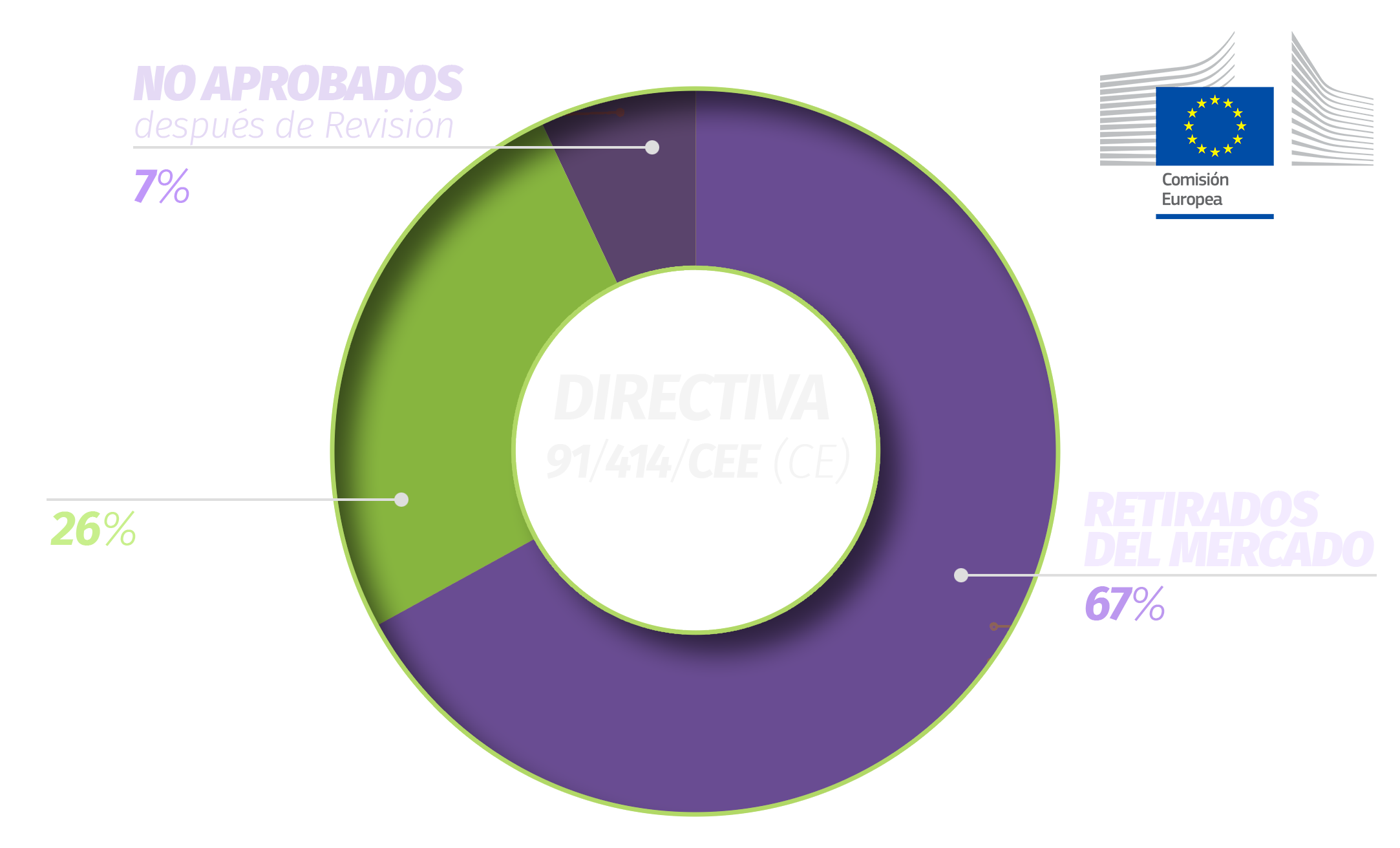
These social demands have had a direct impact on the political and regulatory spheres. In Europe, this process materialized in a thorough review of the regulatory framework for plant protection products. Directive 91/414/EEC established the evaluation of then-authorized active substances, initiating a comprehensive review process based on safety criteria. Subsequently, Regulation (EC) No 1107/2009 reinforced these criteria following the scientific re-evaluation of the active substances. As a result, more than 70% of available substances were withdrawn from the market due to their potential negative impact on human health, animal health, or the environment.
For decades, genetic improvement has been one of the main tools for increasing crop yields and a key factor in disease management through the incorporation of new varieties with greater tolerance or resistance.
However, the current context demands going further. The resilience of the system cannot rely solely on varietal potential, but rather on building a balanced agronomic model where genetics, soil health, microbiology, technical management, and phytosanitary strategy work in an integrated manner.
Today, talking about sustainability in potatoes does not mean producing less, but producing better: strengthening the soil as a living ecosystem, reducing vulnerability to pathogens, optimizing inputs and maintaining productive stability season after season.
2. Understanding cultivation as a complex system
From an agronomic perspective, potato cultivation should be understood as a multivariable system in which soil, climatic, microbiological, and management factors converge. Soil structure, organic matter content, and biological activity influence root development and the ability to explore the soil profile. In turn, the water regime affects oxygenation, nutrient availability, and the expression of soilborne diseases.
In this context, varietal genetic resistance represents a first step toward reducing vulnerability to certain pathogens. Genetic improvement has allowed for the incorporation of specific tolerances and enhanced performance against certain pathogens; however, its effectiveness depends largely on the environment in which the plant develops and the agronomic practices applied in its cultivation.
Pathogens do not act in isolation. They are part of a dynamic equilibrium whose aggressiveness is conditioned by inoculum pressure, the physiological state of the plant, and the biological stability of the rhizosphere. In structurally degraded or microbiologically unbalanced soils, even well-performing varieties can show symptoms and even reduce crop productivity.

3. Classification of potatoes according to commercial destination
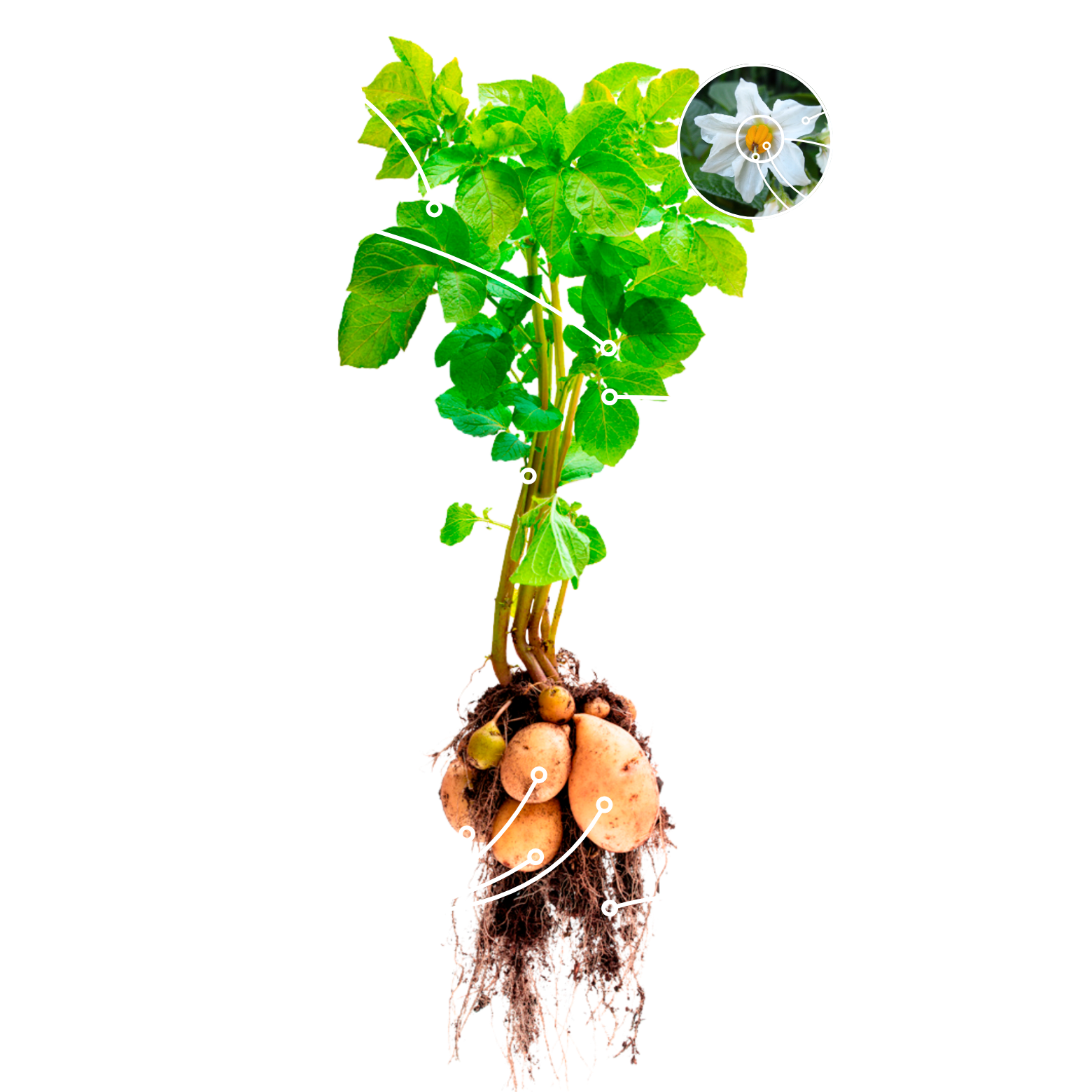
The intended use of potatoes not only defines their commercial purpose. It directly influences the choice of variety, the fertilization strategy, irrigation management, the level of sanitary requirements, and the overall technical approach to farming.
Furthermore, this destination can be developed under two different production frameworks — conventional or organic — which adds an additional variable in terms of available inputs, disease pressure and level of permitted intervention.
Consequently, the final yield depends not only on the genetic potential of the variety, but also on the coherence between destination, production system and technical management.
Within this productive classification we distinguish three main categories:
Seed potato
Seed potatoes form the basis of the production system. Their main purpose is to guarantee genetic multiplication under controlled sanitary conditions.
Here the priority requirement is not immediate commercial yield, but varietal purity and the absence of transmissible pathogens .
European regulation and certification: the health basis of the system
Seed potatoes in the European Union are regulated by Directive 2002/56/EC, which establishes the official categories—pre-basic, basic, and certified—and the minimum standards for sanitary quality and varietal purity for their marketing. This common framework is further developed and monitored through the national legislation of each Member State.
In this context, the Netherlands is an international benchmark. Certification is structured under its national seed legislation and is managed by the NAK (Nederlandse Algemene Keuringsdienst).

Plant passport: guarantee of traceability and plant health
In addition to official certification, the marketing of seed potatoes in the European Union requires the issuance of a phytosanitary passport, regulated by Regulation (EU) 2016/2031 on plant health.
This document certifies that the plant material has been produced under official controls and meets the established phytosanitary requirements to prevent the introduction and spread of harmful organisms. The plant passport guarantees the traceability of the batch within the European Union and is a key element in the health and safety of the production system.

4. Varietal resistance in potato cultivation
Varietal resistance has historically been a cornerstone of potato disease management. Genetic improvement has significantly reduced vulnerability to key pathogens, contributing to improved yield stability and decreased dependence on external interventions.
However, correctly understanding what resistance is and how it works is essential to avoid overestimating its scope.
Genetic resistance does not imply immunity. In most cases, it involves a modification in the interaction between the plant and the pathogen that limits infection, delays disease development, or reduces its impact on yield. It is a biological balance, not the complete elimination of risk.
Types of resistance: intensity and stability
From a functional point of view, the response of a variety to a pathogen can be placed on a continuum that combines intensity and stability.
At one extreme we find tolerance, where the plant can become infected but maintains much of its yield. Further along the spectrum, partial or quantitative resistances appear, generally polygenic, which reduce the rate of disease development and tend to be more stable over time.
At the other extreme are specific or vertical resistances, based on one or a few specific genes that recognize particular races of the pathogen. This type of resistance can offer intense and easily observable protection in the field, but its stability depends on the pathogen’s ability to evolve.
So-called long-lasting resistance depends not only on the intensity of the response, but also on its behavior across different growing seasons, environments, and pathogenic pressures. In practice, it is usually associated with more complex and less easily overcome mechanisms.
The key is not only how much a resistance protects, but how long it does so and under what conditions.
How are new resistant varieties created?
Genetic improvement has followed different paths to incorporate resistance in potatoes.
A classic strategy has been the introgression of genes from wild species of the genus Solanum. In the case of late blight (Phytophthora infestans), genes derived from Solanum demissum allowed the development of varieties with high resistance to certain races.
More recently, the accumulation of multiple small-effect loci (several specific and distinct physical positions on one or more chromosomes that house genes or genetic markers) (polygenic resistance) has sought to generate more stable responses, reducing the selective pressure exerted on the pathogen.
Marker-assisted selection has accelerated these processes, allowing the identification of resistant genotypes in the early stages of the breeding program. Internationally, gene-editing techniques represent a growing line of research, although their application in Europe is limited by the regulatory framework.
In all cases, the objective is the same: to reduce the vulnerability of the crop to structural diseases.
Late blight (Phytophthora infestans)
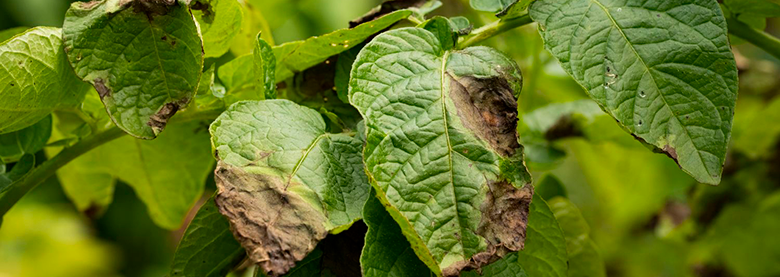
The history of late blight clearly illustrates the plant-pathogen dynamic. The incorporation of specific R genes (S. demissum) vertical allowed, for a certain period, effective control of certain pathogen populations. However, the high evolutionary capacity of Phytophthora infestans favored the emergence of new races capable of overcoming these resistances.
This phenomenon does not invalidate genetic improvement, but it demonstrates that vertical resistance can be compromised when intense and prolonged selective pressure is exerted.
What are R genes?
R genes (resistance genes) are specific genes present in the plant that allow it to recognize specific proteins of the pathogen (effectors) and activate a rapid defensive response.
In the case of late blight (Phytophthora infestans), the R genes function under the “gene-for-gene” model: a plant R gene recognizes an avirulence gene of the pathogen. When this recognition occurs, a localized defense response is triggered that can halt the infection.
However, if the pathogen evolves and modifies or loses that recognized effector, the resistance can break down, which explains the lower stability of vertical resistances based on one or a few genes.
New genetic improvement strategies against late blight are based on polygenic resistances, supported by many small-effect genes that slow infection, reduce the need for fungicides and offer longer-lasting protection than the old vertical resistances based on R genes.
Nematodes ( Globodera rostochiensis )
A representative example of specific resistance in potato cultivation is found in the resistance to Globodera rostochiensis incorporated in some genetic improvement programs.
Among the best-known examples is the H1 gene, widely used to control certain potato cyst nematodes. This case clearly illustrates how these types of specific resistances function within varietal improvement strategies.
What is the H1 gene?
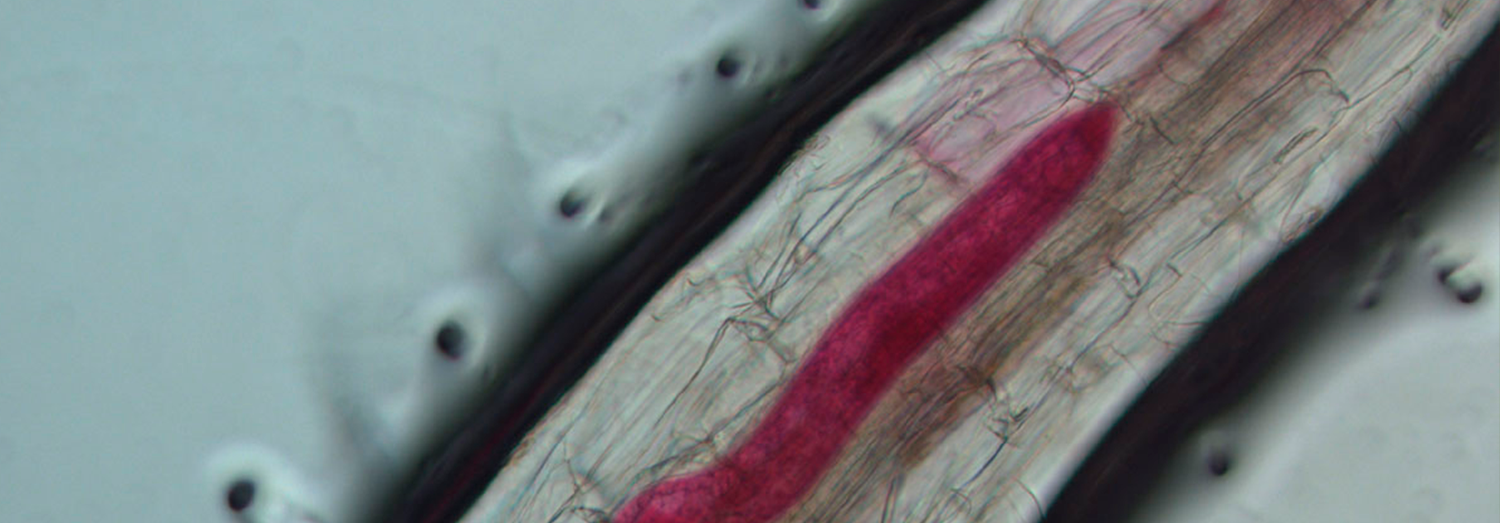
The H1 gene is a specific resistance gene present in some potato varieties that confers resistance against certain pathotypes of the potato cyst nematode (Globodera rostochiensis).
It also works under the “gene-for-gene” model: when the nematode carries the factor recognized by H1, the plant activates a defensive response that prevents the normal development of the parasite in the root.
However, this resistance is specific to certain pathotypes (mainly Ro1 and Ro4). If different populations predominate in the soil or the nematode evolves, efficacy may be compromised, again illustrating the lower stability of resistances based on one or a few genes.
5. Limitations of resistance as a sole strategy
Genetic resistance acts on the plant-pathogen interaction, but does not necessarily modify other structural factors of the production system.
• It does not correct imbalances in soil microbiology.
• It does not by itself reduce the inoculum pressure accumulated in the plot.
• It does not eliminate the influence of soil and climate conditions favorable to the pathogen.
• It does not replace proper agronomic management.
Furthermore, when used as the sole tool, it can exert selective pressure that favors the emergence of new pathogenic variants. Therefore, varietal resistance should be understood as a powerful tool, but one integrated within a broader system. Its actual effectiveness depends on the context in which it is implemented.
And it is precisely this context —soil, microbiology, management and complementary strategies— that determines whether genetic resistance becomes a structural advantage or a temporary solution.
6. The structural limitations of resistance as a sole strategy
Genetic resistance is a fundamental tool, but productive resilience is not built exclusively from the genome. It is built from the system.
A resilient system does not eliminate risk, but rather reduces its structural vulnerability. This involves acting on several levels simultaneously: genetics, soil microbiology, agronomic management, and complementary control strategies.
Before discussing resistant varieties, it is necessary to discuss strategy.
Strategies for building resilience
A resilient approach combines different tools that act on different dimensions of the production system:
The role of RootDei Biocontrol in an integrated strategy
In this context, the application of biocontrol agents such as RootDei Biocontrol is presented as a complementary tool to genetic resistance.
Biological control microorganisms do not replace genetic resistance, but they act in a complementary way in controlling diseases in the root system. They can compete with pathogens in the rhizosphere, reduce the intensity of infection, stimulate the plant’s natural defense mechanisms, and contribute to the soil’s microbiological balance, thus reinforcing the crop’s health stability from the environment in which it develops.
By acting on the root environment, they decrease the selective pressure exerted exclusively on resistance genes, reducing the probability of the appearance and spread of virulent races.
The key is not to choose between genetics or biocontrol, but to integrate them.

7. Resilience as the construction of a sustainable and productive system
Resilience in potato cultivation is not an isolated quality, but the result of a systemic construction. It can be summarized in a simple equation:
When these dimensions act in a coordinated manner, the production system reduces its structural vulnerability. Genetics provides defense capacity; soil microbiology contributes to the balance against pathogens; agronomic management modulates the environment in which the plant develops; and varietal diversity reduces the selective pressure exerted on pathogenic populations.
This integration has direct effects: it reduces dependence on intensive chemical interventions, decreases selection pressure on pathogens, and improves productive stability season after season. Furthermore, biologically active soil tends to develop greater suppressive capacity against soilborne diseases, strengthening the system from its foundation.
Building resilience is not solely about environmental criteria. It also has clear economic implications. Progressively reducing the use of chemical pesticides allows for lower residue levels, adaptation to increasing regulatory demands, and access to markets with stricter standards. In certain contexts, it even facilitates the transition to organic or differentiated production systems.
Markets that value production with a lower environmental impact and greater traceability can offer better prices, which translates into opportunities for greater profitability. At the same time, a balanced system tends to improve key production parameters such as size uniformity, yield stability, and commercial quality—factors directly linked to the economic value of the crop.
Resilience, therefore, is not merely a technical or environmental objective. It is a productive and business strategy that allows for sustained profitability in an increasingly demanding agronomic and regulatory environment.