
Efficacy of T34 Biocontrol® in Cucurbit Crops
The official trials of T34 Biocontrol® in cucurbits,
compared against reference chemical treatments.
See the evidence for yourself.
- ✓ 25 official GEP trials in Spain, Italy, and France
- ✓ Always benchmarked against the reference chemical treatment
- ✓ Experimental design, dosage rates, varieties, and statistical significance
Being sustainable isn’t enough. It has to be effective.
A professional grower cannot afford to lose productivity in exchange for adopting a more sustainable solution. If a product doesn’t control the disease, nothing else matters.
That’s why T34 Biocontrol® doesn’t rely on its biological origin as an argument. It demonstrates that it performs under real production conditions and holds up against what growers are already applying.
Preserving soil biological activity, reducing residue-related constraints, and moving toward safer protocols only make sense if yield is maintained.
We’re not asking you to simply trust that a biological can work. We show you the trials — their design and their results.
What you'll find inside
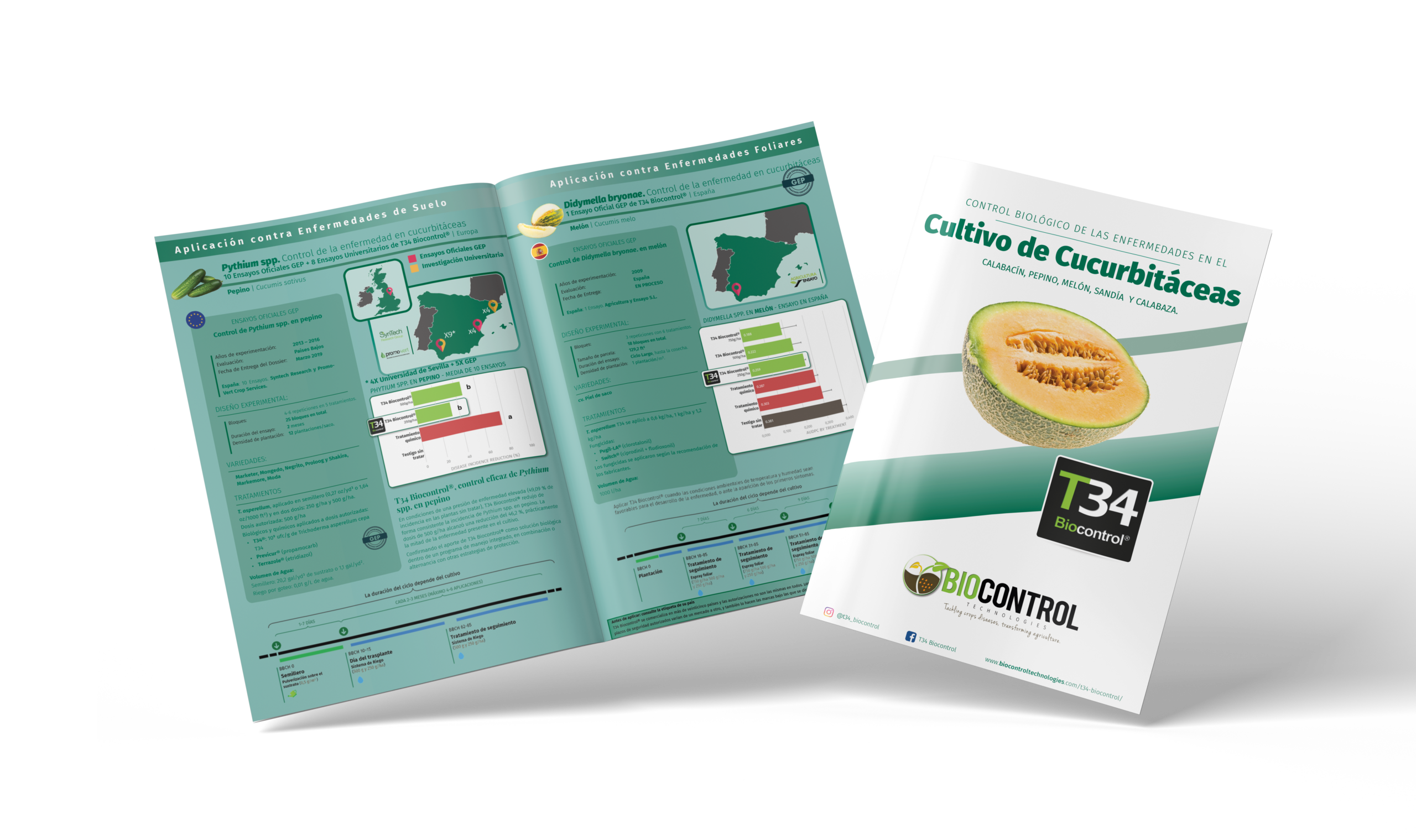
This isn’t a brochure. It’s the full set of trials, including experimental design, varieties, dosage rates, treatments compared, and statistical significance.
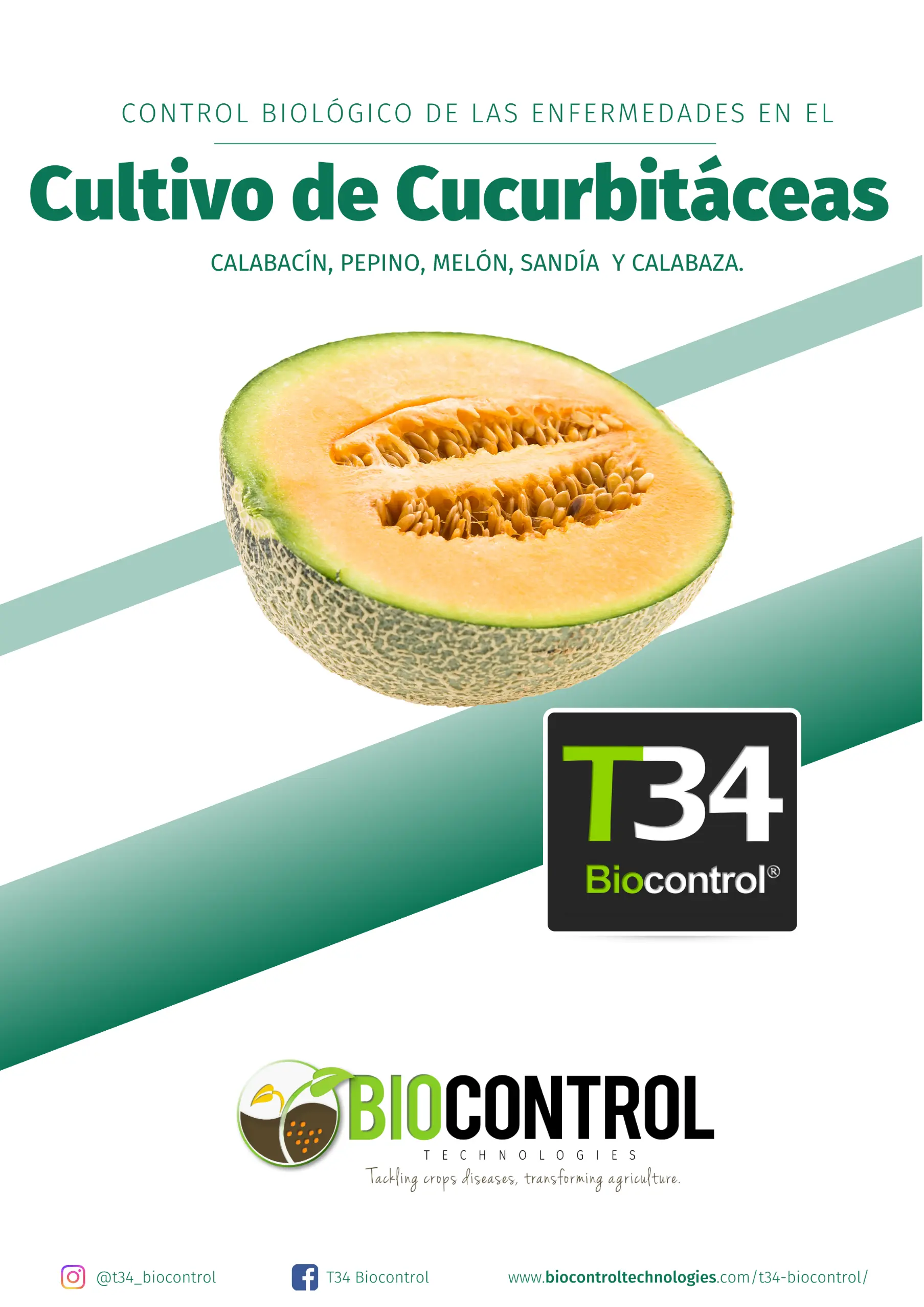
Cucurbits · Spanish edition
PDF · Includes application protocol
Table of Contents
- 01 Fusarium spp. in melon 6 official GEP trials · Southern Europe · SynTech Research and SAGEA · 2023
- 02 Pythium spp. in cucumber 10 official GEP trials + 8 university trials · Europe · 2013–2016
- 03 Didymella spp. in cucumber: leaf, stem, and fruit 8 official GEP trials · France · Promo-Vert, Eurofins, and SAGEA · 2019–2020
- 04 Didymella bryoniae in melon 1 official GEP trial · Spain · Agricultura y Ensayo S.L.
-
05
Yield improvement in organic zucchini
Commercial trial · El Ejido, Almería · Establishment and weekly harvest - 06 Application protocol by crop Attached document
Important: the existence of trials or publications on a given crop or pathogen does not constitute a use authorization. Authorized crops and pathogens, as well as the maximum number of applications, vary by country. Always check the current registration status and the approved label before applying.
What kind of evidence you'll find in the dossier
Trials conducted under GEP protocol, evaluated by accredited independent companies, and submitted to the competent authorities. These are not in-house tests.
Universities
Accredited companies
-
Six outdoor GEP trials were conducted in melon, with a prior nursery application and three dosage rates evaluated against a reference chemical treatment and an untreated control. The dossier presents the reduction in incidence for each dosage rate, along with the marketable yield obtained with each treatment. 6 official GEP trials · SynTech Research and SAGEA · Spain and Italy · 2023
-
The Didymella spp. trials in cucumber evaluated all three plant organs separately. The dossier includes an independent chart for leaf, stem, and fruit, showing the three dosage rates tested and the results obtained on each organ compared with the reference chemical treatment. 8 official GEP trials · France · Promo-Vert, Eurofins, and SAGEA · 2019–2020
-
Each trial reports the incidence recorded in the untreated control, allowing the percentage reductions to be interpreted in the context of actual disease pressure. Both the Pythium spp. trials in cucumber and the Didymella spp. fruit trials were conducted under high disease pressure, not under low-incidence conditions. Untreated-control incidence reported for each trial
-
Each chart includes the statistical grouping letters for every treatment, allowing you to identify which treatments show statistically significant differences and to compare each dosage rate with the reference chemical treatment. Statistical grouping letters included in every chart
-
Each trial includes a full experimental design sheet: variety, location, number of blocks and replicates, plot size, trial duration, planting density, and application volume. This information lets you assess how comparable the trial conditions are to those on your own operation. Full experimental design sheet in every section of the dossier
-
The dossier closes with a study conducted in organic greenhouse zucchini in El Ejido (Almería), comparing two greenhouses on the same operation. It documents plant losses during establishment, replacement costs, and the weekly harvest progression in both greenhouses through the end of the cycle. Commercial conditions · Organic zucchini · El Ejido, Almería
All the answers are in the dossier. With the trial, evaluating center, and conditions for each one, so you can compare them against your own growing conditions.
A dossier for every crop
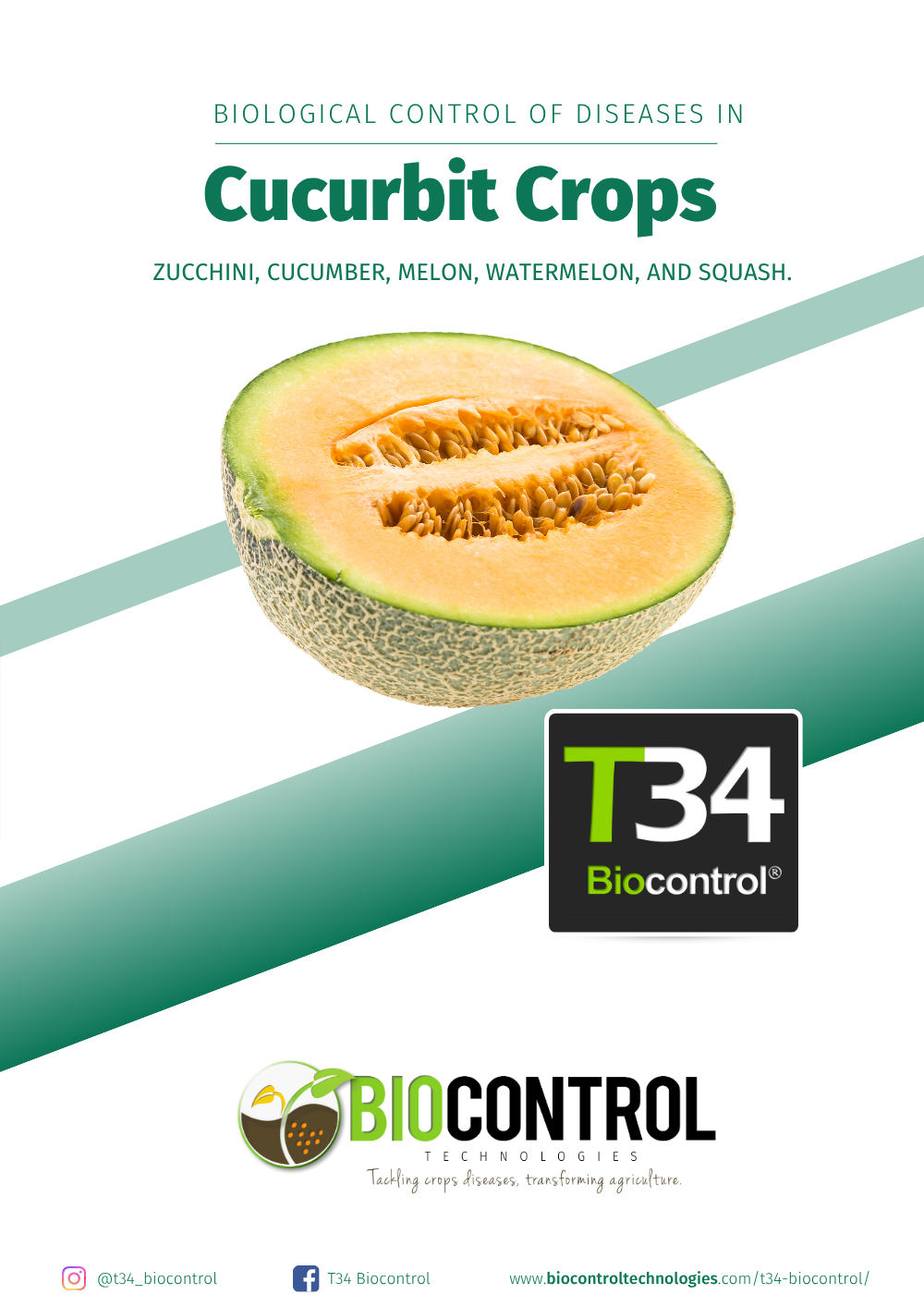
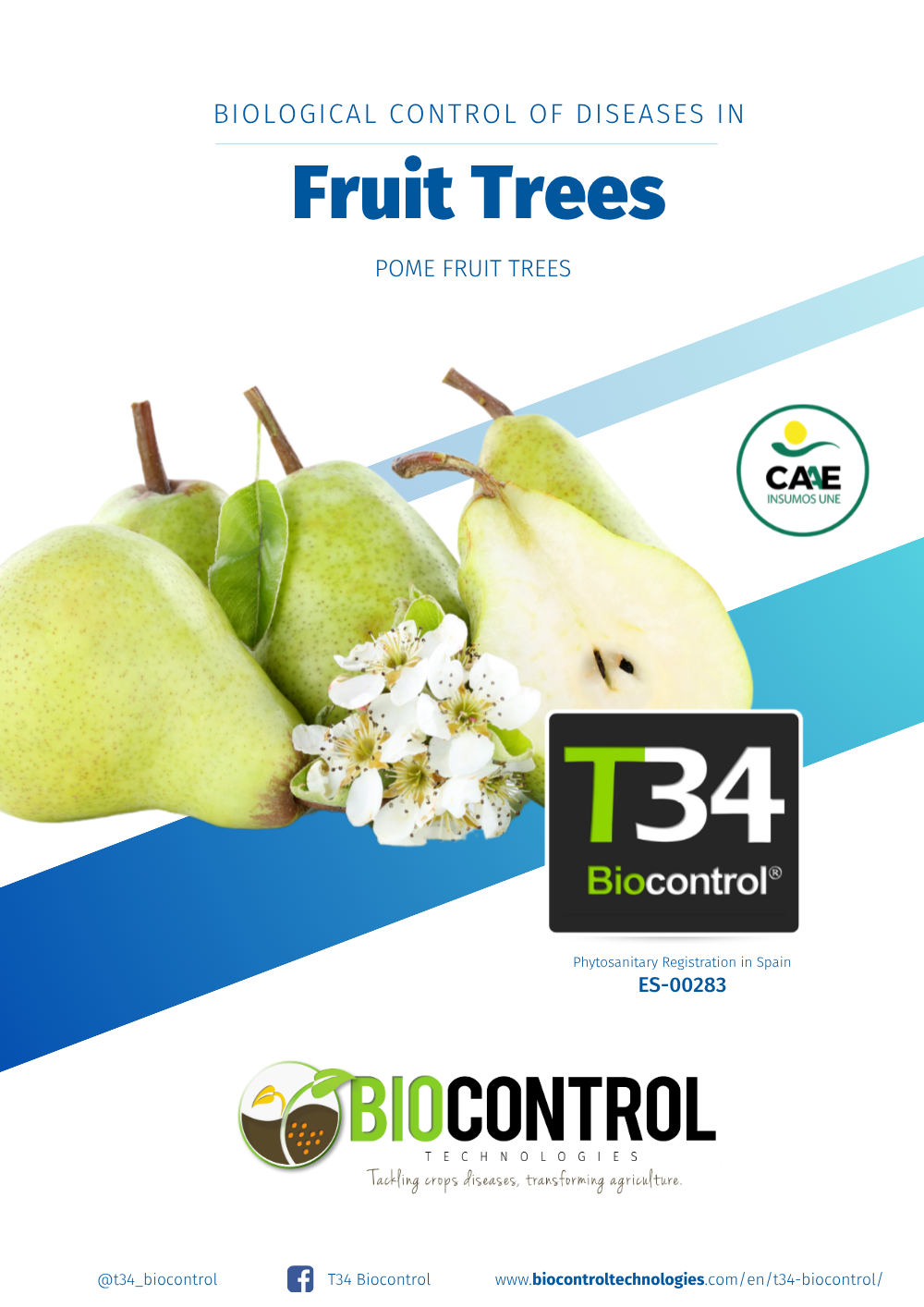
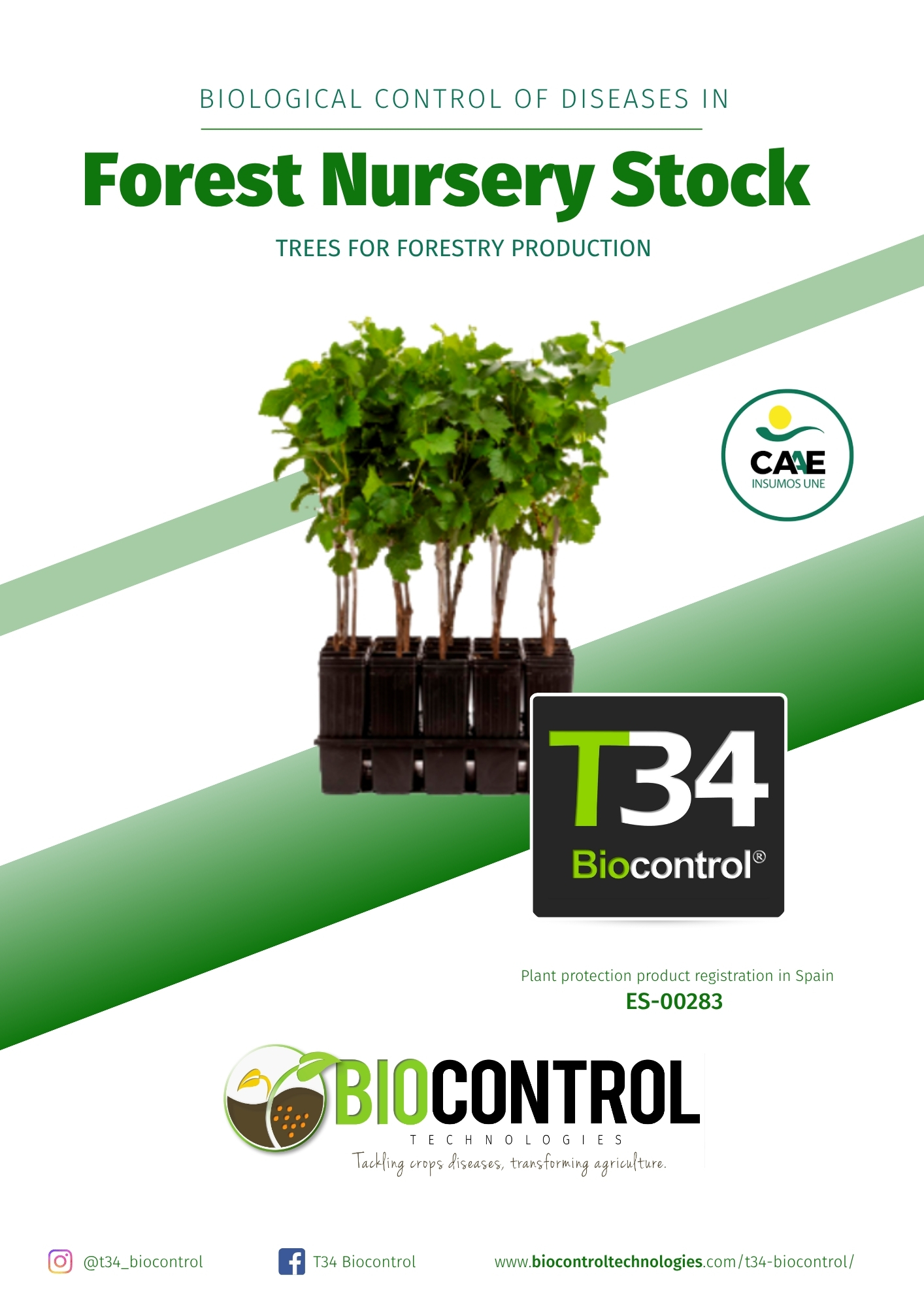
Each crop has its own technical dossier, with the official trials, scientific publications, and application protocol that apply to it. This is the complete series.
Quick access
-
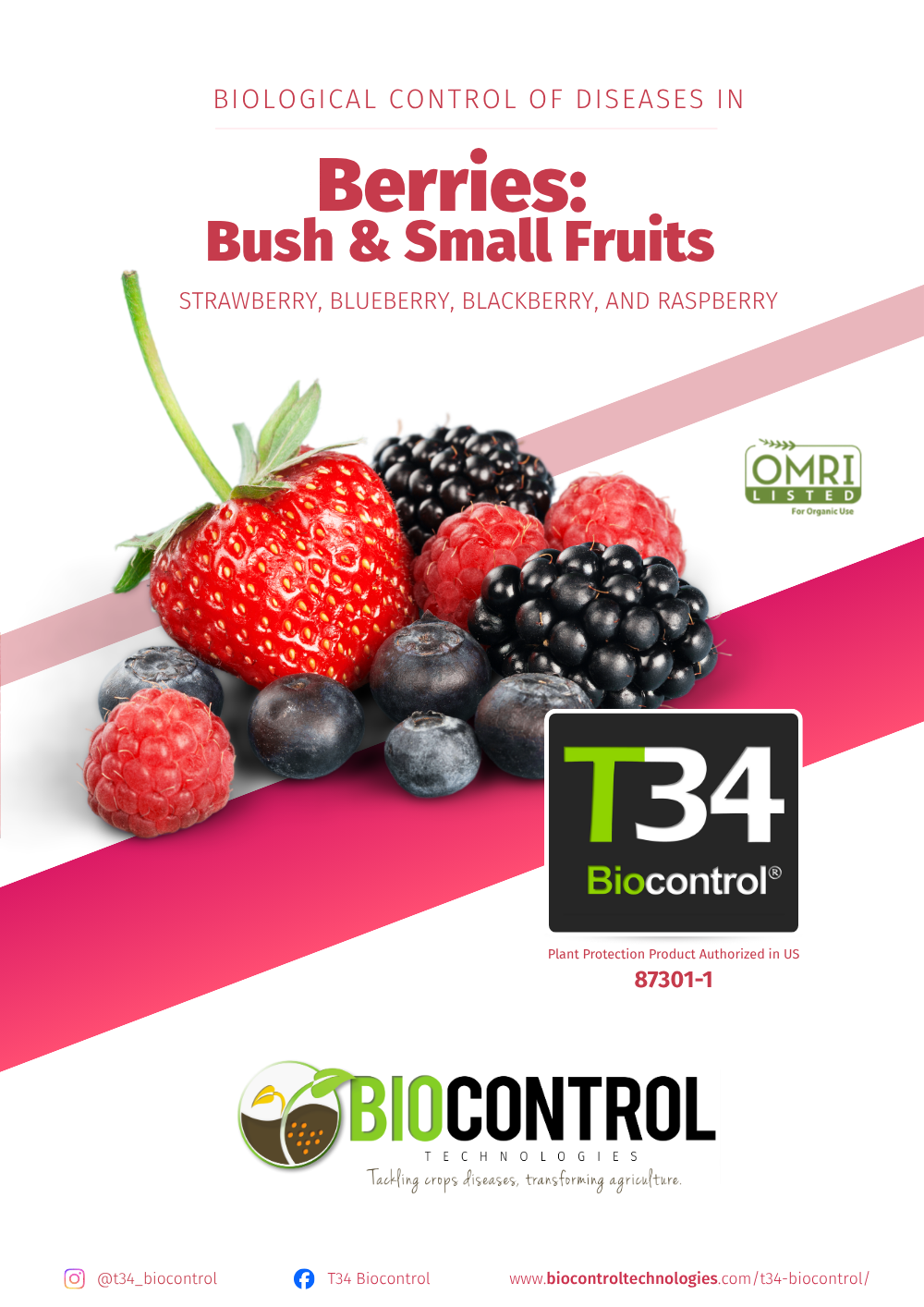
Biological control in
strawberry and berry crops
with
T34 Biocontrol®
Strawberry · Large-fruited strawberry · Blueberry · Blackberry · Raspberry
View the dossier
→
-
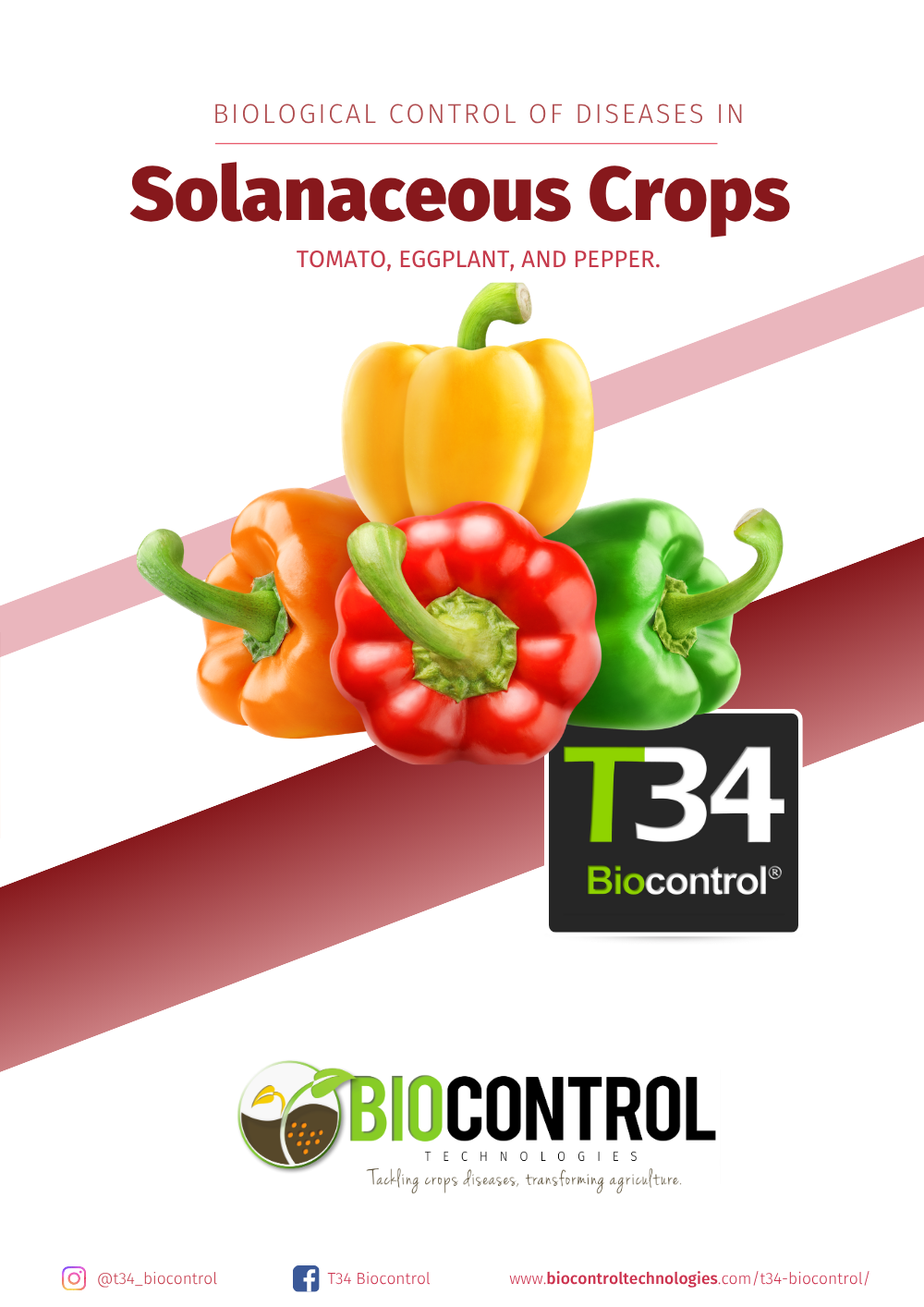
Biological control in
solanaceous crops
with
T34 Biocontrol®
Tomato · Eggplant · Pepper
View the dossier
→
-
Biological control in
cucurbit crops
with
T34 Biocontrol®
Melon · Watermelon · Cucumber · Zucchini · Squash
View the dossier
→
-
Biological control in
ornamental plants
with
T34 Biocontrol®
Carnation · Pansy · Primrose · Hydrangea · Lavender
View the dossier
→
-
Biological control in
fruit trees
with
T34 Biocontrol®
View the dossier
→
-
Biological control in
forest nursery stock
with
T34 Biocontrol®
View the dossier
→
The data is here. The dossier explains it.
Experimental design, dosage, varieties, and statistical significance for each of the 25 official GEP trials, always benchmarked against the reference chemical. Application protocol by crop included.
Biocontrol Technologies, S.L. · NIF B63545446
Av. Madrid, 217 — 08014 Barcelona