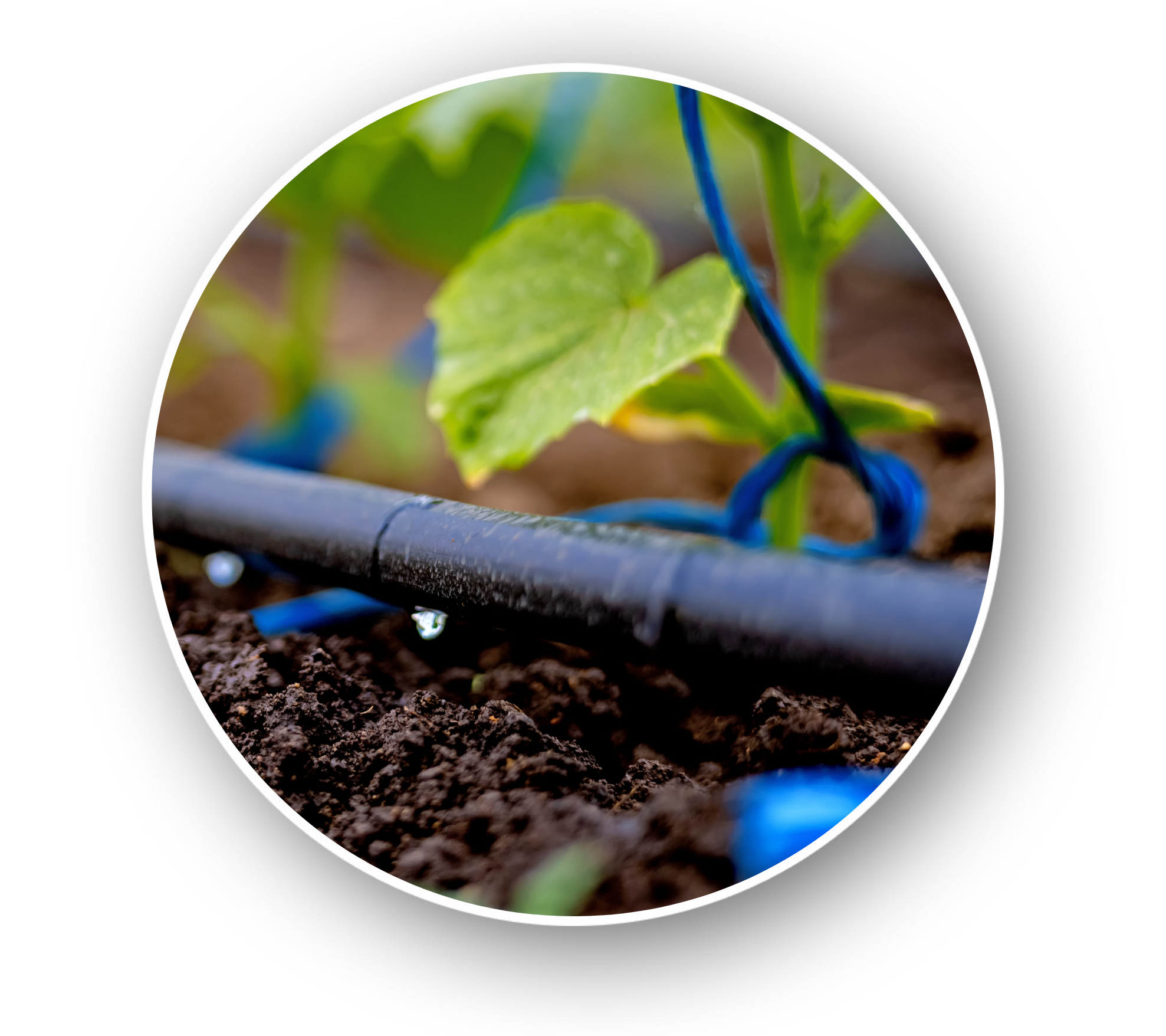
Substrate
- Dosage
- 10 g/m³
- Timing
- During preparation of the growing substrate.
- Method
- Pre-dilute the product in water and mix thoroughly with the substrate.

T34 Biocontrol® · Application Methods
This page summarizes the authorized application methods, reference dosages, and compatibility conditions, so growers and technicians can plan treatment before entering the field.
Application Versatility
The versatility of T34 Biocontrol® is not just a matter of formulation, but also of where the microorganism can establish itself and act. Trichoderma asperellum strain T34 colonizes both the rhizosphere and the leaf surface, and this ability opens up three application areas that cover the entire crop cycle: the seedling tray, the soil, and the aerial part of the plant.
In the seedling tray, the product is incorporated into the substrate during preparation or sprayed onto the tray. The plant develops in an already-colonized medium and reaches transplant with the rhizosphere occupied and protected.
In the soil, the application accompanies the crop from planting through the end of the cycle. Root dipping allows for a targeted treatment at the time of transplant, using very small product volumes. Irrigation then delivers T34 Biocontrol® through the system the operation already uses, in both soil-based and hydroponic/soilless systems, maintaining adequate population levels whenever the crop requires it.
In foliar application, the product is diluted and sprayed onto the aerial part of the crop. Here the criterion is not a fixed schedule but timing relative to disease pressure: early application — at the onset of favorable environmental conditions or during the early stages of pathogen development — is what allows the leaf surface to be occupied before pathogen pressure increases. Authorization depends on the national registration in effect in each country.
None of the three application areas requires specialized equipment or an added task on the work calendar: all of them rely on operations the farm already performs regularly, from filling trays to irrigation and routine foliar treatments. This is the practical reason a single product fits contexts as different as a professional nursery, a hydroponic greenhouse, or an open-field planting.

| Use | Dosage | Application Timing | Application Method |
|---|---|---|---|
| Substrate |
| During preparation of the growing substrate. | Pre-dilute the product in water and mix thoroughly with the substrate. |

| Spraying on seedling trays |
| Before sowing or rooting, or immediately afterward. | Dilute in the required amount of water and spray onto the tray. |
| Root dip |
| Before planting. | Prepare the solution at 1 g of product per liter of water and dip the roots. |
| Prepare the solution at 0.01 g of product per liter of water and keep the roots submerged overnight. | ||
| Irrigation |
| After transplanting. Repeat the treatment after 2–3 months. | Pre-dilute the product in a container with water and pour the dilution into the irrigation tank. |
| Foliar Application |
| When environmental temperature and humidity conditions favor disease development, or at the first signs of disease. | Pre-dilute the product in water and spray onto the aerial part of the plant, ensuring uniform coverage of the leaf surface. |
≈ 500 g/1.000 m²
Brief dip, a few seconds
Extended dip, overnight
250 g/ha in lettuce for control of Sclerotinia spp.
In hydroponic crops: 0.01 g/L of substrate
The authorized crops, target diseases, dosages, and conditions of use are defined by the national registration in effect in each country. The groupings shown here represent the cumulative scope of all registrations worldwide and are provided for informational purposes only; they do not replace the approved national label. Always consult the label authorized in your territory before using the product. Registration Status by Country
Leave us your details and our technical team at Biocontrol Technologies will get in touch with you.
Plantillas > Pie de página).
── CONDICIÓN DE VISUALIZACIÓN ──
Hoy la plantilla solo se muestra en las dos landings de dosier.
Debe estar en TODO EL SITIO: en Elementor > Plantillas > Pie de
página > Condiciones de visualización, poner «Todo el sitio».
Ahora mismo falta en las tres páginas legales, en Almería y en
la landing inglesa /en/t34-biocontrol-2026/, que sigue con el
pie del tema (Vela) y por tanto sin ningún enlace legal.
── QUÉ SE ARREGLA EN LA v4 ──
La v3 solo llamaba a cmplz_set_banner_status(‘show’). En páginas
donde Complianz no había inicializado el banner (Do Not Track /
Global Privacy Control activados en el navegador) eso oscurecía
la pantalla sin abrir nada. Ver el comentario del script.
── QUÉ SE ARREGLÓ EN LA v3 ──
El enlace de preferencias no funcionaba. La v2 daba por hecho
que Complianz abre el panel con cualquier elemento que lleve la
clase cmplz-show-banner. Es falso: esa clase no aparece ni una
vez en complianz.min.js, así que el no tenía nada
escuchando detrás.
Complianz solo registra un listener, y exige
cmplz_add_event(“click”, “button.cmplz-manage-consent”, …)
Copiar esa clase aquí no sirve: el propio plugin gestiona la
visibilidad de ese botón con cmplz-hidden / cmplz-show, y nos lo
ocultaría. Se usa por tanto la API pública, que sí está expuesta
en window: cmplz_set_banner_status(‘show’), que es exactamente
lo que ejecuta el botón nativo. show_cookie_banner() queda como
alternativa por si cambia la primera.
El listener va delegado sobre document a propósito: sigue
funcionando aunque Elementor cargue o clone el pie después, y no
depende del orden de carga de los scripts.
── LO DEMÁS SE MANTIENE DE LA v2 ──
Los cuatro elementos son , en IBM Plex Mono, mayúsculas, mismo
tamaño y espaciado: misma caja y mismo alineado vertical, sin
pelearse con los estilos de
── PARA QUE EL ANCHO COMPLETO FUNCIONE ──
No basta con este HTML. En la sección de Elementor que lo
contiene: Diseño > Ancho del contenido = «Ancho completo», y
márgenes y relleno laterales de la sección a 0.
── WPML ──
Al traducir la plantilla, traducir también las URL:
/en/privacy-policy/, /de/datenschutz/, etc.
Pendiente aparte: las cadenas del banner de Complianz no están
traducidas del todo en /en/ (cuerpo en español, botones en
inglés). Eso se corrige en WPML > Traducción de cadenas, no aquí.
============================================================ –>
Biocontrol Technologies, S.L. · NIF B63545446
Av. Madrid, 217 — 08014 Barcelona
/* Abre el panel de consentimiento de Complianz desde el pie. Por qué no basta con cmplz_set_banner_status(‘show’): esa función solo cambia clases sobre la variable interna cmplz_banner, que Complianz rellena dentro de show_cookie_banner() al cargar la página. Si esa función no llegó a ejecutarse — pasa, por ejemplo, con Do Not Track o Global Privacy Control activados, donde Complianz decide no mostrar banner — cmplz_banner queda sin definir. El contenedor sí existe siempre, así que se aplicaba la capa gris del soft cookiewall y el panel no aparecía: pantalla oscurecida y nada más. Secuencia correcta: 1. show_cookie_banner() inicializa cmplz_banner y quita cmplz-hidden 2. cmplz_set_banner_status(‘show’) lo marca como visible (en este orden: show_cookie_banner termina llamando a set_banner_status sin argumento, que lee la cookie y volvería a ocultarlo si ya se había aceptado) 3. red de seguridad sobre el DOM, por si algo de lo anterior falla 4. si no hay banner en la página, se limpia la capa gris para no dejar la pantalla bloqueada, y se va a la política de cookies Delegado sobre document: sobrevive a recargas parciales de Elementor y no depende del orden de carga de los scripts. */ (function () { if (window.bctCookiePrefsBound) return; // evita doble binding window.bctCookiePrefsBound = true; document.addEventListener(‘click’, function (e) { var el = e.target.closest ? e.target.closest(‘.bct-cookie-prefs’) : null; if (!el) return; e.preventDefault(); try { if (typeof window.show_cookie_banner === ‘function’) { window.show_cookie_banner(); } } catch (err) {} try { if (typeof window.cmplz_set_banner_status === ‘function’) { window.cmplz_set_banner_status(‘show’); } } catch (err) {} var banner = document.querySelector(‘.cmplz-cookiebanner’); if (banner) { banner.classList.remove(‘cmplz-hidden’, ‘cmplz-dismissed’); banner.classList.add(‘cmplz-show’); var cerrar = banner.querySelector(‘.cmplz-close’); if (cerrar && cerrar.focus) { try { cerrar.focus(); } catch (err) {} } return; } /* No hay banner en esta página: deshacer la capa gris del soft cookiewall y no dejar al usuario encerrado. */ var cont = document.getElementById(‘cmplz-cookiebanner-container’); if (cont) { cont.classList.remove(‘cmplz-show’); cont.classList.add(‘cmplz-dismissed’); } document.body.classList.remove(‘cmplz-banner-active’); window.location.href = ‘/politica-de-cookies/’; }, false); })();