Efficacy of T34 Biocontrol® in strawberry and other berry crops
Results from official GEP trials and other scientific studies on disease control in berry crops. See how it performs and what it means for yield and fruit quality.
- ✓ Official GEP trials conducted in Spain, Italy and Central Europe.
- ✓ Results against Phytophthora spp., Botrytis cinerea and Macrophomina phaseolina.
- ✓ Comparisons against chemical and biological treatments, with data on efficacy, marketable yield and postharvest quality.
Being sustainable isn’t enough. It has to be effective.
A professional grower cannot afford to lose productivity in exchange for adopting a more sustainable solution. If a product doesn’t control the disease, nothing else matters.
That’s why T34 Biocontrol® doesn’t rely on its biological origin as an argument. It demonstrates that it performs under real production conditions and holds up against what growers are already applying.
Preserving soil biological activity, reducing residue-related constraints, and moving toward safer protocols only make sense if yield is maintained.
We’re not asking you to simply trust that a biological can work. We show you the trials — their design and their results.
What you'll find inside
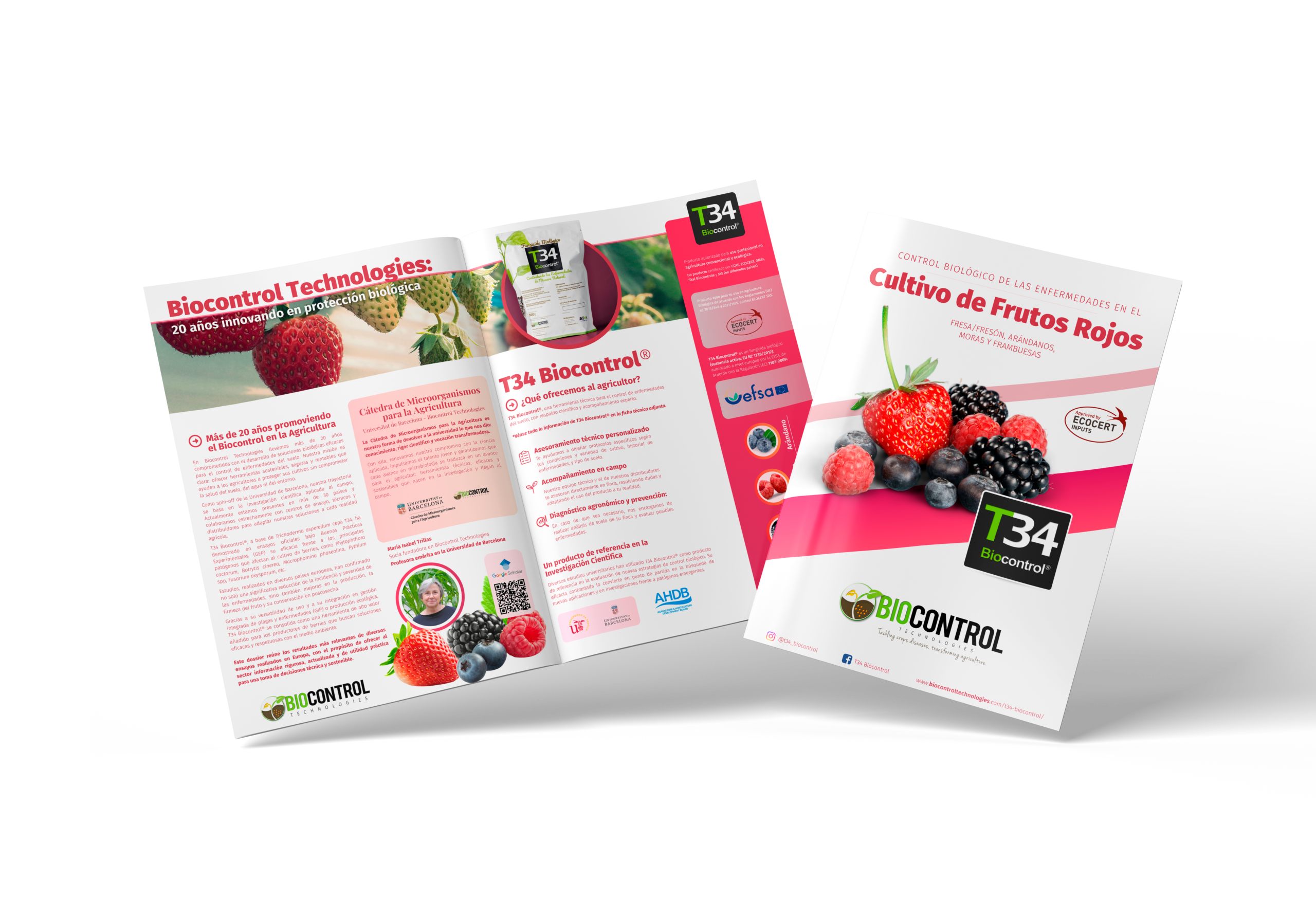
This isn’t a brochure. It’s the full set of trials, including experimental design, varieties, dosage rates, treatments compared, and statistical significance.
Table of Contents
- 01 Phytophthora spp. in strawberry Official GEP trials · Southern Europe zone · Spain and Italy · 2019–2020
- 02 Phytophthora spp. in raspberry Official GEP trials · Southern Europe zone · Spain · 2019–2020
- 03 Macrophomina phaseolina in strawberry University trial · University of Seville · Charcoal rot control
- 04 Phytophthora spp. in strawberry Official GEP trials · Central Europe zone · Germany, Poland and Romania · 2020–2022
- 05 Phytophthora cactorum in strawberry SCEPTRE research project · United Kingdom · 2012
- 06 Botrytis cinerea in strawberry University trial · University of Seville · Application to the fruit
- 07 Botrytis cinerea and Phytophthora cinnamomi in blueberry Commercial trial · Trujillo, Peru · 2019
- 08 Postharvest benefits Firmness · Soluble solids · Ascorbic acid · Independent study · Egypt
Important: trials or publications covering a crop or pathogen do not amount to an authorisation for use. Authorised crops and pathogens, together with rates, application methods and the maximum number of applications, vary from country to country. Always check the current registration and the approved label before applying.

What kind of evidence you'll find in the dossier
Official GEP trials, work by universities and research centres, independent scientific publications and trials under commercial conditions. None of it is in-house testing.
Universities
Programmes and institutions

Trial contractors
-
Fourteen GEP trials were run in strawberry against crown and root rot. Ten were carried out in Central Europe (Germany, Poland and Romania, 2020–2022) and four in Southern Europe (Spain and Italy, 2019–2020). T34 Biocontrol® was tested at three rates against a reference chemical treatment and an untreated control. It was applied first as a root dip before transplanting and then through drip irrigation. The dossier reports the reduction in incidence, plant mortality and the yield gain achieved by each treatment. 14 official GEP trials · Eurofins, Promo-vert and SAGEA · Germany, Poland, Romania, Spain and Italy · 2019–2022
-
The two GEP trials in raspberry were carried out at Cartaya and Rociana del Condado (Huelva) in 2020, in the open field and under tunnels, with the varieties Wengi and Glen Rocío. They follow the same design: three rates against the chemical standard and the untreated control. The dossier gives incidence and yield for each treatment. It also includes a combined analysis of the six Southern European trials: four in strawberry and two in raspberry. 2 official GEP trials · Promo-vert · Huelva, Spain · 2020
-
Three trials were run in Andalusia with the varieties Camarosa and Rociera. One under glass at the University of Seville (2007); two under micro-tunnels in Huelva, conducted by Agricultura y Ensayo (2009 and 2011). All three measured the proportion of affected fruit across the harvest period against two reference chemical fungicides and an untreated control. The dossier charts how disease developed at each assessment date. It also shows how the response varied with rate in each trial. 3 trials · University of Seville and Agricultura y Ensayo · Seville and Huelva · 2007–2011
-
The dossier brings together three studies:
SCEPTRE programme (United Kingdom, 2012): funded by AHDB and run by NIAB at East Malling. It tested T34 against Phytophthora cactorum in strawberry cv. Elsanta, alongside other biological and chemical fungicides. It recorded symptomatic plants and plant deaths.
University of Seville (2011): glasshouse trial against Macrophomina phaseolina, the cause of charcoal rot, with artificial inoculation of the pathogen.
Observación en laboratorio (2021): documenta cómo T34 parasita las hifas de Macrophomina. NIAB at East Malling (SCEPTRE programme) · University of Seville · Fitosanidad Perú -
Two independent studies published in Egypt examine the effect of preharvest field applications:
PPATHRI (2022): assessed, over two seasons in cv. Festival, rot caused by Botrytis cinerea and Rhizopus stolonifer during storage. It also measured firmness, soluble solids and ascorbic acid after 15 days of storage.
Ain Shams and Heliopolis universities (2023): studied fruit rots in the field and after harvest in three varieties. 2 scientific publications · PPATHRI, Ain Shams University and Heliopolis University · Egypt · 2022–2023 -
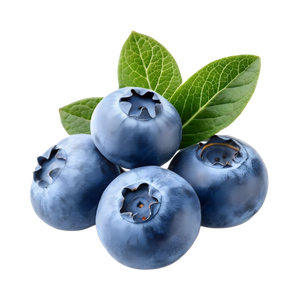
The dossier includes a trial on a commercial blueberry farm (cv. Biloxi) at Trujillo-Virú (Peru) in 2019, with five rates against an untreated control. Two problems were assessed in the same crop: root damage caused by Phytophthora cinnamomi and flower infection by Botrytis cinerea. Commercial conditions · Blueberry · Trujillo-Virú, Peru · 2019
Every answer is in the dossier. Each one with its trial, its testing centre and its conditions, so you can weigh them against the conditions on your own farm.
A dossier for every crop
Each crop has its own technical dossier, with the official trials, scientific publications, and application protocol that apply to it. This is the complete series.
Quick access
-
Biological control in
strawberry and berry crops
with
T34 Biocontrol®
Strawberry · Large-fruited strawberry · Blueberry · Blackberry · Raspberry
View the dossier
→
-
Biological control in
solanaceous crops
with
T34 Biocontrol®
Tomato · Eggplant · Pepper
View the dossier
→
-
Biological control in
cucurbit crops
with
T34 Biocontrol®
Melon · Watermelon · Cucumber · Zucchini · Squash
View the dossier
→
-
Biological control in
ornamental plants
with
T34 Biocontrol®
Carnation · Pansy · Primrose · Hydrangea · Lavender
View the dossier
→
-
Biological control in
fruit trees
with
T34 Biocontrol®
View the dossier
→
-
Biological control in
forest nursery stock
with
T34 Biocontrol®
View the dossier
→
The data is here. The dossier explains it.
Experimental design, dosage, varieties, and statistical significance for each of the 25 official GEP trials, always benchmarked against the reference chemical. Application protocol by crop included.
Biocontrol Technologies, S.L. · NIF B63545446
Av. Madrid, 217 — 08014 Barcelona