A synthetic fungicide can be described in a single line: it inhibits mitochondrial respiration; it blocks sterol biosynthesis. One molecule, one altered function. With a product formulated from a living microorganism, that kind of description stops being enough.
The reason is that a microorganism does not act through a single pathway. It deploys different processes depending on what it is up against, at what point in the cycle, and under what soil and crop conditions. Understanding the mechanisms of action of biological control determines, in practice, when to apply a product, what to expect from it, and how to integrate the treatment with the rest of the crop management program.
This article works through the six blocks involved: parasitism, antibiosis, and competition for space, nutrients, and iron, all directed at the pathogen; and activation of the plant’s immune system, growth promotion, and effects on germination, directed at the plant. For each one, we explain what it consists of, what evidence supports it, and what consequences it has for field management.
One clarification is worth making at the outset. The mechanism of action is the causal process by which an active substance reduces a disease, and it should not be confused with the specific target it acts on within that process. Readers who want that distinction developed further, along with a comparison between the logic of chemical and biological plant protection products, will find it in the first module of this series. Here we take it as a starting point and move directly into how these mechanisms work.
1. Two Basic Directions of Action: Toward the Pathogen and Toward the Plant
This is the key that organizes everything that follows. A biological control agent does not work in a single direction. It acts simultaneously on two fronts, and the processes it deploys on each one are of a different nature.
Toward the pathogen, the antagonist interferes directly with its development: it parasitizes it, produces substances that hinder its metabolism, or competes with it for the resources it needs to establish itself.
Toward the plant, it does not interfere with anyone: it modifies the state of the host. It activates the plant’s defenses, improves its root development and nutrition, and supports the crop through the early stages of the cycle.
This dual orientation gives rise to the blocks described below. One important nuance is worth flagging from the start: the first four are recognized in the literature as biological control mechanisms in the strict sense — parasitism, antibiosis, competition, and activation of the plant’s immune system. Growth promotion and effects on germination are better described as additional functional effects on the plant — they contribute to crop health but are not equivalent, in mechanistic status, to the first four. We explain why further on, since that distinction is exactly what separates rigorous technical discourse from purely commercial talk.
There is also an important difference between the two types of plant protection products. An active substance based on a chemical compound can have a negative effect on other non-target micro- and macro-organisms present in the soil, on leaves, and in the air. Plant protection products formulated with living microorganisms tend to be far more specific and generally do not harm non-target organisms — they can even benefit them. All of this must be demonstrated during the plant protection product registration process, since it is not only the active substance itself (chemical or microorganism) that gets evaluated, but also the components of its formulation.
2. Mechanisms Directed at the Pathogen
Parasitism: The Antagonist Feeds on the Pathogen
Parasitism is the direct interaction between two organisms in which one obtains nutrients from the other. When the parasitized organism is itself a parasite (a plant pathogen), this is called mycoparasitism (when a fungus is parasitized) or, depending on the context, hyperparasitism.
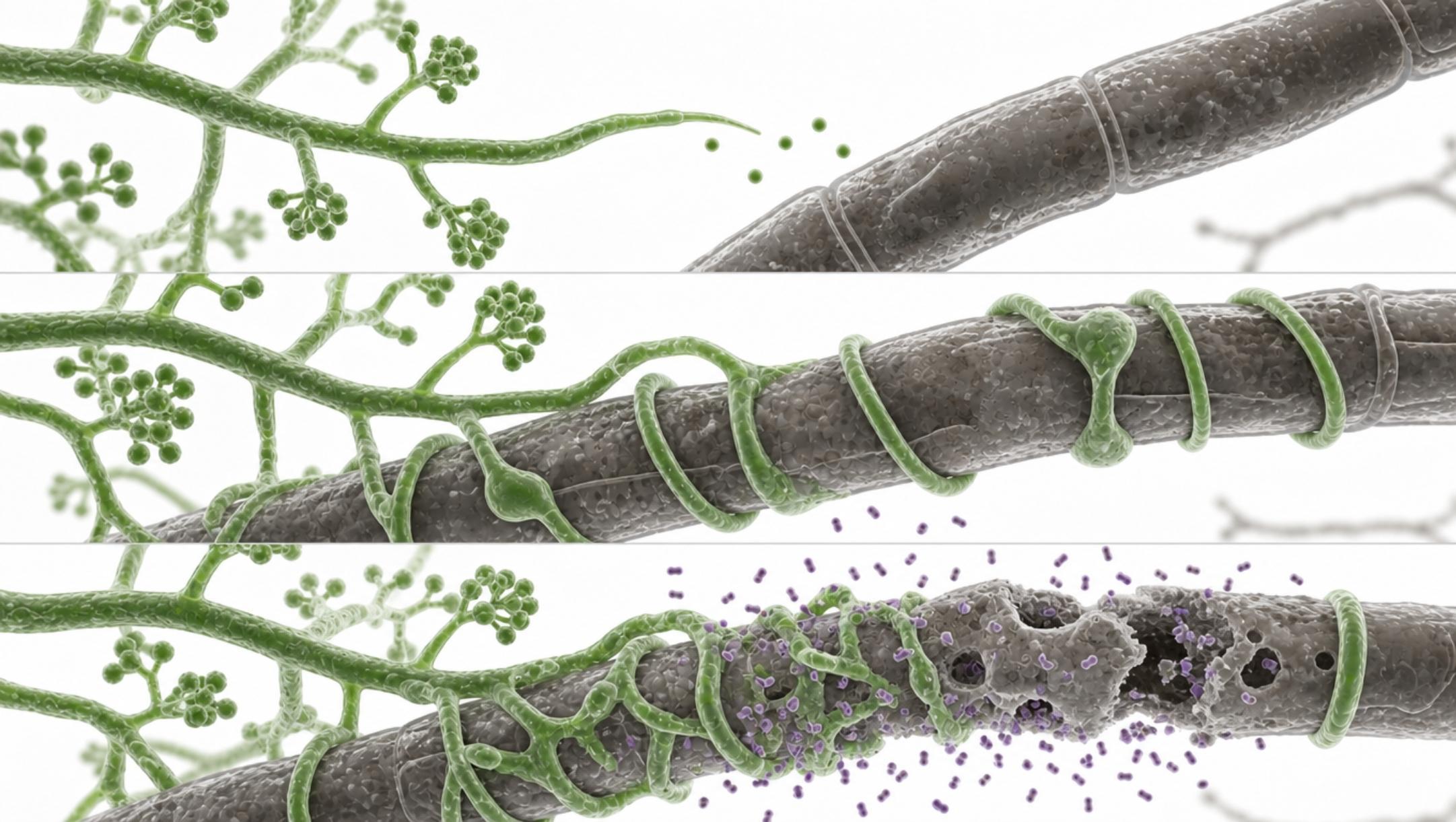
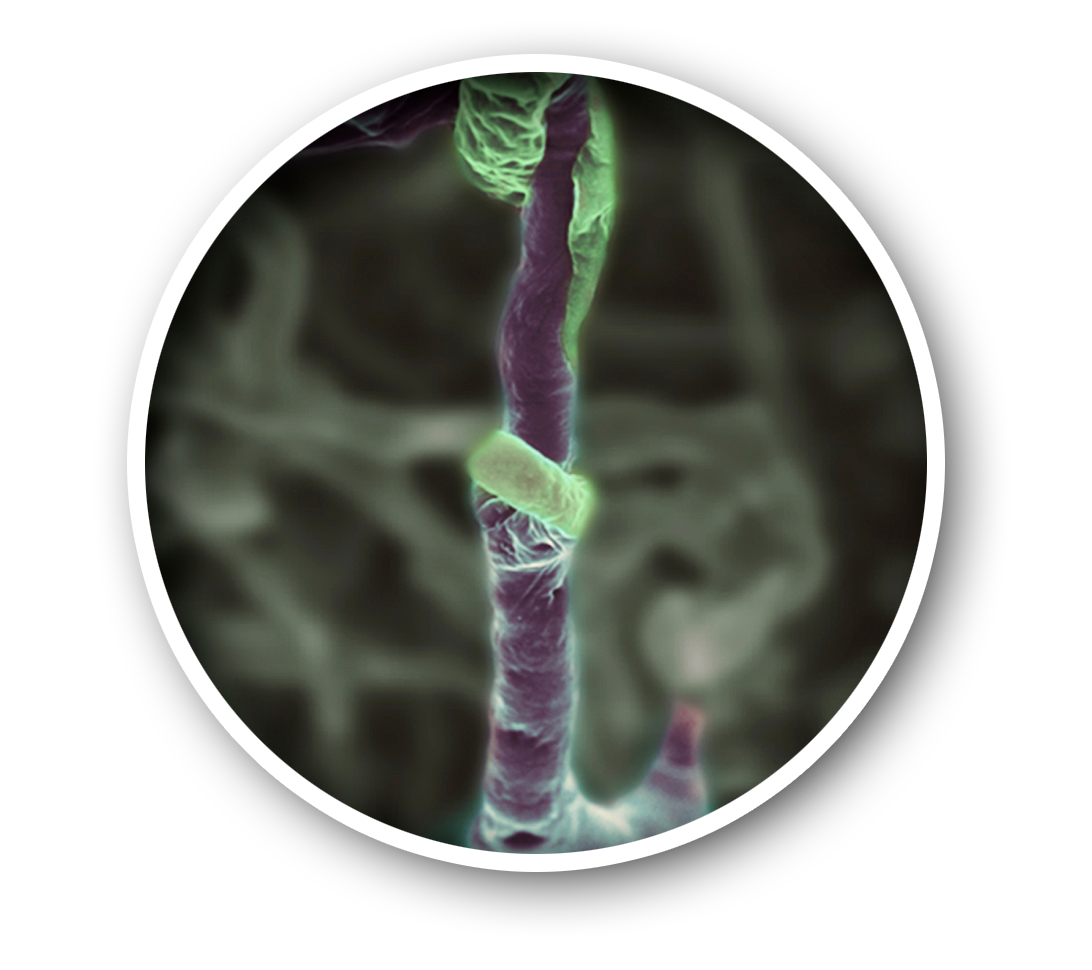
In antagonistic fungi of the genus Trichoderma, the process is well documented in the literature and follows a set sequence. The beneficial fungus chemically recognizes the presence of the pathogen, approaches and attaches to its hyphae/conidia and/or bacterial cells, coils around them, and then deploys a battery of lytic enzymes — chitinases, β-1,3-glucanases, and proteases — that degrade the cell wall. Once the cell’s integrity has been compromised, the antagonist penetrates it and uses its contents as a source of nutrients.
One detail that matters for interpreting results in practice: these enzymes are not produced constitutively. Their synthesis is triggered after the host is recognized, through signaling cascades. In other words, the antagonist does not secrete enzymes continuously just in case — it deploys them once it detects a target. That regulated nature explains why enzyme production measured in the lab, in isolation from the interaction, is a poor predictor of real-world efficacy.
Mycoparasitism has a reach that is especially relevant to crop management: it also extends, for example, to the resistance structures of pathogenic fungi. Parasitism by Trichoderma spp. of the sclerotia of several soilborne pathogens is very well documented, including Sclerotium rolfsii, Sclerotinia sclerotiorum, Sclerotinia minor, Rhizoctonia solani, and Botrytis cinerea. Sclerotia are the structures that allow the pathogen to survive adverse environmental conditions; reducing this inoculum reserve has consequences for the following cycle, not just the current one.
In the field: this is the mechanism behind applications aimed at reducing soil inoculum between crop cycles, not only at protecting the plant during cultivation.
Antibiosis: Metabolites That Interfere with Pathogen Development
Antibiosis consists of inhibiting the pathogen through secondary metabolites, volatile compounds, enzymes, or other antimicrobial substances produced by the antagonist.
This is, by far, the most visible mechanism in the lab, and probably for that reason the most overrated. The genus Trichoderma produces more than a hundred documented secondary metabolites — pyranones, viridins, peptaibols, azaphilones, diketopiperazines, among many other groups — and most of them are species- or even strain-specific.
This is where a nuance developed in detail by the review by Köhl, Kolnaar, and Ravensberg (2019) comes in. Antimicrobial compounds are produced in situ in very small quantities, localized in micro-niches and over brief periods, and degrade quickly in the environment. Their role under natural conditions is not always to kill; at sub-inhibitory concentrations, they take part in signaling, nutrient mobilization, or biofilm formation. In other words, they are called antibiotics because of their effect on other microorganisms at high concentrations on a plate, when their role in the soil or on the leaf may be quite different.
There is also a safety implication that the industry does not always highlight. Some metabolites produced by certain species can be toxic to the plant, the consumer, or the environment. That is why the toxicological and ecotoxicological evaluation required to register a biological plant protection product provides more assurance than looking at each substance in isolation — and why using unregistered microbial preparations carries a real risk.
In the field: antibiosis rarely acts alone and should not be read as “a natural antibiotic.” It is one piece within a broader sequence.
Competition for Space and Soil Nutrients
Competition brings together three fronts that operate jointly, even though the literature treats them separately.
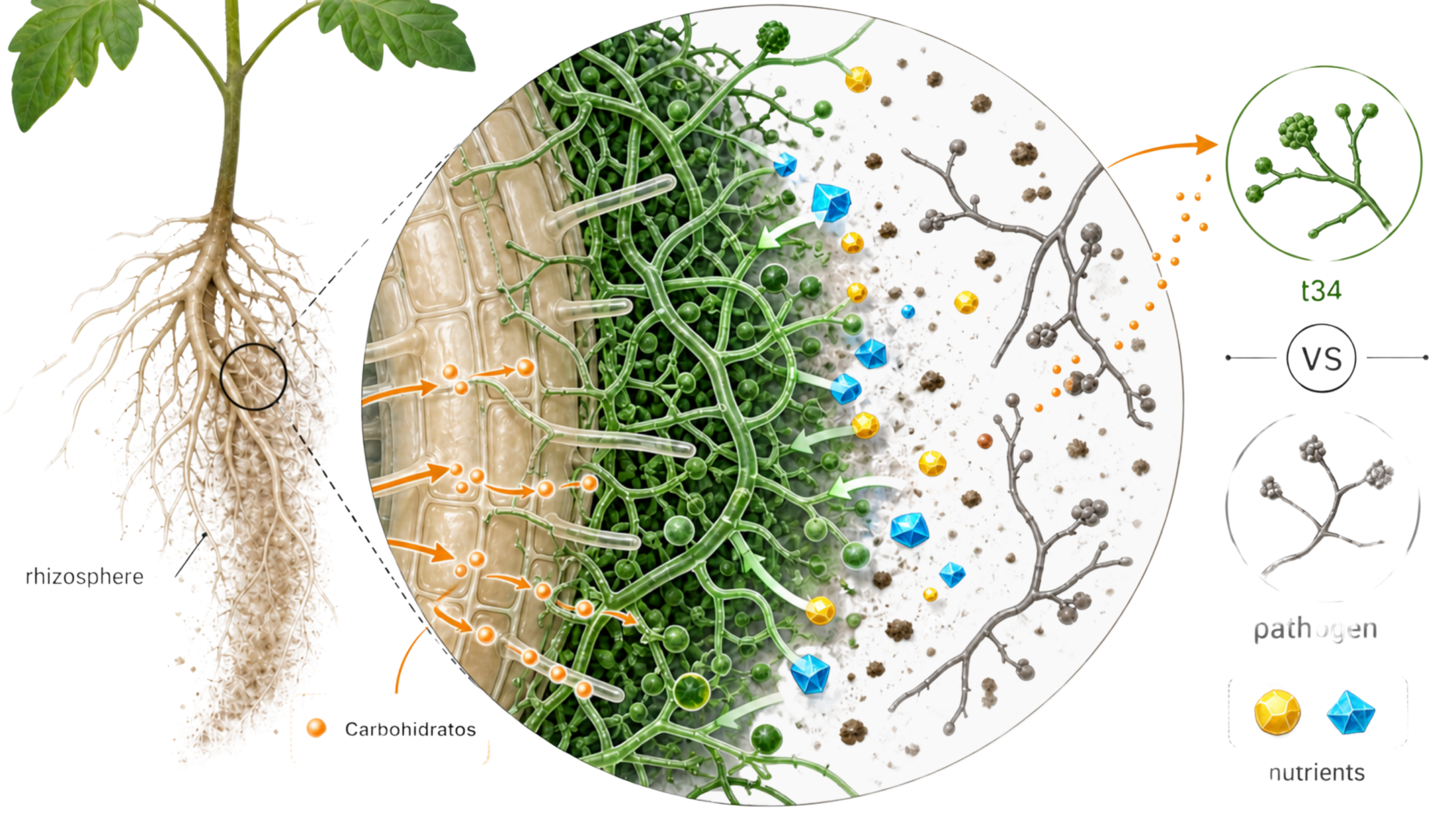
Competition for space. The rhizosphere is not a neutral environment. Roots release photosynthates, low- and high-molecular-weight exudates, CO₂, and protons, which actively select the microbial populations that colonize it. Most soilborne pathogens infect through the root tip, and that is also the niche occupied by Trichoderma species. When the antagonist establishes itself first and colonizes the root/leaf epidermis, it creates an occupation barrier: the pathogen finds the niche already taken.
From this comes the most consistent agronomic rule in all of biological control: timing wins. An antagonist applied to a rhizosphere already colonized by the pathogen starts at a competitive disadvantage.
Competition for nutrients. A good antagonist consumes, from the medium, the resources the pathogen needs, limiting their availability and, as a result, altering the pathogen’s populations. The goal of biological control is not to eliminate the pathogen but to keep its populations low enough that they do not affect the crop. The composition of the nutrient environment shapes the outcome; for example, studies have looked at how the ammonium/nitrate ratio of the nutrient solution affects the control of tomato Fusarium wilt with Trichoderma asperellum T34 (Borrero et al., 2012).
Competition for iron. This deserves its own mention. Iron is a limiting factor for microbial growth because of the low solubility of the Fe³⁺ ion. Many microorganisms produce siderophores, low-molecular-weight molecules with an extremely high affinity for ferric iron. An antagonist that produces more effective siderophores than the pathogen deprives it of an essential resource.
This mechanism is well characterized in Trichoderma asperellum strain T34: the work by Segarra et al. (2010), published in Microbial Ecology, documents control of tomato vascular Fusarium wilt in soilless culture through competition for iron. In a complementary sense, iron deprivation limits not only pathogenicity but also the growth of Fusarium spp., which makes the availability of this element a management variable, not just a background factor.
In the field: this explains why the nutritional status of the soil or substrate shapes the efficacy observed, and why two identical applications in different plots can produce different results.
3. Mechanisms and Effects Directed at the Plant
Induced Systemic Resistance (ISR): Activating the Plant's Own Defenses
With ISR, the subject of the action changes. Here the microorganism does not attack anyone: it is the plant that defends itself.
Plants have both constitutive defense mechanisms — cuticles, physical barriers — and inducible ones, which are activated when specific receptors recognize certain signals. Beneficial microorganisms release molecules recognized by those receptors, and their detection triggers a signaling cascade that raises the plant’s overall defensive capacity against a broad range of pathogens.
There is a particularly interesting variant from an agronomic point of view: priming. Rather than keeping its defenses switched on permanently — which carries a metabolic cost that competes with growth and yield — the plant is left primed to respond faster and more intensely once the pathogen attacks. It is the difference between keeping a team mobilized at all times and keeping it trained and ready.
In biochemical terms, the associated responses involve signaling pathways mediated by salicylic and jasmonic acid, the accumulation of phenolic compounds and callose, the activation of peroxidases and lipoxygenases, and the expression of pathogenesis-related proteins. One thing that tends to surprise people: the product is applied to the soil, on the root, while the defensive response shows up in the leaves and stems. Hence the term systemic.
A joint study by the Universitat de Barcelona and Utrecht University offers an unusually detailed look at the process. Segarra, Van der Ent, Trillas, and Pieterse (2009) studied root colonization by Trichoderma asperellum strain T34 in Arabidopsis plants and found that it reduced disease severity against three pathogens of very different natures: the bacterium Pseudomonas syringae pv. tomato, the biotrophic oomycete Hyaloperonospora parasitica, and the necrotrophic fungus Plectosphaerella cucumerina. A spectrum that broad is hard to explain through direct interference with each pathogen individually.
The clearest illustration of priming comes from that same study. Among the H. parasitica spores that germinated on the leaf, the proportion blocked by callose papillae formation rose from just over 20% in control plants to around 60% in plants treated with strain T34. The plant had not kept its defenses deployed in advance — it activated them earlier and more intensely once the attack came.
That study also demonstrates that the effect is genuinely systemic rather than local interference. The fungus was recovered abundantly from the rhizosphere and root tissue, but no externally sterilized stem section produced mycelial growth. T34 stayed in the root; the resistance appeared in the shoot. As for the pathway involved, the response remained intact in mutants deficient in salicylic acid synthesis but was blocked in the npr1 and myb72 mutants, which places T34-induced ISR in the same signaling pathway triggered by beneficial rhizobacteria.
The reach of ISR extends even beyond microorganisms. Pocurull et al. (2020) showed that the T34-based commercial formulation induces systemic resistance in tomato against the nematode Meloidogyne incognita, with reductions of 71% in infectivity and 54% in nematode reproduction, and that this effect is additive to that conferred by the Mi-1.2 resistance gene. Induced resistance does not overlap with genetic resistance — it adds to it, which opens a path to extending the durability of resistant varieties against the selection of virulent populations.
That same study also illustrates why caution is essential. Induction occurred in tomato but not in cucumber, where both strains tested actually increased nematode reproduction compared to non-inoculated plants. The authors note that a dose sufficient to induce resistance in one species may not be sufficient in another and point out that no Trichoderma strain is approved in the European Union for nematode control. ISR is a demonstrated mechanism, not a universal guarantee of results.
One further note of technical caution, following Köhl et al. (2019): the response depends on the plant’s genotype and the crop’s physiological state, and field crops are continuously exposed to inducing stimuli from other sources. The magnitude of the effect attributable to any one application can vary considerably depending on the context.
In the field: this justifies preventive application and explains why part of the benefit is not visible as “pathogen death,” but rather as lower disease severity under the same inoculum pressure.
Promotion of Plant Growth
Beneficial rhizosphere fungi can improve crop development through various routes: modifying root architecture, mobilizing minerals with low availability, and improving their uptake.
Root architecture is influenced both by specific substances secreted by the fungus and by the modulation of plant hormones — cytokinins, indole-3-acetic acid, ethylene. On the nutrition side, the evidence available for strain T34 is substantial and comes from several independent studies: effects on iron nutrition in white lupin (de Santiago et al., 2009), on the uptake of iron, copper, manganese, and zinc in wheat grown in calcareous soil (de Santiago et al., 2011), on iron nutrition in cucumber grown in calcareous soil (de Santiago et al., 2013), and on the uptake of phosphorus from poorly available sources (García-López et al., 2015). In tomato, an increase in iron, sulfur, copper, silicon, and boron content has been reported (Fernández et al., 2014).
A more developed, more branched root system allows better exploration of the soil, which translates into greater water and nutrient uptake, greater tolerance to water-stress episodes, and, potentially, more efficient fertilizer use.
This is where the nuance matters. Growth promotion is a widely recognized beneficial activity, formally described in the literature as growth promotion or plant growth promotion. But it primarily describes an effect on the plant — a biostimulant-type function — not necessarily a causal process for controlling a plant pathogen. There can be biological overlap: a plant with a better root system, better nutritional status, and greater vigor may show lower disease severity. That association is real and agronomically valuable, but it does not automatically turn growth promotion into a pathogen-control mechanism. It is an additional functional effect, and it should be communicated as such.
Effects on Germination
The sixth block closes out the earliest stage of the cycle. Rhizosphere colonization in the seedbed, tray, or at the time of transplanting supports the crop when its root system is most vulnerable and when exposure to soilborne pathogens is decisive for the rest of the cycle.
In this block, terminological caution matters even more. Effects on germination — both the inhibition of pathogen spore germination and improved crop establishment — are a measurable experimental outcome, not a standalone mechanistic category. The reason is that the same effect can result from different mechanisms:
Antibiosis
if a metabolite inhibits spore germination, the mechanism is
antibiosis.
Competition
if the antagonist depletes a resource needed for germination, the mechanism is
competition.
Mycoparasitism
if there is damage or degradation through contact, it corresponds to
mycoparasitism.
That is why effects on germination are better described as an efficacy endpoint or a phenotypic variable attributable to one or several of the mechanisms above. It is still relevant data for the grower — it affects crop establishment, which is what matters to them — but its place in the technical hierarchy is different.
EFFECT ON THE PATHOGEN
Direct Parasitism
T34 recognises the hyphae of pathogenic fungi, attaches to them and breaks them down using lytic enzymes. Effective against Rhizoctonia solani, Botrytis spp. y others.
Parasitism of sclerotia and other survival structures
T34 parasitises sclerotia and other survival structures, helping reduce the infectious reservoir in the soil and limiting new infection cycles.
Competition for space and nutrients
Rapid colonisation of the rhizosphere prevents pathogen establishment. Demonstrated suppression of Fusarium spp., Pythium spp. y and others.
Production of biostatic metabolites
T34 produces bioactive compounds with inhibitory effects against fungi such as Sclerotinia spp. and Rhizoctonia solani.
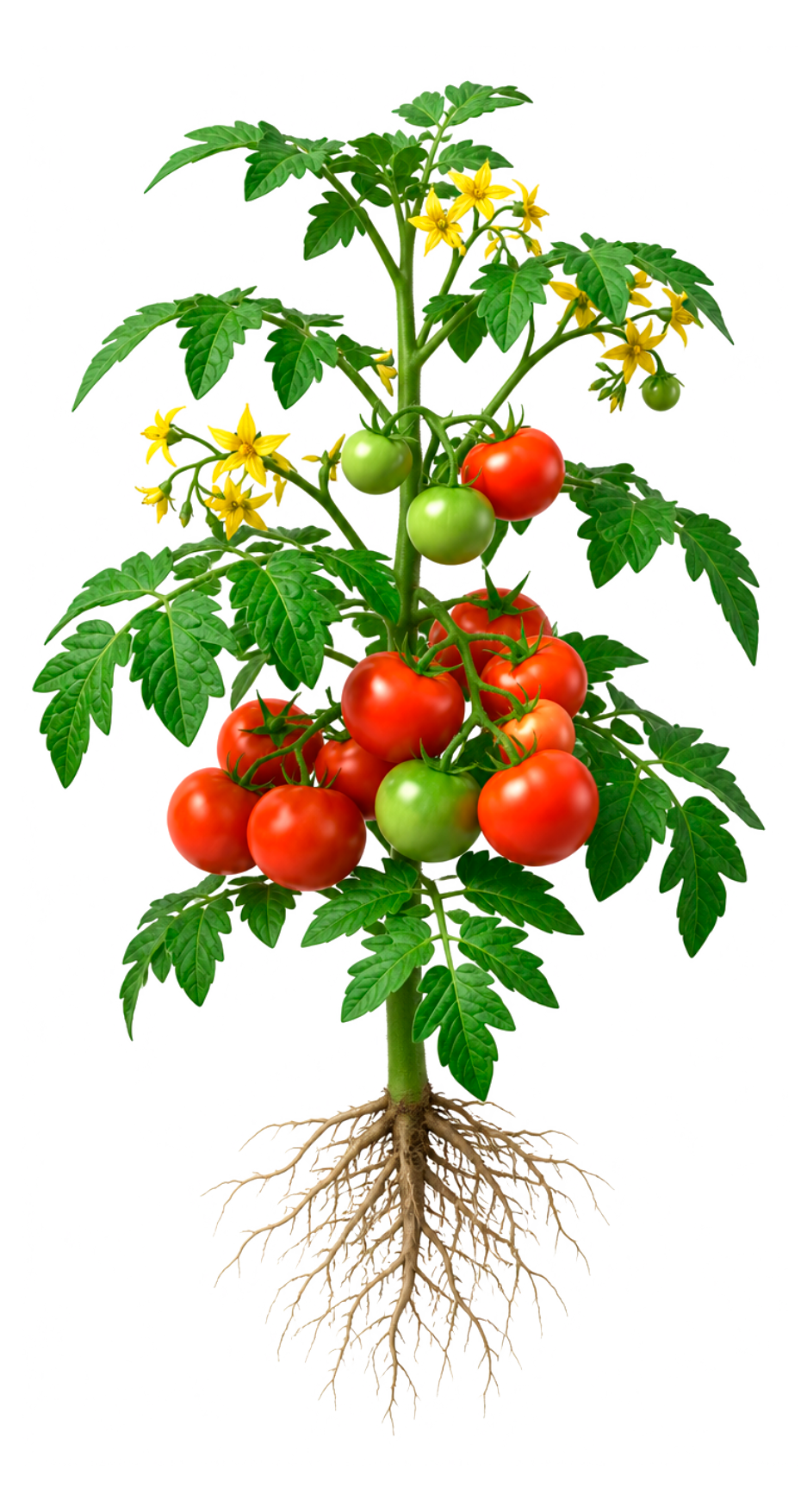
POSITIVE EFFECT ON THE PLANT
Induced systemic resistance (ISR)
Improves the plant’s natural defence mechanisms against a range of biotic stressors, enabling faster and more effective responses to pathogen attack.
Stimulation of root development
Promotes the formation of secondary roots and root hairs, improving water and nutrient uptake from the beginning of the crop cycle.
Improved nutrient assimilation
Strengthens rhizosphere activity and supports more efficient nutrient uptake and utilisation by the plant.
Support for establishment and early vigour
Supports stronger early development and more even crop establishment, particularly under stressful or variable growing conditions.
References
Köhl, J., Kolnaar, R., & Ravensberg, W. J. (2019). Mode of Action of Microbial Biological Control Agents Against Plant Diseases: Relevance Beyond Efficacy. Frontiers In Plant Science, 10, 845. https://doi.org/10.3389/fpls.2019.00845
Segarra, G., Casanova, E., Avilés, M., & Trillas, I. (2010). Trichoderma asperellum Strain T34 Controls Fusarium Wilt Disease in Tomato Plants in Soilless Culture Through Competition for Iron. Microbial Ecology, 59(1), 141-149. https://doi.org/10.1007/s00248-009-9545-5
Segarra, G., Van Der Ent, S., Trillas, I., & Pieterse, C. M. J. (2009). MYB72, a node of convergence in induced systemic resistance triggered by a fungal and a bacterial beneficial microbe. Plant Biology, 11(1), 90-96. https://doi.org/10.1111/j.1438-8677.2008.00162.x
Pocurull, M., Fullana, A. M., Ferro, M., Valero, P., Escudero, N., Saus, E., Gabaldón, T., & Sorribas, F. J. (2020). Commercial Formulates of Trichoderma Induce Systemic Plant Resistance to Meloidogyne incognita in Tomato and the Effect Is Additive to That of the Mi-1.2 Resistance Gene. Frontiers In Microbiology, 10, 3042. https://doi.org/10.3389/fmicb.2019.03042
Mohamed, B. F. F., Sallam, N. M. A., Alamri, S. A. M., Abo-Elyousr, K. A. M., Mostafa, Y. S., & Hashem, M. (2020). Approving the biocontrol method of potato wilt caused by Ralstonia solanacearum (Smith) using Enterobacter cloacae PS14 and Trichoderma asperellum T34. Egyptian Journal Of Biological Pest Control, 30(1). https://doi.org/10.1186/s41938-020-00262-9
Pieterse, C. M., Zamioudis, C., Berendsen, R. L., Weller, D. M., Van Wees, S. C., & Bakker, P. A. (2014). Induced Systemic Resistance by Beneficial Microbes. Annual Review Of Phytopathology, 52(1), 347-375. https://doi.org/10.1146/annurev-phyto-082712-102340
Harman, G. E., Howell, C. R., Viterbo, A., Chet, I., & Lorito, M. (2004). Trichoderma species — opportunistic, avirulent plant symbionts. Nature Reviews Microbiology, 2(1), 43-56. https://doi.org/10.1038/nrmicro797
Borrero, C., Trillas, M., Delgado, A., & Avilés, M. (2011). Effect of ammonium/nitrate ratio in nutrient solution on control of Fusarium wilt of tomato by Trichoderma asperellum T34. Plant Pathology, 61(1), 132-139. https://doi.org/10.1111/j.1365-3059.2011.02490.x
De Santiago, A., Quintero, J. M., Avilés, M., & Delgado, A. (2009). Effect of Trichoderma asperellum strain T34 on iron nutrition in white lupin. Soil Biology And Biochemistry, 41(12), 2453-2459. https://doi.org/10.1016/j.soilbio.2009.07.033
De Santiago, A., Quintero, J. M., Avilés, M., & Delgado, A. (2010). Effect of Trichoderma asperellum strain T34 on iron, copper, manganese, and zinc uptake by wheat grown on a calcareous medium. Plant And Soil, 342(1-2), 97-104. https://doi.org/10.1007/s11104-010-0670-1
De Santiago, A., García-López, A. M., Quintero, J. M., Avilés, M., & Delgado, A. (2012). Effect of Trichoderma asperellum strain T34 and glucose addition on iron nutrition in cucumber grown on calcareous soils. Soil Biology And Biochemistry, 57, 598-605. https://doi.org/10.1016/j.soilbio.2012.06.020
M, G. L. A., Manuel, A. G., & Antonio, D. G. (2015). Plant uptake of phosphorus from sparingly available P- sources as affected by Trichoderma asperellum T34. http://hdl.handle.net/11441/63801
Fernández, E., Segarra, G., & Trillas, M. (2014). Physiological effects of the induction of resistance by compost or Trichoderma asperellum strain T34 against Botrytis cinerea in tomato. Biological Control, 78, 77-85. https://doi.org/10.1016/j.biocontrol.2014.06.012