
Biological Control of Rhizoctonia solani in Potato:
Why Early In-Furrow Application Matters

Introduction
In the management of soil-borne diseases, one of the most common questions among growers, agronomists and distributors is why the same treatment programme can work well in one season and prove insufficient the next. In the case of Rhizoctonia solani in potato, the answer does not lie solely in the product used, the timing or the application equipment. The key lies in the biology of the pathogen: where the inoculum survives, how virulent it is, when it infects, and how long the crop remains exposed. These are the questions that determine where and when the control tool must be positioned.
Rhizoctonia in potato is associated with two well-known problems: stem canker and black scurf. The literature describes R. solani as a pathogen that attacks tubers, underground stems and stolons, with damage that is especially significant in cold, wet soils during the weeks following planting.
Resilience in potato cultivation is not an isolated quality, but the result of a systemic approach. It can be summarized in a simple equation:
What is Rhizoctonia solani, and why is it so difficult to manage?
R. solani belongs to the group historically known as the sterile fungi (“Mycelia sterilia”). This historical designation reflects the fact that, for a long time, these fungi were considered to produce mainly mycelium and sclerotia, but no spores visible under normal conditions. It is now known that they can produce basidiospores in their sexual stage, although this is uncommon in the field and of little practical use for identifying the pathogen.
This trait has important agronomic consequences. Rhizoctonia does not behave like other pathogens that release large quantities of airborne spores or drive secondary infection cycles in the aerial part of the crop. In potato, its strategy relies above all on the primary inoculum already present in the soil or carried on the seed tuber.
Rhizoctonia forms sclerotia: survival structures made up of mycelium and coated in a layer of melanin that acts as a protective barrier against desiccation, radiation and microbial breakdown. Thanks to this protection, the pathogen remains viable for long periods in the soil, on crop residues or on the tuber skin, where it gives rise to black scurf. These dark masses are not inert residue: they are resting structures capable of reigniting infection on the seed tuber itself.
Are all sclerotia the same?
No. The degree of melanisation varies between anastomosis groups, and those of the potato pathotype (AG-3 PT) are among the most heavily melanised. This difference translates into particularly high persistence on the tuber skin and in the soil and explains why a field’s inoculum load does not disappear on its own from one season to the next.
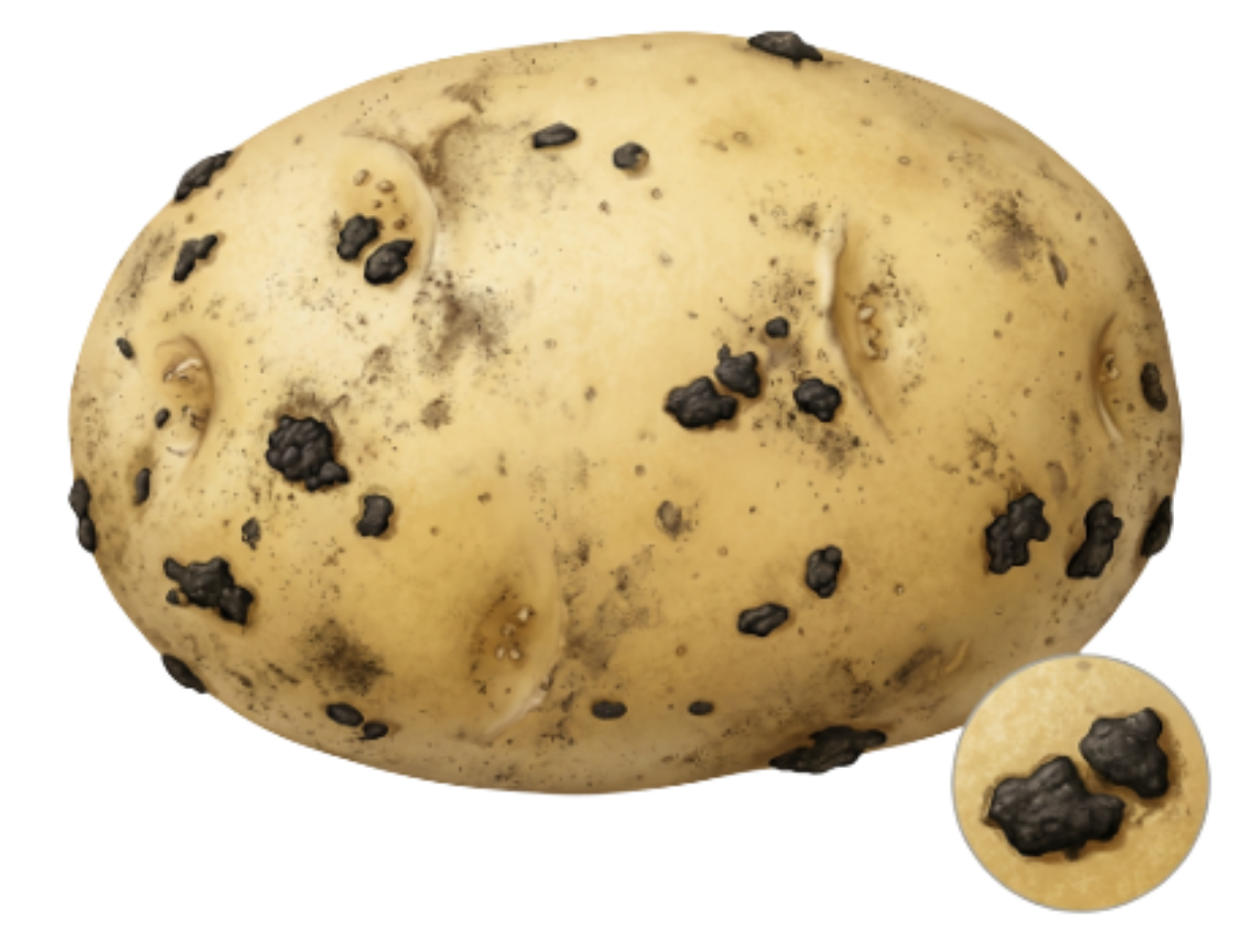
Figure 1. Black scurf — sclerotia of R. solani AG-3 PT attached to the tuber periderm.
Scientific information transformed into a visual resource/content using Artificial Intelligence.
Black scurf is not just a cosmetic problem
One of the most common mistakes is to treat black scurf as a purely cosmetic defect. It is true that, at first glance, the sclerotia can look like soil clinging to the tuber skin. However, they are not easily removed by washing and serve a very clear biological function: they act as active inoculum for the following season.
Commercially, black scurf can affect the visual quality of the tuber. But from a plant-pathology standpoint its importance is greater: it indicates that the pathogen has completed part of its cycle and produced structures capable of surviving, spreading and reigniting infection.
This places the problem at a very specific point: at planting, the inoculum is present not only in the field but on the seed tuber itself. This is not a pathogen that arrives from outside during the season, and so there is nothing to intercept in the aerial part of the crop.
The AG-3 PT pathotype: specialisation in potato
R. solani is not a single, uniform organism: it is divided into anastomosis groups (anastomosis groups, AG), defined by the ability of their hyphae to fuse with one another, exchange genetic material and form populations with different host specialisation.
What is anastomosis?
Anastomosis is the fusion of compatible hyphae, allowing genetic material to be exchanged outside sexual reproduction (a process known as the parasexual cycle). This mechanism maintains distinct populations adapted to a specific host, and is what allows R. solani to be classified into anastomosis groups.
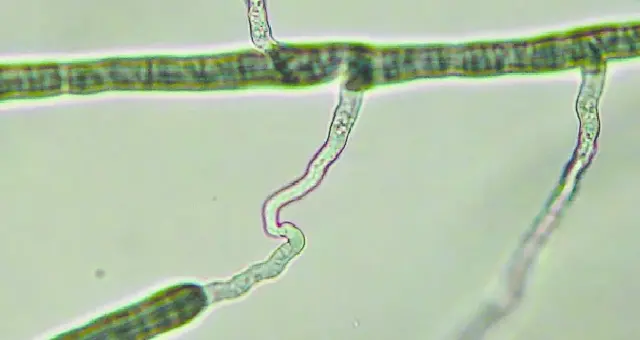
Figure 2. Microscopy image: R. solani reproduction through hyphal anastomosis.
Beltrán-Acosta, C., Smith, A., Cotes, A. M., & Moreno, C. A. (2011). Efficacy of two Trichoderma koningiopsis Th003-based formulations for the control of Rhizoctonia solani under field conditions. In C. Beltrán-Acosta, C. A. Moreno, & A. M. Cotes (Eds.), pp. 55–72.
Trichoderma koningiopsis Th003: A biological alternative for the control of Rhizoctonia solani in potato crops (pp. 55–72). Produmedios, Bogotá, D.C. 72 pp.
In potato, the most relevant group is AG-3, and in particular the potato-associated pathotype known as AG-3 PT. The technical literature indicates that AG-3 affects mainly potato, causing stem cankers, stolon lesions and black sclerotia on tubers.
This specialisation explains why the management of Rhizoctonia in potato must be approached specifically. It is not enough to speak of “soil fungi” in general terms. The risk depends on the crop, the field history, the type of inoculum present, seed quality and the environmental conditions at planting.
Why the pre-emergence phase is critical
The most delicate period for potato against Rhizoctonia is the interval between planting and emergence. During this phase, the underground sprout advances slowly from the tuber towards the surface. It has not yet fully developed its structural defence mechanisms and is surrounded by soil, moisture, organic residues and possible survival structures of the pathogen.
A mismatch between the pathogen's temperature range and the crop's pace.
In many growing regions, potato is planted into cold soils, where the sprout emerges slowly. Rhizoctonia, meanwhile, finds its optimum around 15–18 °C. Damage is most severe when the growth of stems and stolons is slow relative to the pathogen’s development.
Young, tender, poorly protected tissue.
The underground sprout is young tissue, actively growing, without the structural protection of a plant that has already emerged and hardened off.
Rhizoctonia can attack this tissue with hyphae that secrete enzymes capable of degrading the plant’s cell walls.
The literature describes broad, thick-walled hyphae with characteristic right-angle branching and a septum near the branch point.
These morphological features, visible under electron microscopy, help identify the fungus in laboratory observations and confirm its presence when field diagnosis alone is not conclusive.
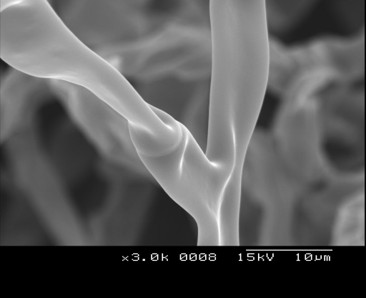
Figure 3. Hyphae of Rhizoctonia solani (AG-3 PT) under scanning electron microscopy (SEM). Source: Biocontrol Technologies.
Exposure time
Every additional day the sprout takes to emerge widens the window of exposure. Deep planting, low-vigour seed, and compacted, cold or poorly drained soils can all lengthen this critical phase. This is why, with Rhizoctonia, management is not only about “treating the pathogen”. It is also about helping the crop escape the window of maximum susceptibility as quickly as possible.
That window has a defined start and end: it opens on the day of planting and closes at emergence. Any later intervention finds the damage already established in sprouts and stolons.
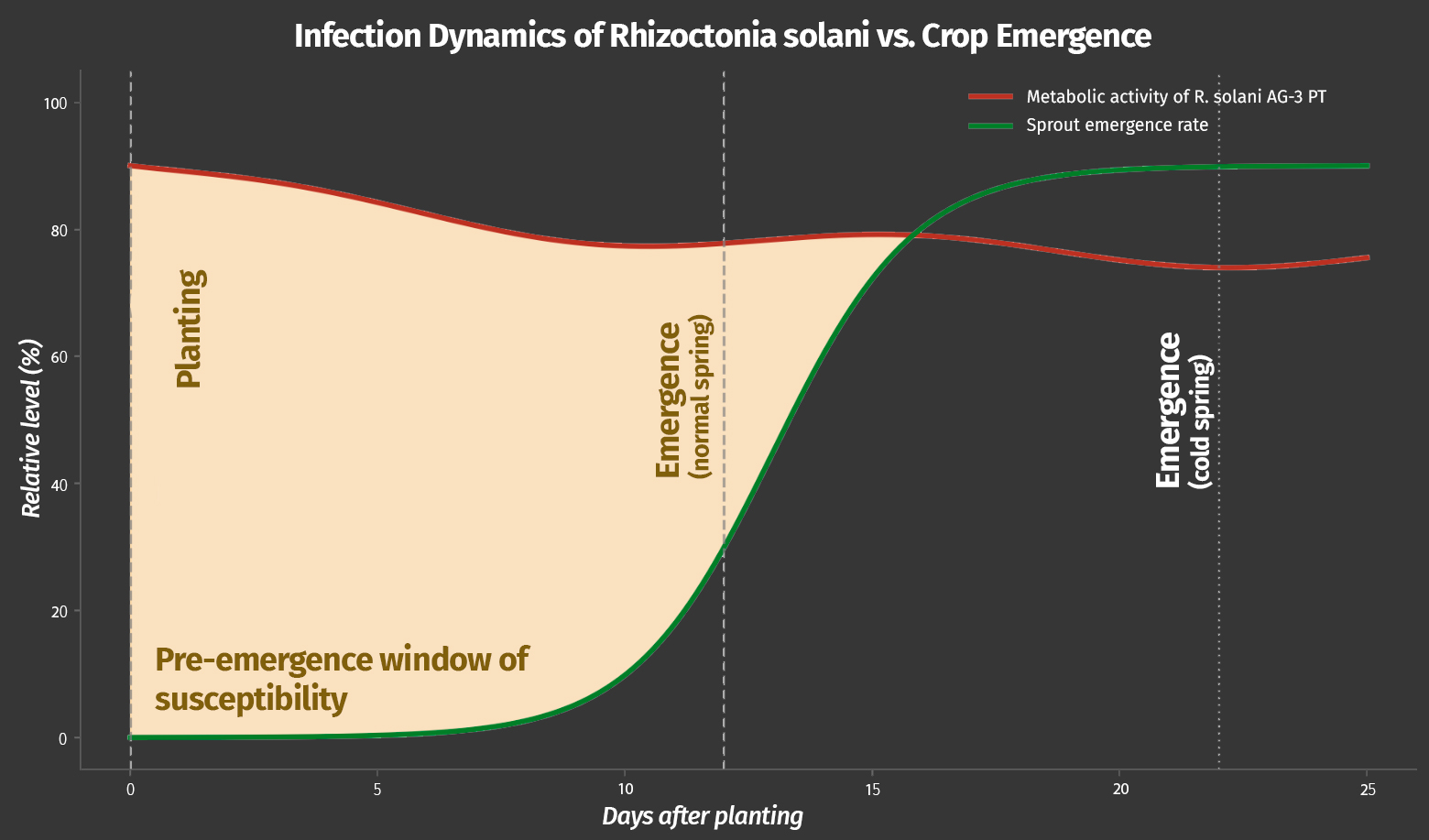
Figure 4. Metabolic activity of R. solani AG-3 PT against crop emergence rate. The window of susceptibility widens when emergence is delayed.
Scientific information transformed into visual content using artificial intelligence.
The length of that window is not constant between seasons. With the same field, the same seed and the same treatment programme, a cold spring with slow emergence keeps the sprout exposed for considerably longer than a mild season. The pathogen does not change: what changes is the length of time the crop stays within its reach. This is why the same programme can prove sufficient one year and insufficient the next.
In-field symptoms: telling Rhizoctonia apart from other soil problems
Rhizoctonia can cause establishment failures, weak plants, damaged stems, reduced tuber number and size, and deformities. In the field, visual diagnosis should focus on the below-ground part of the plant: sprouts, stems, stolons and tubers.
| Affected plant organ | Typical symptom | Agronomic interpretation |
|---|---|---|
| Underground sprouts | Brown or reddish-brown lesions | Early infection during crop emergence |
| Underground stems | Dry, sunken and clearly defined cankers | Localised infection caused by Rhizoctonia |
| Stolons | Lesions that disrupt the transport of nutrients to developing tubers | Reduced tuber number and size |
| Tubers | Black sclerotia attached to the tuber skin | Black scurf and a source of inoculum for subsequent growing seasons |
One important difference from other soil-borne pathogens is the appearance of the lesion. Rhizoctonia tends to produce dry, sunken lesions with well-defined margins. Other problems such as Pythium, by contrast, tend to cause wetter, more diffuse rots. This distinction is useful for agronomists and growers, although a definitive diagnosis should rely on technical inspection and, where necessary, laboratory analysis.
The disease cycle: the first attack decides much of the damage
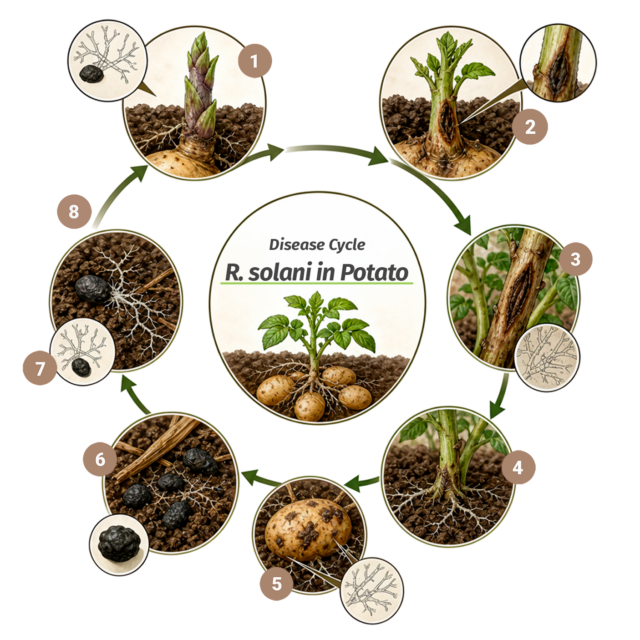
From an epidemiological standpoint, Rhizoctonia in potato behaves as a predominantly monocyclic pathogen.
What is the difference between a monocyclic and a polycyclic pathogen?
In plant pathology, a pathogen is described as monocyclic when it completes its main infection cycle in a single event per season, as opposed to polycyclic pathogens, which repeat the infection cycle several times over the course of the crop and therefore call for repeated treatments.
This does not mean the pathogen produces no new structures during the season. Mycelium that has colonised stems and stolons can form secondary sclerotia on the surface of the developing daughter tubers, giving rise to the black scurf seen at harvest. This inoculum does not usually reinfect the standing crop — hence the predominantly monocyclic character — but it does determine the commercial quality of the lot and the inoculum load carried over to the following season, especially where the material is used as seed.
The practical implication is direct: preventing the initial colonisation of the sprout and underground stem not only protects establishment but also reduces the formation of black scurf on the daughter tuber. What happens in the first few weeks shapes the outcome at harvest, and for that reason protection must be in place in the soil before the sprout begins to grow, rather than applied in response to a visible symptom.
Integrated management of Rhizoctonia: no single measure is enough
Soil-borne diseases have traditionally been tackled with disinfection strategies (chemical, solarisation or biofumigation), but their applicability is limited in field crops such as potato, where management rests mainly on seed health, cultural practices and localised treatments at planting. For this reason, the control of Rhizoctonia must be approached through integrated management: no single tool is sufficient in every situation. It is the combination of field history, seed quality, planting conditions and early protection of the sprout that determines the outcome.
Manage the field history
Rotation can help reduce inoculum, though it is not always sufficient. Sclerotia and mycelium can survive in the soil, on crop residues or in planting material; rotation must therefore be combined with healthy seed, drainage management and crop monitoring.
Choose disease-free seed and check for black scurf
Seed is one of the pathogen’s main points of entry. Where tubers show visible sclerotia, the risk increases. Visual inspection of lots, knowledge of seed origin and traceability are basic steps within preventive management.
Promote rapid emergence
Rapid emergence reduces the sprout’s exposure time to the pathogen. This means working with well-drained soils, an adjusted planting depth, vigorous seed, good seedbed preparation and, wherever possible, avoiding planting into excessively cold or wet conditions.
Biological control at the right moment
Since the critical point is the planting-to-emergence phase, control tools must be positioned where the risk originates: in contact with the seed tuber and with the soil surrounding the developing sprout. In-furrow application at planting responds to this agronomic logic, placing the biological control agent in the zone of primary infection and at the crop’s moment of maximum susceptibility.
How RootDei Biocontrol® fits into this control strategy
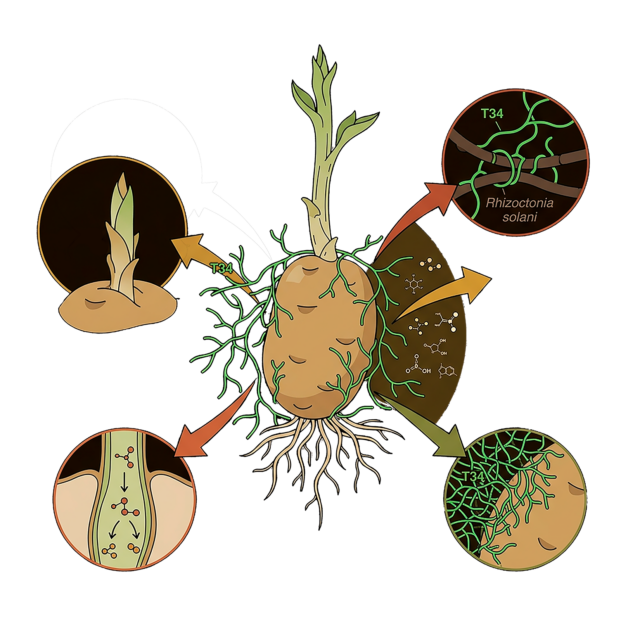
RootDei Biocontrol®, based on Trichoderma asperellum strain T34, is designed as a preventive tool for localised application at planting, when the inoculum, the seed tuber and the underground sprout all converge at the same point. Unlike other control tools, T34 is a living microorganism that colonises the potato seed and the rhizosphere from the moment of planting, maintaining an active presence throughout the sprout’s window of maximum susceptibility.
The modes of action associated with T. asperellum T34 include competition for space and nutrients in the rhizosphere, the production of antifungal compounds, direct interaction with the pathogen and the activation of the plant’s defence responses. A study published in the Plant Pathology Journal, co-authored by the R&D team at Biocontrol Technologies, evaluated T. asperellum T34 against R. solani in potato plants and observed a reduction in disease incidence and severity under experimental conditions.
As with any biological or chemical solution, efficacy depends on following the label specifications — compatibilities, timing and dose, as well as storage and preparation conditions — and the label in force in each country: these are living organisms, and their field performance is conditioned by how they are stored, prepared and applied.
Practical in-field decision matrix
| Field conditions | Expected risk | Recommended RootDei Biocontrol® strategy |
|---|---|---|
| Clean seed tubers, well-drained soil and warm spring conditions | Low to moderate | Preventive application at planting, followed by crop monitoring. |
| Cold or wet soil, or slow crop emergence | High | Prioritise preventive application, promote rapid emergence and closely monitor disease risk. |
| Visible black scurf on seed tubers | High | Use clean seed tubers and prioritise preventive treatment. |
| Field history of Rhizoctonia | High | Implement crop rotation, manage the soil through biofumigation, and apply a medium-to-high rate to the seed tubers and surrounding soil. |
This matrix does not replace technical judgement, but it helps focus the decision.
Conclusion: the pathogen's biology defines the application protocol
Managing Rhizoctonia in potato is decided not only by the choice of control product, but by the moment and the place in which that product is positioned. And both are dictated by the biology of the pathogen: the inoculum is already in the soil and/or on the tuber before planting; infection occurs between planting and emergence; and the vulnerable tissue is the underground sprout, which stays exposed for longer the slower the emergence.
The three conditions converge on a single point in the crop: the planting site — the furrow. This is why the control of Rhizoctonia rests on three principles: prevent — reducing the starting inoculum through healthy seed and field history; position the control tool where and when infection occurs; and promote rapid emergence to shorten the window of exposure.
Biological control solutions such as RootDei Biocontrol®, based on Trichoderma asperellum strain T34, follow this logic: a living agent placed on the seed and in the furrow, in contact with the primary inoculum and the sprout, throughout the window of susceptibility. In soil-borne diseases, understanding the pathogen’s cycle is not an academic exercise: it is what makes it possible to decide where and when to act. With Rhizoctonia, that decision is made before the problem is ever visible in the plant.
module I.
BEYOND GENETICS
Building a resilient potato production system requires combining genetics, agronomic management, and biocontrol.
MODULE II.
TECHNICAL VIDEO
Discover in this video how to correctly apply RootDei Biocontrol® in-furrow during potato planting.


