Resistance and the advantages of biological plant protection products
PART 3/3
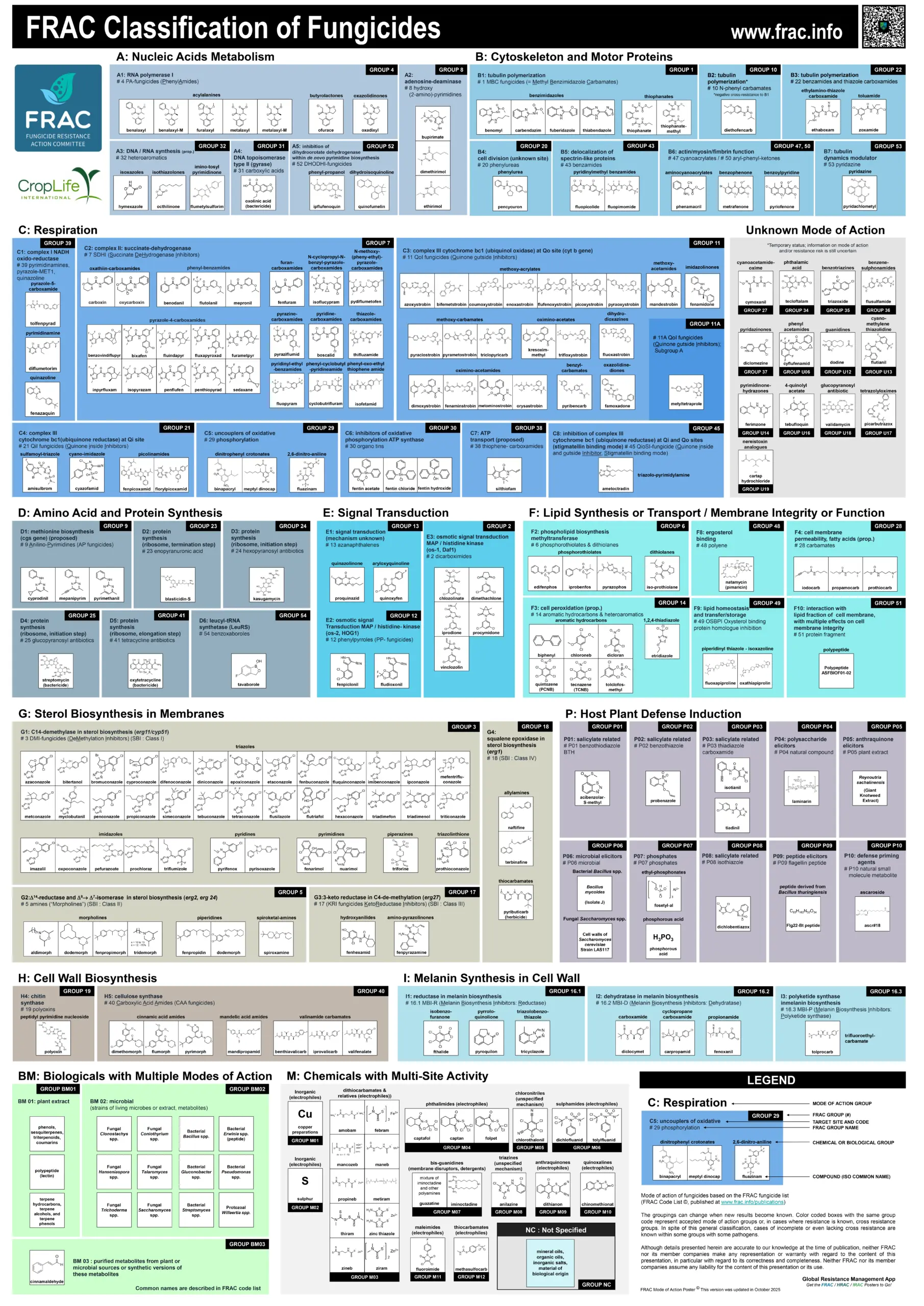
Most synthetic fungicides currently in use act on a single target site: they block a specific enzyme or protein in the pathogen. Biocontrol agents, by contrast, can act through several mechanisms simultaneously. This difference has an important practical consequence: biological products with multiple modes of action have a markedly low risk of resistance development. This is also reflected in their classification in FRAC group BM02 (FungicideResistanceActionCommittee).
What is FRAC?
FRAC (Fungicide Resistance Action Committee) is a technical group within CropLife International,
the global trade association of the crop protection
industry. It was set up in the early 1980s to prevent
and manage the emergence of fungicide resistance
in crop pathogens.
Its main tool is the FRAC Code List, a regularly updated list that classifies active ingredients by mode of action and resistance risk, assigning each group a code such as BM02.
Building on that list, FRAC issues
recommendations to help products stay
effective for as long as possible.
It is not a regulatory body:
it does not authorize products,
nor does it endorse specific ones.
In this third and final module, we look at what multiple mechanisms mean for resistance, how to interpret the FRAC BM02 classification, and which criteria help separate agronomic evidence from a mere sales pitch.
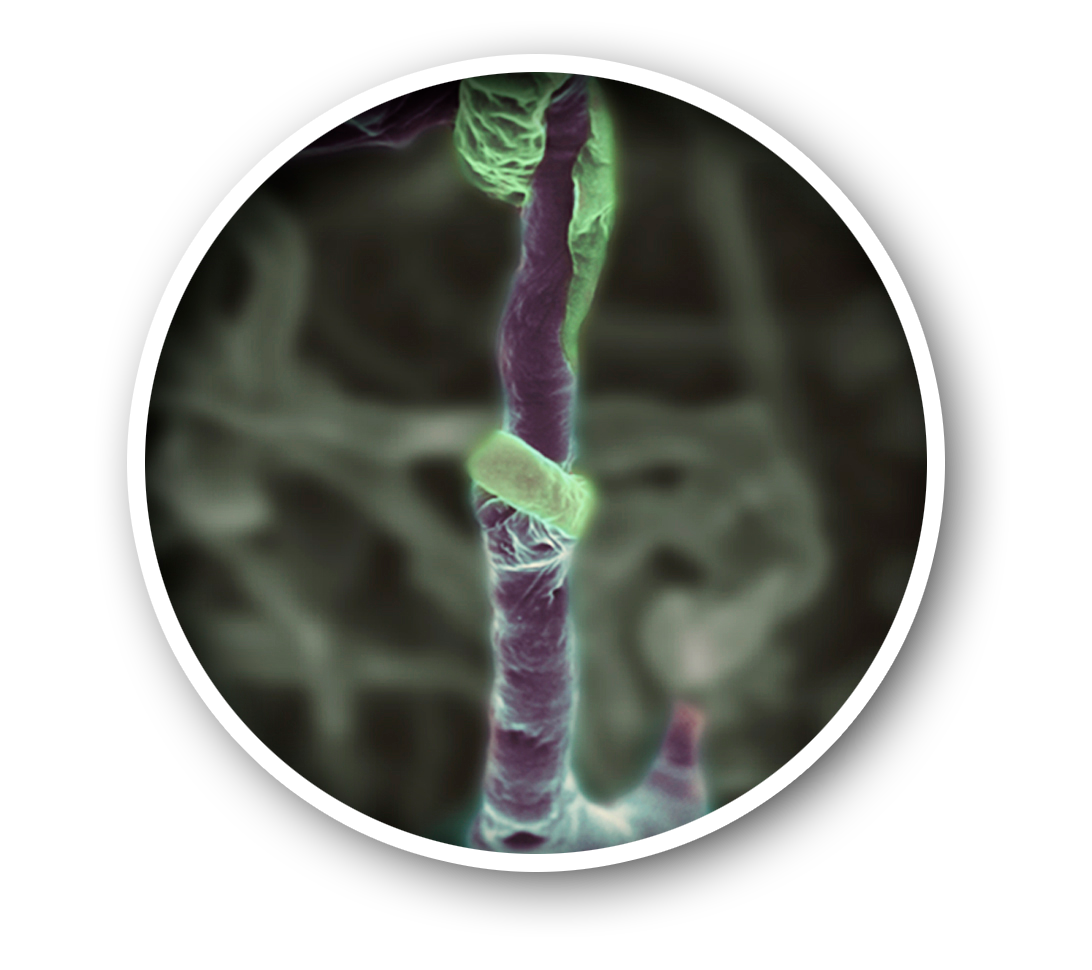
FRAC groups fungicidal active ingredients by mode of action and resistance risk. Group BM02 is made up mainly of microbial biological control agents (living fungi or bacteria) that act through several mechanisms at once: parasitism, antibiosis, competition for space and nutrients, or activation of the plant’s immune system. In practice, this means their efficacy does not hinge on a single target and no associated resistance risk is known. How each mechanism works was covered in the second module; here we focus on how to evaluate them.
1. Mechanism, effect, and benefit: three things not to confuse
This distinction is worth reinforcing, because it is a critical-reading tool that applies to any technical data sheet that lands on an advisor’s desk, whether for a synthetic or a biological product:
MECHANISM OF ACTION
The antagonist
parasitizes the pathogen.
OBSERVABLE EFFECT
Reduced germination of
pathogen spores
Lower incidence of
disease
AGRONOMIC BENEFIT
A healthier, more uniform,
higher-quality crop.
With fewer plant losses.
For a grower, however, the most important consequence of an agent acting through several mechanisms does not show up in any of those three lines: it becomes apparent over the seasons. A fungicide that acts on a single target tends to lose efficacy because the pathogen eventually develops resistance; with an agent that acts through several mechanisms, on the other hand, this rarely happens. Let’s look at why.
2. Why multiple mechanisms reduce resistance development
This is arguably the most strategically significant argument, so it is worth stating precisely.
How resistance emerges
In a pathogen population made up of millions of individuals, random mutations arise all the time. Most have no consequences, but some may alter precisely the target on which a synthetic fungicide acts. When that fungicide is applied, sensitive individuals die while those carrying the mutation survive and multiply. Season after season, the proportion of resistant individuals grows until the product no longer controls the disease. The fungicide does not create the mutation: it selects it. That is why we speak of selection pressure.
It is the same phenomenon seen with antibiotics in medicine. Repeated use of an antibiotic favors bacteria that, through mutation or gene acquisition, are no longer susceptible, and over time that antibiotic loses its usefulness against them. Medicine has also learned how to slow the process down: tuberculosis, for example, is treated with several drugs at once, because it is highly unlikely that a single bacterium will be resistant to all of them simultaneously. The same principle explains the low resistance risk of biological control agents with multiple mechanisms of action.
One target versus many
Resistance is a serious problem with single-site fungicides: it shortens the useful life of active ingredients and calls for increasingly complex rotation strategies. That is why FRAC assigns many of them a medium or high resistance risk and recommends rotating them or combining them with other modes of action. Not all chemical fungicides are single site: multi-site fungicides (such as copper, sulfur, and others in FRAC’s M groups) act on many targets at once and carry a low risk. The relevant dividing line, therefore, is not between chemical and biological, but between acting on one target or on many.
Generally speaking, a microbial antagonist does not exert pressure on a single target. It acts through combinations of processes, each of which in turn relies on multiple players: different lytic enzymes, different signaling molecules, different metabolites. To escape all of them, the pathogen would have to accumulate several independent adaptations at the same time — far less likely than altering a single target. On top of that, some mechanisms exert little or no selection pressure: according to Köhl et al. (2019), competition for nutrients resembles the stresses the pathogen already endures in the soil, and induced resistance acts not directly on the pathogen but on the plant.
What the literature says (and what it doesn’t)
The literature does not claim that resistance is impossible, only that it is considerably less likely. Köhl et al. (2019) document variability in the sensitivity of pathogen populations to specific metabolites (for example, Botrytis cinerea to pyrrolnitrin) and even cases of adaptation in in vitro assays with increasing concentrations. At the same time, they point out that no pathogen has been reported to develop resistance to hyperparasitism, and they pin the risk down to one very specific scenario: applying a purified antimicrobial metabolite, formulated at high rates, across the entire crop — a situation that is functionally close to that of a single-site fungicide.
The practical takeaway is that low resistance risk is not an automatic property of «biologicals», but a consequence of multiple mechanisms acting in situ. And that multiplicity is precisely what defines Group BM02. For growers, it translates into a tool that can remain effective season after season and that, when built into a mode-of-action rotation, can also help protect the efficacy of synthetic fungicides.
3. How a mechanism of action is demonstrated (and why the Petri dish can be misleading)
There is a methodological bias worth knowing about, because it shapes much of the available literature and many of the sales arguments in circulation.
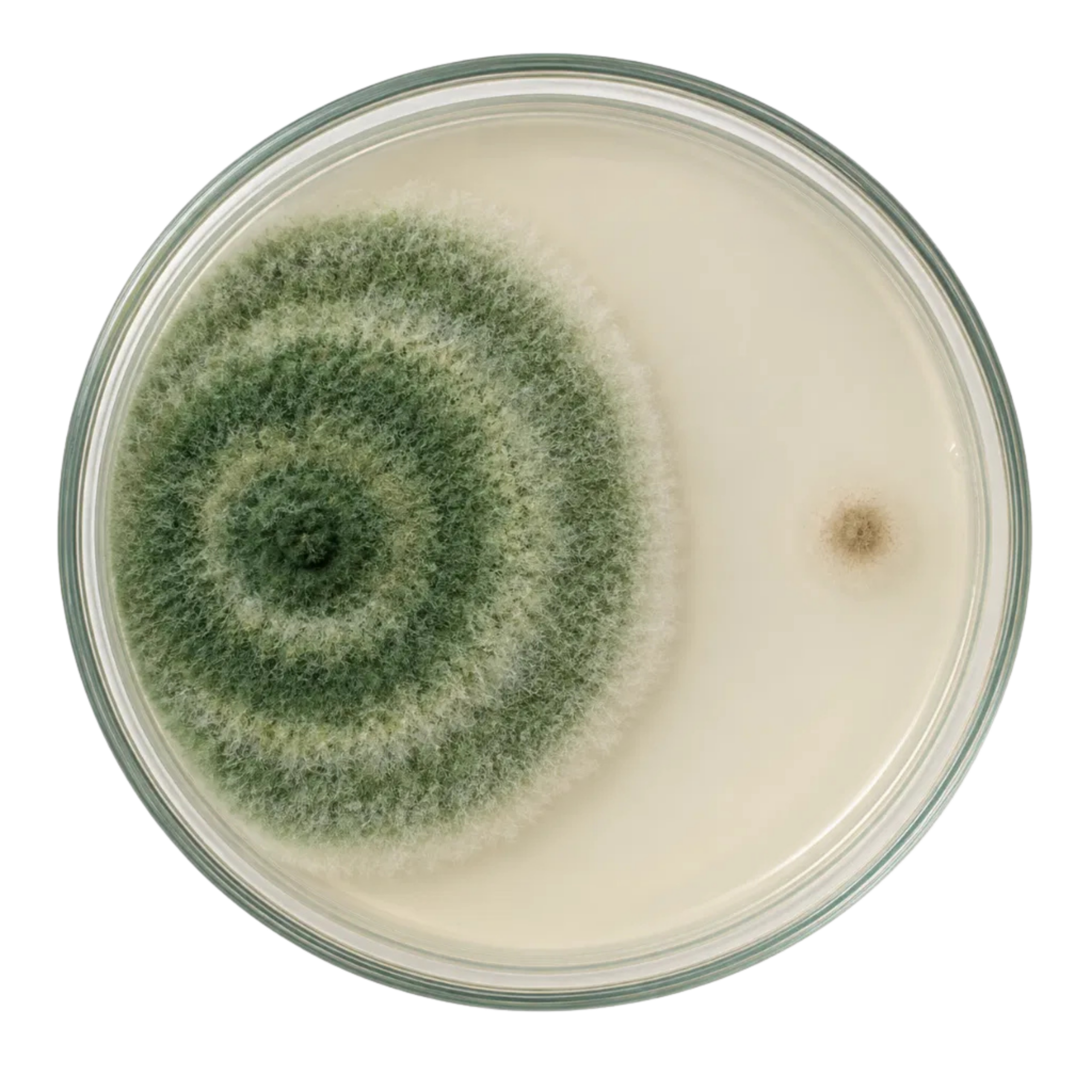
The in vitro dual culture assay (two fungi facing off on a plate, with their inhibition zone) is fast, reproducible, inexpensive and visually very compelling. Its image has become the iconic representation of biological control. The problem is that it systematically selects for a single mechanism: the production of antimicrobial metabolites in an artificial, nutrient-rich medium.
Köhl et al. (2019) document just how much this skews the picture. Standard culture media are roughly one hundred times richer in nutrients than a plant’s rhizosphere, and agar promotes the diffusion of compounds in a way that does not occur in soil or on leaf surfaces. The result is a self-fulfilling prophecy: in vitro assays confirm the importance of antibiosis because, by design, they rule out every other mechanism.
The most telling case they report is a screening of 256 isolates of Trichoderma against Rhizoctonia solani. In dual culture, 192 showed antagonism and 64 did not. In pot trials with corn salad in infested soil, mean efficacy in reducing damping-off (pre- and post-emergence rot) was 61.2 % for the former and 59.7 % for the latter. Virtually identical. Antagonism on the plate did not predict efficacy on the plant (Köhl et al., 2019b).
The practical consequence for anyone evaluating products: a plate image is not evidence of agronomic efficacy. Robust proof requires trials that bring together antagonist, pathogen and plant under representative environmental conditions, as well as field trials across a range of experimental conditions.
256 Trichoderma isolates
Each tested twice: on a plate against Rhizoctonia solani and in pots with plants.
1256 isolatesEach dot is one isolate
192 inhibit
64 do not inhibit
2On the plateOn the plateDoes it inhibit the pathogen?
192 isolatesinhibit the pathogenAntibiosis through metabolites
64 isolatesdo not inhibit itNo visible antibiosis
75 %25 %
3PlantWith plant
4Average protectionResult: average protection for the group
Tap the pot61.2 %protectionaverage of the 192Tap the pot59.7 %protectionaverage of the 640 %50 %100 %
Conclusion
No. Antagonism on the plate did not predict efficacy on the plant.
Why. The plate mainly detects one mechanism: the production of antimicrobial metabolites (antibiosis) in a nutrient-rich medium. It leaves out the rest: competition, mycoparasitism and induced resistance in the plant.
That is why a plate image is not evidence of agronomic efficacy: plant bioassays and field trials are needed.
Protection: mean reduction in damping-off in pots sown with corn salad in soil infested with R. solani. Figures are group means; the source does not break down results by isolate. Source: Köhl (2019), cited in Köhl et al. (2019), Frontiers in Plant Science, 10:845.
4. Limitations and conditions of use worth knowing
These are the conditions that most influence the efficacy of a biological control agent:
Dependence on environmental conditions.
Antagonistic activity requires active metabolism.
Temperature, moisture, pH and soil type
all affect colonization.
Trichoderma asperellum T34 is reported to have
a pH range of 4 to 9, an approximate temperature range
of 10 to 28 °C and a high colonization
capacity across different soil types.
pH RANGE4–9
APPROX. TEMPERATURE RANGE10–28 °C
Application timing is critical.
The competitive advantage depends on getting there
before the pathogen or, at the very least,
at the same time. Applying once the disease
is already established limits its action to parasitism.
Strain-to-strain variability.
Mechanisms described for one species
cannot automatically be extrapolated
to every strain of that species.
Evidence is built strain by strain.
Compatibility with other practices.
Integration with chemical treatments,
soil disinfestation or solarization
requires observing the proper intervals and sequencing.
Not a one-size-fits-all replacement.
Biological control reaches its full potential
within an integrated pest management strategy,
not as a stand-alone substitute for
every other measure.
A word of caution on safety is also in order: microbial preparations that are not registered as plant protection products, generally, offer no guarantees as to strain identity, viable concentration or toxicological profile. The studies required for plant protection product registration are precisely what make it possible, among many other things,to rule out the presence or production of metabolites of concernfor human health or the environment.
What does each type of assay prove?
From plate to field: each assay adds another part of the real system, and with it changes what can be claimed, it is important to distinguish between the different types of trials and understand how each contributes to assessing the efficacy of a microorganism as a biological control agent.
What the assay includes includesdoes not include
Antagonist and pathogen
Plant
Soil or substrate
Environmental variability
Mechanisms expressed
Mainly antibiosis
All, including via the plant
All, under real conditions
What it proves
Potential capability
Efficacy on the plant
Agronomic efficacy
Tap an assay to see what it proves and what it does not.
Field trial. Proves agronomic efficacy: in the crop and under varying environmental conditions.
Plant bioassay. Proves efficacy with antagonist, pathogen and plant together, under representative conditions. It does not prove that efficacy holds when environmental conditions change.
Plate assay. Proves that the isolate can produce metabolites that hold back the pathogen in a nutrient-rich medium. It does not prove that it protects the plant.
Why the plate overstates antibiosis: available nutrients
Culture mediumabout 100 times more
Rhizosphere
Conclusion
The plate shows a capability. Efficacy is proven with plants and in the field.
Robust proof requires bioassays that bring together antagonist, pathogen and plant under representative conditions, as well as field trials under varying environmental conditions.
Source: Köhl et al. (2019), Frontiers in Plant Science, 10:845.
5. Criteria for evaluating a biological solution
A useful checklist of questions for any sales proposal:
01
Is the strain identified, not just the genus or species?
The designation should include the specific strain and its molecular identification.
02
Are the claimed mechanisms documented for that particular strain?
Not for the genus in general.
03
Does the evidence come from plant bioassays and field trials, or only from plate assays?
And is it statistically supported?
04
Is it registered as a plant protection product for the proposed use?
The crop and the pathogen must appear on the label. In Spain, this can be checked in the Plant Protection Products Registry of the Ministry of Agriculture, Fisheries and Food (MAPA).
05
Are the conditions for efficacy specified?
pH and temperature ranges, application timing, compatibilities.
06
Is the product concentration declared and guaranteed throughout its entire shelf life?
Product concentration is measured in colony-forming units (CFU).
07
Are the scientific references verifiable?
With a DOI or full citation, and published in peer-reviewed journals.
08
Are the limitations disclosed as well?
A supplier who only lists advantages is describing a product that does not exist.
6. The case of Trichoderma asperellum T34
Much of the evidence cited in this article comes from work carried out on one specific strain, which helps illustrate how a mechanism-of-action dossier is built.
Strain T34 of Trichoderma asperellum was isolated in 2002 from a compost with natural suppressiveness to Fusarium oxysporum, out of more than two hundred strains evaluated. Its identification was completed at molecular level using the ITS region and the genetic markerstef1, rpb2 and acl1. FRAC classifies it in group BM02, microbial biological control agents with multiple mechanisms of action.
For this strain, the processes described throughout this series are backed by published documentation: the effect on Fusarium wilt and water use in carnation (Sant et al., 2010); the efficacy against Phytophthora capsici in pepper (Segarra et al., 2013); the suppression of Rhizoctonia solani in cucumber seedlings in combination with agricultural waste compost (Trillas et al., 2006); the characterization of the induced resistance signaling pathway (Segarra et al., 2009); the induction of systemic resistance against the nematode Meloidogyne incognita in tomato (Pocurull et al., 2020); and the series of studies on mineral nutrition presented in the second module. Its ability to parasitize hyphae ofDidymella and sclerotia of Sclerotinia.
One feature of this dossier deserves emphasis, beyond the sheer number of publications: much of it comes from groups outside the company and has been published in peer-reviewed journals. The work on the ISR signaling pathway was co-authored with Corné Pieterse’s laboratory in Utrecht, an international benchmark in induced resistance; the Meloidogyne work, with the nematology group at the Universitat Politècnica de Catalunya and the Centre de Regulació Genòmica. That external traceability is what sets a verifiable description of mechanisms apart from a generic attribution to the genus Trichoderma.
Biocontrol Technologies, a spin-off of the Universitat de Barcelona, develops and markets this strain under the name T34 Biocontrol, which is authorized as a plant protection product in seventeen European Union countries and in other international markets such as Canada and the United States. Ongoing work with research centers is what makes it possible to substantiate this description of mechanisms.
Authorized uses, rates and crops vary from country to country and are set out on the label and in the corresponding plant protection product registration in each territory. Any application decision should be based on that documentation and, where appropriate, on the advice of a crop advisor.
7. Conclusion
With any biological control solution, the first check is also the simplest: verify that what is being advertised is backed by the authorization shown on the label — that is, the crop, the pathogen and the authorized conditions of use. It is the most direct way to separate agronomic evidence from a sales pitch. Mechanisms, trials and publications then help explain how the product works and under which conditions it performs best.
From there, the multiplicity of mechanisms is the property that gives these agents their greatest strategic value: it accounts for their low resistance risk and their classification in Group BM02, and it enables them to help keep the entire crop protection program effective over time. But it is a property that has to be proven strain by strain, with plant trials under field conditions — not with a plate image.
That rigor does not weaken biological control; it is what allows it to firmly earn the place that integrated pest management reserves for it. And it is the same rigor that should be applied to any plant protection product, whether synthetic or biological.
References
Köhl, J., Kolnaar, R., & Ravensberg, W. J. (2019). Mode of Action of Microbial Biological Control Agents Against Plant Diseases: Relevance Beyond Efficacy. Frontiers In Plant Science, 10, 845. https://doi.org/10.3389/fpls.2019.00845
Elena Jimenez, Georgina & Köhl, Jürgen. (2020). Screening Strategies for Selection of New Microbial Antagonists of Plant Pathogens. 10.1007/978-3-030-53238-3_11. https://doi.org/10.1007/978-3-030-53238-3_11
Cotxarrera, L., Trillas-Gay, M., Steinberg, C., & Alabouvette, C. (2002). Use of sewage sludge compost and Trichoderma asperellum isolates to suppress Fusarium wilt of tomato. Soil Biology And Biochemistry, 34(4), 467-476. https://doi.org/10.1016/s0038-0717(01)00205-x
Segarra, G., Avilés, M., Casanova, E., Borrero, C., & Trillas, I. (2013). Effectiveness of biological control of Phytophthora capsici in pepper by Trichoderma asperellum strain T34. Phytopathologia Mediterranea, 52(1), 77-83. https://doi.org/10.14601/Phytopathol_Mediterr-11242
Segarra, G., Casanova, E., Avilés, M., & Trillas, I. (2010). Trichoderma asperellum strain T34 controls Fusarium wilt disease in tomato plants in soilless culture through competition for iron. Microbial Ecology, 59(1), 141-149. https://doi.org/10.1007/s00248-009-9545-5
Segarra, G., Van der Ent, S., Trillas, I., & Pieterse, C. M. J. (2009). MYB72, a node of convergence in induced systemic resistance triggered by a fungal and a bacterial beneficial microbe. Plant Biology, 11(1), 90-96. https://doi.org/10.1111/j.1438-8677.2008.00162.x
Sant, D., Casanova, E., Segarra, G., Avilés, M., Reis, M., & Trillas, M. I. (2010). Effect of Trichoderma asperellum strain T34 on Fusarium wilt and water usage in carnation grown on compost-based growth medium. Biological Control, 53(3), 291-296. https://doi.org/10.1016/j.biocontrol.2010.01.012
Trillas, M. I., Casanova, E., Cotxarrera, L., Ordovás, J., Borrero, C., & Avilés, M. (2006). Composts from agricultural waste and the Trichoderma asperellum strain T-34 suppress Rhizoctonia solani in cucumber seedlings. Biological Control, 39(1), 32-38. https://doi.org/10.1016/j.biocontrol.2006.05.007
Borrero, C., Trillas, M. I., Delgado, A., & Avilés, M. (2012). Effect of ammonium/nitrate ratio in nutrient solution on control of Fusarium wilt of tomato by Trichoderma asperellum T34. Plant Pathology, 61(1), 132-139.
Pocurull, M., Fullana, A. M., Ferro, M., Valero, P., Escudero, N., Saus, E., Gabaldón, T., & Sorribas, F. J. (2020). Commercial formulates of Trichoderma induce systemic plant resistance to Meloidogyne incognita in tomato and the effect is additive to that of the Mi-1.2 resistance gene. Frontiers in Microbiology, 10, 3042. https://doi.org/10.3389/fmicb.2019.03042
What comes next
From evaluating a solution to taking it to the field
With the criteria in this module, it is already possible to judge whether a biological control proposal deserves credit. What remains is the part that decides the outcome: how that solution fits into the day-to-day management of the farm.
Application timing and method, compatibility with the crop protection program and monitoring the establishment of T. asperellum in the rhizosphere are the factors that carry trial evidence across to the field.
The eight-question checklist works as an initial filter: if a proposal fails those checks, no adjustment to the application will make up for the lack of agronomic evidence.
Continue exploring:
Continue exploring the modes of action of T. asperellum
Return to the main Modes of Action page or explore the full information on T34 Biocontrol®.
Want to see how these mechanisms fit into your crop protection program?
The Biocontrol Technologies technical team is available to review your specific case and advise you on application options for your crop.
DATA PROTECTION
Basic information on the processing of your personal data
Data Controller: Biocontrol Technologies S.L.
Purpose: To manage your request and send you new educational and/or informational content by email.
Legal basis: Your consent, given by accepting our Privacy Policy.
Recipients: For internal use by Biocontrol Technologies. Your data will not be disclosed to third parties unless required by law or to service providers acting as data processors.
Your rights: You may request access to, rectification or erasure of your personal data, restriction of processing, objection to processing, or data portability, and you may withdraw your consent at any time by contacting: rgpd@biocontroltech.com
Biocontrol Technologies, S.L. · NIF B63545446 Av. Madrid, 217 — 08014 Barcelona
Gestionar consentimiento
Para ofrecer las mejores experiencias, utilizamos tecnologías como las cookies para almacenar y/o acceder a la información del dispositivo. El consentimiento de estas tecnologías nos permitirá procesar datos como el comportamiento de navegación o las identificaciones únicas en este sitio. No consentir o retirar el consentimiento, puede afectar negativamente a ciertas características y funciones.
Funcional
Always active
El almacenamiento o acceso técnico es estrictamente necesario para el propósito legítimo de permitir el uso de un servicio específico explícitamente solicitado por el abonado o usuario, o con el único propósito de llevar a cabo la transmisión de una comunicación a través de una red de comunicaciones electrónicas.
Preferencias
El almacenamiento o acceso técnico es necesario para la finalidad legítima de almacenar preferencias no solicitadas por el abonado o usuario.
Estadísticas
El almacenamiento o acceso técnico que es utilizado exclusivamente con fines estadísticos.El almacenamiento o acceso técnico que se utiliza exclusivamente con fines estadísticos anónimos. Sin un requerimiento, el cumplimiento voluntario por parte de tu proveedor de servicios de Internet, o los registros adicionales de un tercero, la información almacenada o recuperada sólo para este propósito no se puede utilizar para identificarte.
Marketing
El almacenamiento o acceso técnico es necesario para crear perfiles de usuario para enviar publicidad, o para rastrear al usuario en una web o en varias web con fines de marketing similares.