Mechanisms of Action of Trichoderma asperellum T34
Six processes. Two directions. One single strain.
Three processes that directly interfere with pathogen development and three that act on the plant. What each one does, what published evidence supports it, and what cannot be expected from it.
How Trichoderma asperellum T34 works, and the technical context needed to place it within a protocol.
This page brings together technical information on the mechanisms of action of microorganism-based plant protection products (active substances): what they are, how they are determined, and how the mechanisms of a biological agent differ from those of a synthetic substance. It also explains how Trichoderma asperellum T34 acts against pathogens and what this means for fungicide resistance management.
This page is designed for those who make protocol decisions—growers, advisors, and plant health technicians—who want an in-depth understanding of how a biological plant protection product works.
The material is technical and fully referenced
Everything stated on this page and in the linked modules comes from peer-reviewed scientific publications, official trials, and information derived from the registration dossier, always with its corresponding reference. Supporting documentation is linked from each module.
It Works in Layers
This is the complete map, and from this page you can access each module, which explores its section in depth. The series is expanded periodically: each mechanism will have its own dedicated development, and scientific publications will be added as they become available.
Module I
Mechanisms of Action: Why a Chemical Fungicide and a Microorganism Aren’t Described the Same Way
What a mechanism of action is in a plant protection product, the difference between mechanism and target site, and why chemical and biological products don’t act in the same way.
Resistance, Evidence, and Criteria for Evaluating Mechanisms of Action in Biological Control
Why biological control poses a lower risk of resistance, what evidence demonstrates a mechanism of action, and how to evaluate a solution.
Publication date
Why it matters
Knowing How a Product Works Changes How It Should Be Applied
A mechanism of action is the process by which a plant protection product achieves disease control. It is not the outcome observed in the field, but what happens beforehand: exactly what a given active substance does to bring about that outcome.
Understanding this process helps determine when and how to apply a product. For synthetic fungicides, application timing is governed by the presence of the pathogen or the risk of infection, as well as by the characteristics of each active substance, including its persistence, selectivity, and potential phytotoxicity. After application, the substance also degrades progressively, and its activity diminishes over time.
A biological control microorganism can act differently. When applied preventively, it can establish itself before the pathogen and limit its development through mechanisms such as competition for space and nutrients or activation of the plant’s defenses. If the pathogen is already present, direct mechanisms such as parasitism or antibiosis can also come into play.
This difference explains why application timing cannot be decided solely by analogy with a synthetic fungicide. Some chemical products have shown the ability to induce defense responses in the plant, but this is not the typical mechanism of most fungicides. In microorganism-based products, by contrast, the ability to establish, compete, and interact with the plant is part of their mode of action and directly determines how they are integrated into a protocol.
CHAPTER I
Why a Chemical Fungicide and a Microorganism Aren’t Described the Same Way
The conceptual framework underlying everything else: what a mechanism of action actually is, how it differs from the target it acts on, and why that language stops working when the active substance is a living organism.
Europe’s shift toward integrated management brought with it a language problem: the sector still describes biologicals using the same categories it learned to apply to chemical fungicides. Much of the poorly calibrated field expectations stem from that inertia—expecting a microorganism to deliver the fast, uniform response curve of a contact chemical. This chapter sorts out the three concepts that technical communication tends to blur together and sets the stage for examining T34’s specific mechanisms.
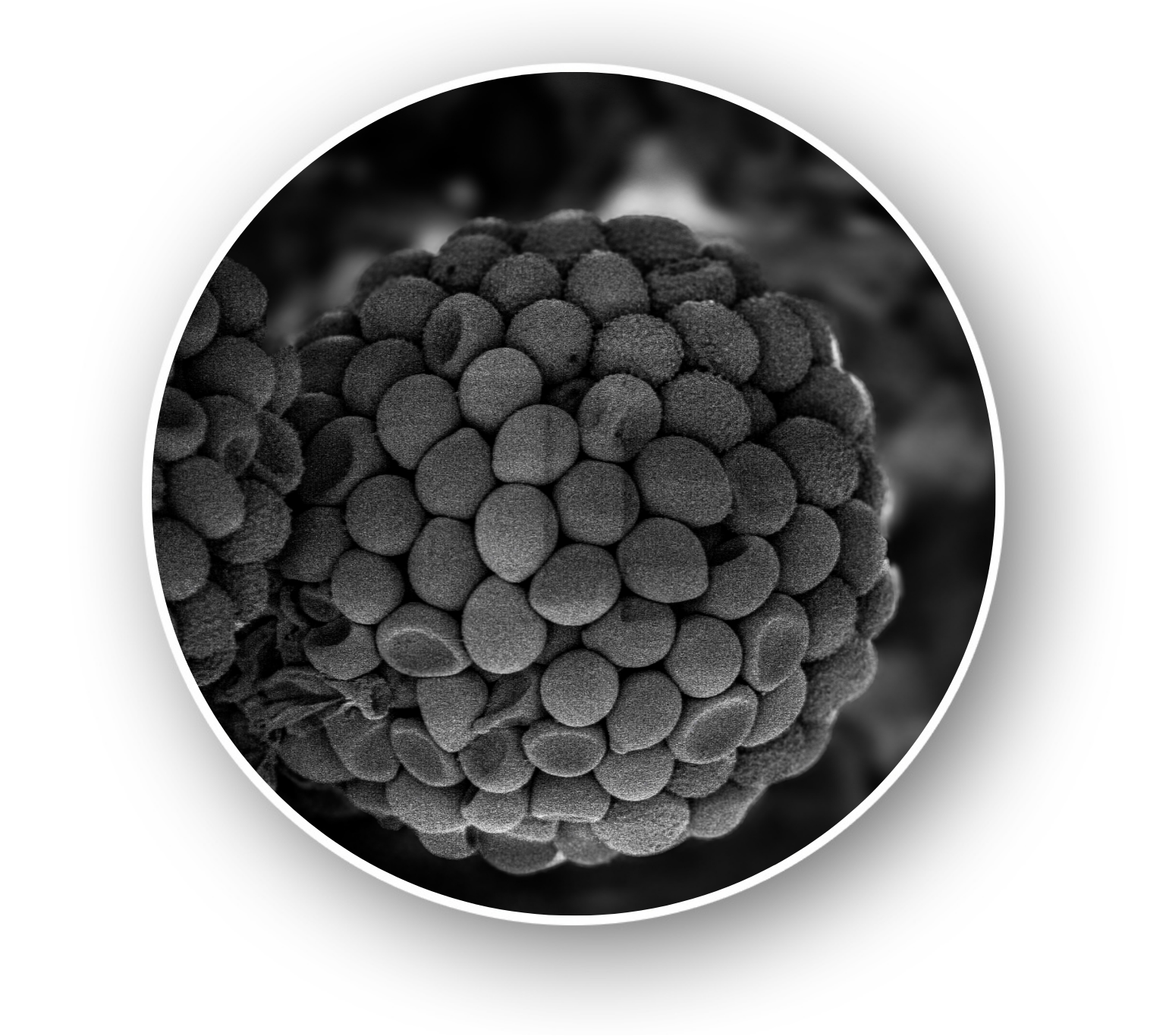
Electron micrograph of a conidiophore bearing numerous spores of T. asperellum strain T34.
Reading time
6 min
Intended for
technicians, professional growers, and advisors
Languages
ES · CA · EN · DE
Free
Access
MODULE I · AUG 26, 2026
Mechanisms of Action: Why a Chemical Fungicide and a Microorganism Aren’t Described the Same Way
What a mechanism of action really is, how it differs from the target site, and why understanding that distinction changes how a biological product is evaluated, applied, and integrated in the field.
What Makes a Microorganism a Biological Control Agent?
To answer this, we go back to 1983, when two scientists, R. James Cook and Kenneth F. Baker, specialists in plant pathology who recognized the potential of biological control, published The Nature and Practice of Biological Control of Plant Pathogens, one of the foundational books of biological control practice.
It clearly describes the characteristics a microorganism must have to serve as a biological control agent. Its central thesis is that controlling a disease involves much more than killing the pathogen, and that there are pathways of intervention a molecule simply cannot take.
In exploring these pathways, they reached a conclusion that 21st-century agriculture has since confirmed in the field: not all beneficial microorganisms qualify as biological control agents. What conditions are we talking about?
Aggressive colonizer, well adapted to the physical and physicochemical conditions of the environment in which it must become established.
Growth that depends on the same nutrients as the pathogen, or that interferes with the pathogen’s access to them.
Production of enzymes, antibiotics, or biostatic substances capable of interfering with the pathogen’s growth and development.
In addition
Ability to activate the plant’s immune system, leaving it primed to respond to pathogen attack.
That list was compiled from a handful of identified antagonistic microorganisms. Four decades later, and with more than a decade of commercial use behind it, formulations based on Trichoderma asperellum strain T34 allow the check to be run in reverse: going through the four points one by one and matching each with its corresponding documented mechanism.
The first three are the requirements Cook and Baker set out for an antagonist to function optimally. The fourth is not a strict condition: in the same book, they present it as what distinguishes a good antagonist from an excellent one.
I
Aggressive colonizer, adapted to the environment
Competition for space
Chemotaxis, appressorium-mediated adhesion, and persistent colonization of the rhizosphere.
II
Growth that interferes with the pathogen’s nutrients
Competition for nutrients and iron
Consumption of carbon and nitrogen, and uptake of ferric iron via siderophores.
III
Production of enzymes, antibiotics, or biostatic compounds
Parasitism and antibiosis
Chitinases, β-1,3-glucanases, and proteases; secondary metabolites and volatile compounds.
IV
Activation of plant immunity from the rhizosphere
Induced systemic resistance (ISR)
A documented systemic response with a lower metabolic cost than systemic acquired resistance (SAR).
Chapter II
The Six Mechanisms of Action of Trichoderma asperellum Strain T34
The six components, one by one: what each does, what evidence supports it, and what cannot be expected from it. Three act on the pathogen and three act on the plant.
Toward the Pathogen
Parasitism
The antagonist recognizes the pathogen, attaches to it, colonizes it, and degrades its cell wall using enzymes it produces only after that recognition.
Direct mechanism
Antibiosis
Secondary metabolites, volatile compounds, and enzymes that interfere with pathogen development. It rarely acts alone.
Direct mechanism
Competence
For rhizosphere space and for soil mineral elements, including iron. This is where biological control’s most consistent rule comes from: timing is everything.
Indirect mechanism
Toward the Plant
Induced Systemic Resistance
This shifts the subject of the action: it is the plant that defends itself. It is not permanently activated, but rather primed to respond faster—priming.
Direct mechanism
Growth Promotion
Root architecture and mobilization of poorly available mineral elements. A more exploratory root system absorbs water and nutrients more effectively.
Direct mechanism
Effects on Germination
On crop establishment during its earliest stages, when rhizosphere colonization accompanies the crop from the seedbed or transplanting stage onward.
Indirect mechanism
Reading time
15 min
Intended for
Technicians, professional growers, and advisors
References
13 sources cited
Free
Access
Module II
The Six Mechanisms of Action of Trichoderma asperellum Strain T34
Parasitism, antibiosis, competition, induced systemic resistance, growth promotion,
and effects on germination: six mechanisms explained one by one to understand
what happens to the pathogen, what happens to the plant, and what can be
expected from each process.
A Biological Mode of Action Classified by FRAC as BM02
The multiplicity of processes described in the previous chapters has a standardized translation in crop protection: T34 Biocontrol® belongs to FRAC group BM02, reserved for microbial biological agents with multiple modes of action.
The Fungicide Resistance Action Committee (FRAC) is the international technical body that classifies disease control agents according to their mode of action and cross-resistance patterns. Its codes make it possible to identify whether two solutions act on the same target and help design protection programs that preserve their effectiveness over time.
This classification is especially relevant when comparing single-site fungicides with microorganisms such as Trichoderma asperellum strain T34. While a single-site active ingredient concentrates selection pressure on one specific process in the pathogen, T34 intervenes through complementary processes—including competition, mycoparasitism, metabolite production, and activation of plant defenses. The pathogen therefore does not face a single, isolated target.
B
Biologicals: agents of biological origin.
M
Multiple modes of action: several mechanisms contribute to control.
02
Subgroup of microbial agents, including living microorganisms and certain extracts or metabolites.
Classification source: FRAC Code List 2026 . Inclusion on the FRAC list describes the mode of action and does not, in itself, constitute an efficacy evaluation or a use authorization.
Module III
Resistance, the FRAC Code, and how a mechanism is demonstrated
What the BM02 category means, why multiple mechanisms make pathogen adaptation more difficult, why an inhibition halo on a plate does not demonstrate agronomic efficacy, and what use limitations should be understood.
Biocontrol Technologies, S.L. · NIF B63545446
Av. Madrid, 217 — 08014 Barcelona
Gestionar consentimiento
Para ofrecer las mejores experiencias, utilizamos tecnologías como las cookies para almacenar y/o acceder a la información del dispositivo. El consentimiento de estas tecnologías nos permitirá procesar datos como el comportamiento de navegación o las identificaciones únicas en este sitio. No consentir o retirar el consentimiento, puede afectar negativamente a ciertas características y funciones.
Funcional
Always active
El almacenamiento o acceso técnico es estrictamente necesario para el propósito legítimo de permitir el uso de un servicio específico explícitamente solicitado por el abonado o usuario, o con el único propósito de llevar a cabo la transmisión de una comunicación a través de una red de comunicaciones electrónicas.
Preferencias
El almacenamiento o acceso técnico es necesario para la finalidad legítima de almacenar preferencias no solicitadas por el abonado o usuario.
Estadísticas
El almacenamiento o acceso técnico que es utilizado exclusivamente con fines estadísticos.El almacenamiento o acceso técnico que se utiliza exclusivamente con fines estadísticos anónimos. Sin un requerimiento, el cumplimiento voluntario por parte de tu proveedor de servicios de Internet, o los registros adicionales de un tercero, la información almacenada o recuperada sólo para este propósito no se puede utilizar para identificarte.
Marketing
El almacenamiento o acceso técnico es necesario para crear perfiles de usuario para enviar publicidad, o para rastrear al usuario en una web o en varias web con fines de marketing similares.